
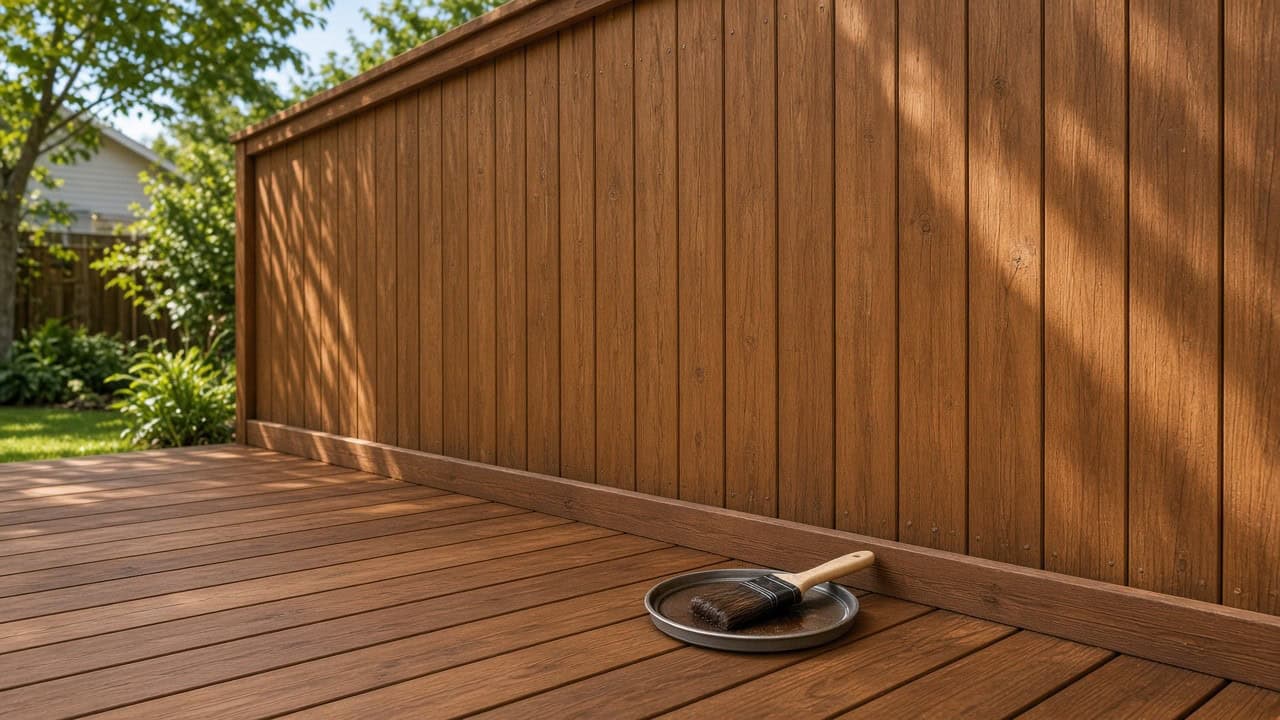
Stain does two jobs on outdoor wood, since it changes the color and also protects the boards from sun and water. If you pick the wrong one, and you may be redoing the whole deck sooner than you’d like, or living with a color that looks nothing like the sample chip.
There isn’t one best exterior wood stain for every project, because the right choice depends on the wood species, how old it is, how much sun it gets and how much grain you want to see. Here’s how we at Anawalt Lumber help homeowners and contractors narrow it down at the counter.
Key Takeaways
- The best exterior wood stain depends on the wood, its age, sun exposure and how much grain you want to see.
- More pigment means more UV protection but less visible grain.
- Oil-based and water-based stains both work, with different trade-offs in penetration, cleanup and drying time.
- Prep matters more than brand, so clean, repair and dry the wood before staining.
- Test on a hidden spot first, because color changes with each wood species.
What Are the Main Types of Exterior Stain?
Exterior stains are usually grouped by how much pigment they carry, and as a general rule, more pigment hides more grain and blocks more sunlight.
Clear or toner finishes have little or no pigment, so they let the natural wood show through but give the least sun protection and usually need recoating more often.
Semi-transparent stains add color while letting the grain show through, which makes them a popular pick for decks and fences made of cedar, redwood or other woods with nice grain.
Semi-solid stains cover more of the grain but still let some texture show, so they work well on older wood that has developed uneven color.
Solid stains look closer to paint because they hide most of the grain while giving strong color and UV protection, and they’re often used on weathered wood, siding or fences where a uniform look matters more than grain.
| Stain type | Grain showing | Sun protection | Good fit for |
|---|---|---|---|
| Clear or toner | Most | Lowest | New wood with great grain, shady areas |
| Semi-transparent | A lot | Moderate | Decks and fences in cedar or redwood |
| Semi-solid | Some | Higher | Older wood with uneven color |
| Solid | Little | Highest | Weathered wood, siding, uniform color |
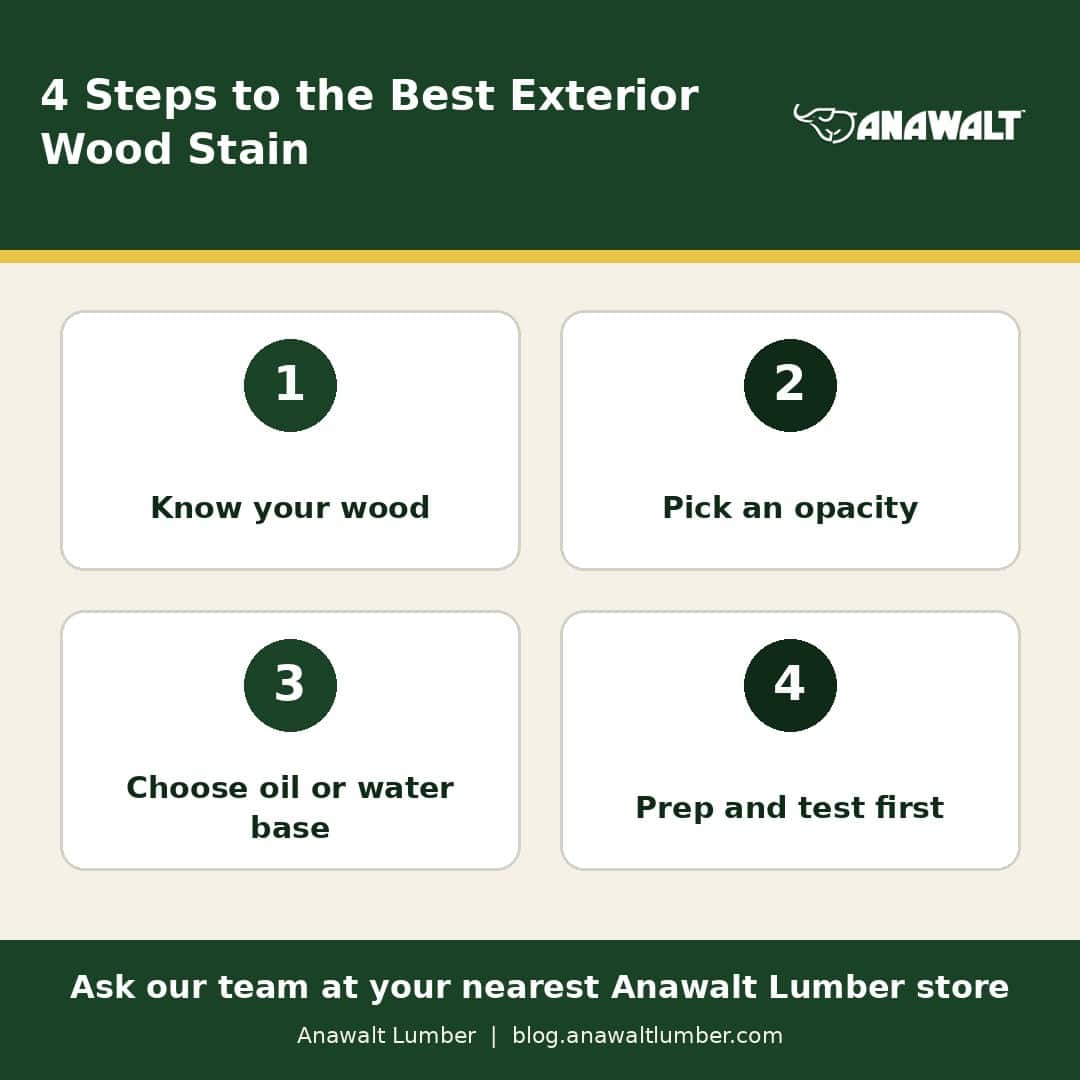
Should You Use an Oil-Based or Water-Based Stain?
Both can give good results on a deck or fence, but each one comes with trade-offs worth understanding before you buy.
Oil-based stains soak into the wood and can bring out a rich, warm tone, which is why they’re often chosen for dense or older wood. They usually take longer to dry, and cleanup takes mineral spirits or another solvent.
Water-based stains dry faster, clean up with soap and water and tend to have less odor, and many newer formulas hold up well outdoors. Because they can sit more on the surface, careful prep and the right application method matter even more.
One local note: Southern California has strict air quality rules on coatings, so the products sold here are formulated to meet them. A stain you see online may not be the same formula you can buy locally, so check the label.
How Does Your Wood Change the Choice?
Different woods absorb stain differently, so the species and condition of your boards should guide your choice.
- Cedar and redwood have natural color and grain that many people want to keep, which makes semi-transparent stains a common pick. Our post on cedar vs. redwood covers how those woods compare.
- Pressure-treated lumber often needs time to dry out after it’s installed before it will absorb stain well. Follow the stain maker’s guidance on wait times.
- Older, weathered wood may have gray fibers and uneven color. A semi-solid or solid stain can even out the look after cleaning.
- Dense hardwoods can resist stain, so look for products made for them.
How Do You Prep Wood for Stain?
Prep is where most stain jobs succeed or fail, because even the best exterior wood stain won’t hold up on dirty, damp or peeling boards.
- Repair first. Replace soft or cracked boards and drive down any raised fasteners before you clean, and if the fence itself is leaning, start with our fence repair basics. Our guide to choosing fasteners can help with replacements.
- Clean the wood. Use a deck or wood cleaner to remove dirt, mildew and gray surface fibers. Rinse well.
- Strip if needed. If an old finish is peeling, remove it before applying a new one.
- Let it dry. Most stains need dry wood and a few dry days in the forecast. Check the label for temperature limits too.
- Do the water test. Sprinkle water on the boards. If it soaks in, the wood is ready to accept stain. If it beads up, wait or clean further.
- Test a small area. Color looks different on every species, so try a hidden spot first.
For brush, roller and pad tips, see our post on wood staining techniques.
How Does Sun and Coastal Weather Affect Stain?
Sun is the biggest enemy of exterior finishes in our area, because UV light breaks down both the stain and the wood fibers underneath it. Decks and fences that face south or west, or sit in full sun all day, usually need recoating sooner.
Near the coast, fog and salt air keep wood damp for longer, so make sure boards are fully dry before staining, and look for products that resist mildew. If your deck shows cupping or warping, fix the moisture problem before you stain. Our post on why deck boards cup explains the usual causes.
What Affects What You’ll Spend?
We don’t list prices here, since they vary by product and container size, but these are the main factors that affect your total:
- The size of the deck or fence and how many coats it needs
- The stain type and base, since some formulas cost more than others
- Prep supplies like cleaner, stripper, brushes, pads and sandpaper
- Repairs and replacement boards found during prep
- How often you’ll need to recoat, which depends on sun and stain type
A little more effort on prep usually saves you from redoing the job early.
Need Help Picking a Stain?
Bring a photo of your deck or fence, or a small offcut of the wood, to your nearest Anawalt Lumber store. Our team can help you compare options and find the best exterior wood stain for your wood and your weather. You can also contact us with questions before you head in.
Frequently Asked Questions
Q: What is the best exterior wood stain for a deck?
A: Many homeowners pick a semi-transparent stain for decks because it shows the grain while still adding UV protection, although older or uneven wood may look better with a semi-solid stain.
Q: How long should I wait to stain new pressure-treated wood?
A: It depends on the lumber and the weather, so follow the stain manufacturer’s guidance and use the water test to check whether the wood is ready.
Q: Can I put a water-based stain over an oil-based stain?
A: It’s usually best to stick with the same type or fully remove the old finish first, and always check the new product’s label for what it can go over.
Q: Does solid stain peel like paint?
A: It can peel if the wood was dirty or damp when it was applied, or if too many coats build up over the years, so good prep and thin coats help a lot.
Q: How often should I restain a fence?
A: It depends on the stain type and sun exposure, so watch for fading color and water soaking into the boards, which are both signs it’s time.