
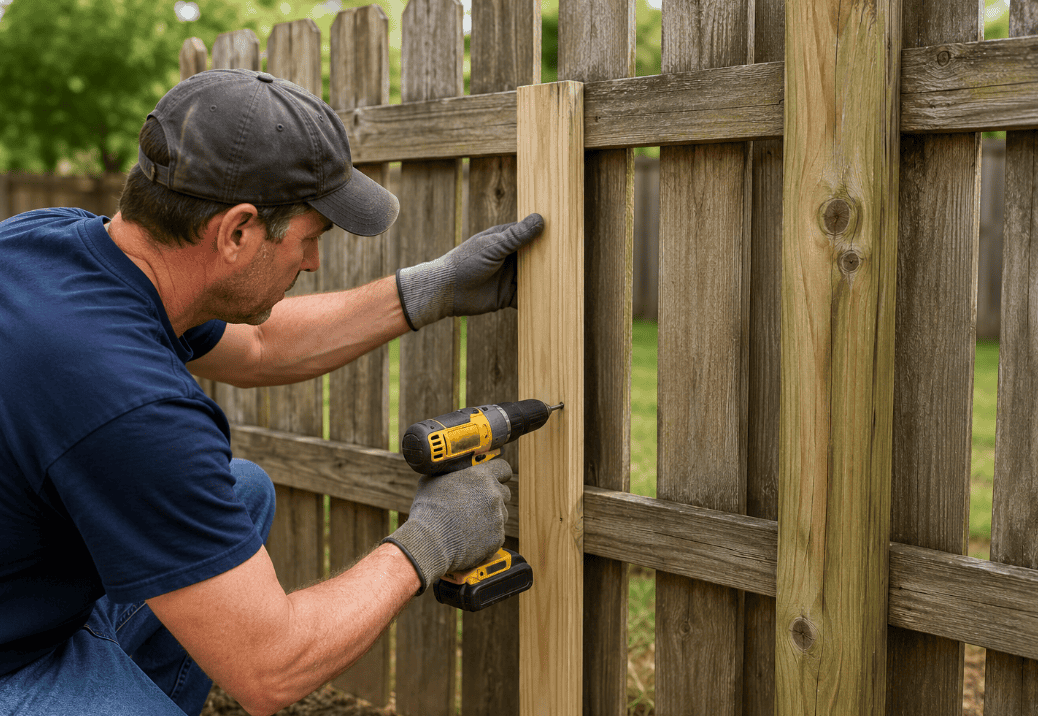
Fence Repair Basics starts with one simple truth. Most fences do not fail all at once. A board loosens. A gate starts dragging. One post leans a little after rain. Then the problem grows because no one deals with it early.
At Anawalt Lumber, we see this a lot. Homeowners often look at a fence and assume the whole thing needs replacement. Sometimes it does. A lot of the time, it does not. Fence Repair Basics often means finding the small failure first, then fixing it before the rest of the fence follows. That is good news for anyone trying to handle DIY fence repair without turning a Saturday into a full rebuild.
A fence has a hard job. It deals with sun, rain, wind, moisture in the soil, and daily wear from gates opening and closing. That is why common fence problems show up sooner than many homeowners expect. The upside is this. Many of those issues are manageable with basic tools, a little patience, and the right materials.
Contact Us

Key Takeaways
- Fence Repair Basics usually covers boards, panels, posts, gates, and hardware.
- DIY fence repair works best when the damage is small and the main structure still feels stable.
- Wood fence repair, vinyl fence repair, and chain link fence repair each need a different approach.
- Signs your fence needs repair often show up early, long before the full section fails.
- Fence repair for homeowners gets easier when you inspect the full fence first instead of rushing into one quick patch.
What Are The Most Common Fence Problems Homeowners Deal With?
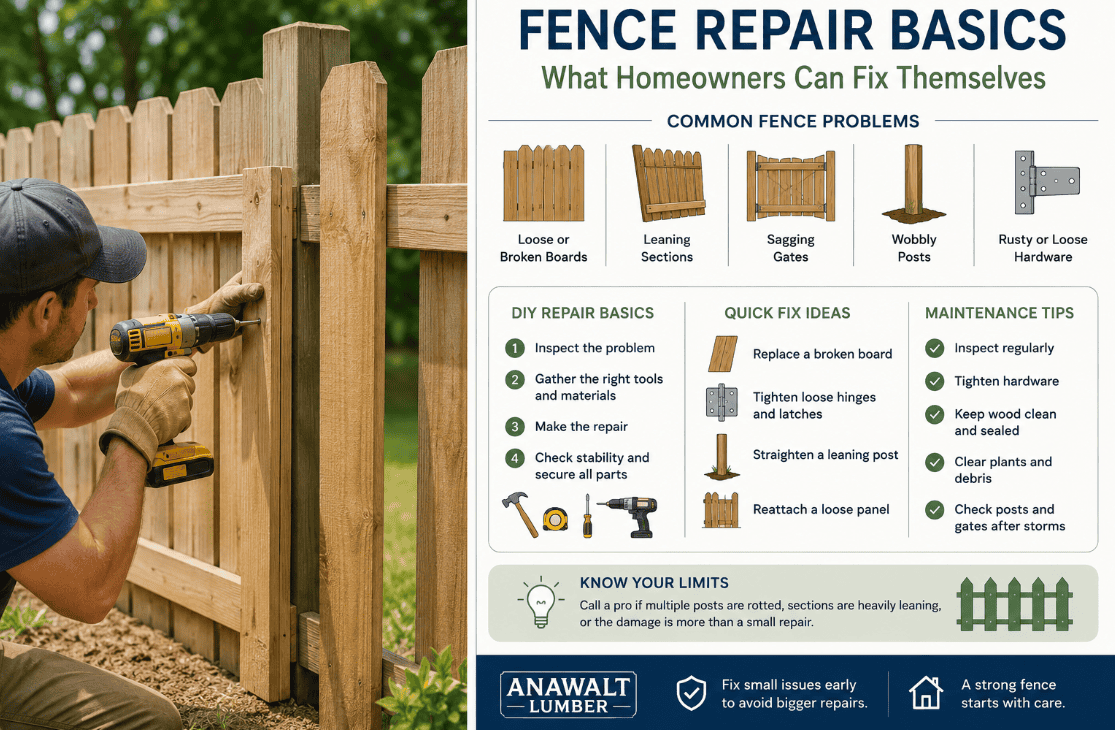
The most common fence problems are loose boards, leaning sections, sagging gates, broken panels, rusty hardware, and weak posts. Some issues are cosmetic. Some are structural. The trick is telling which one you are dealing with before buying parts.
A few signs your fence needs repair are easy to spot:
- Boards that move when touched
- Panels that lean or bow
- Posts that wobble
- Gates that drag or do not latch
- Cracks in vinyl sections
- Chain link that sags or pulls away
- Nails or screws backing out
- Wood that looks soft near the ground
Fence Repair Basics works better when you stop and inspect the whole fence line. One broken board may be only a broken board. It may also be a sign that the rail behind it is weak or that the post beside it is shifting. That is why backyard fence repair should always start with a full look, not a rushed patch.
What Fence Repair Tools Should You Have Before You Start?
You do not need a giant tool collection for simple fence fixes. You do need the basics.
A smart set of fence repair tools includes:
- Hammer
- Drill or impact driver
- Screwdriver
- Tape measure
- Level
- Shovel
- Pry bar
- Adjustable wrench
- Work gloves
- Safety glasses
- Saw for wood cuts if needed
For wood fence repair, extra screws, brackets, and matching boards help a lot. For vinyl fence repair, you may need replacement panels or connector pieces. For chain link fence repair, pliers, tension ties, and a wrench usually matter more.
I think this is where many small jobs go wrong. People start tearing something apart before checking whether they have the right tools or matching materials. Then the fence sits half-fixed for a week. That part gets annoying fast.
How Do You Know When To Repair A Fence And When To Leave It Alone?
When to repair a fence usually comes down to safety, stability, and spread. If the problem is small and local, repair makes sense. If the fence is failing in several places at once, the job may be bigger than a simple weekend fix.
Good repair candidates often include:
- One or two broken boards
- A loose fence panel repair
- Minor fence gate repair
- Light fence post repair
- Small damaged fence repair spots
Less ideal DIY jobs often include:
- Multiple rotted posts
- A whole fence line leaning badly
- Long sections with major ground movement
- Widespread rot across rails and boards
- Heavy sections under strain
Fence Repair Basics does not mean every repair belongs in homeowner hands. It means knowing which ones do.
How To Repair Broken Fence Boards Without Making The Section Weaker?
If you want to learn how to repair broken fence boards, the good news is this. It is one of the easier fence jobs when the rails and posts are still solid.
The basic process looks like this:
- Remove the broken board
- Inspect the rail behind it
- Measure a matching replacement board
- Cut the new board to fit if needed
- Fasten the new board with exterior screws or nails
- Check spacing with nearby boards
For wood fence repair, matching the width and thickness matters. If the new board is too thin or too wide, the section looks off and may wear differently over time. Fence Repair Basics also means checking why the board failed. If a board cracked because the rail behind it shifted, replacing the board alone will not solve much.
Contact Us
How Do You Fix A Leaning Fence?
How to fix a leaning fence is one of the most common questions in residential fence repair. Most of the time, the real problem is not the panel. It is the post.
A fence usually leans because:
- The post loosened in the soil
- The base rotted
- The footing cracked
- The ground moved after heavy rain
For minor fence post repair, you may be able to brace the section, dig around the post, straighten it, and reset it with fresh support. If the post is badly rotted at the base, replacement is usually the better route.
This is where Fence Repair Basics saves time. A lot of people try to pull the panel straight and call it done. If the post is weak, the fence will lean again. Sometimes faster than you expect.
What Makes Fence Gate Repair One Of The Most Common Homeowner Jobs?
Fence gate repair comes up all the time because gates move more than any other part of the fence. They swing open, slam shut, drag on the ground, and carry more daily stress than the rest of the structure.
Common fence gate repair issues include:
- Loose hinges
- Sagging gate frames
- Bent latches
- Misaligned strike points
- Split boards on the gate face
A lot of simple fence fixes on gates start with tightening hardware and checking the support post. If the post is leaning, the gate may never hang right until that is fixed. If the gate frame is weak, adding diagonal support often helps on wood gates.
I think gates are tricky in a frustrating way. They look simple, though one small shift at the hinge side throws the whole thing off.
How Is Vinyl Fence Repair Different From Wood Or Chain Link Fence Repair?
Vinyl fence repair is different because vinyl does not rot like wood and does not flex like chain link. It usually cracks, pops apart at joints, or breaks at connection points after impact or stress.
Common vinyl fence repair tasks include:
- Replacing a cracked panel
- Reconnecting a loose rail
- Swapping broken brackets
- Resetting a shifted post
Chain link fence repair has its own pattern too. There, you are often dealing with sagging mesh, bent top rails, loose ties, or tension problems.
That is why fence repair for homeowners should start with the fence type first. The same method does not work across every material. Wood fence repair leans more on carpentry. Vinyl fence repair needs the right matching components. Chain link fence repair usually depends more on tension and hardware.
What Fence Maintenance Tips Help You Avoid Bigger Repairs Later?
Fence maintenance tips are usually simple. That is the nice part. Small habits go a long way.
A smart routine includes:
- Walk the fence line every few months
- Tighten loose screws and hardware
- Replace cracked or split boards early
- Keep plants and vines from trapping moisture
- Check gates for drag and sag
- Look at posts after heavy rain
- Clean vinyl surfaces so cracks are easier to see
- Check chain link tension after storms
Fence Repair Basics also means paying attention before a repair feels urgent. A fence rarely fails with no warning at all. It usually gives you some signs. A wobble. A gap. A section that moves more than it should. Those early clues matter.
When Should You Stop A Diy Fence Repair And Get More Help?
You should stop when the repair stops feeling controlled. That is a pretty good rule. If the fence feels unstable, the post is buried in a heavy failed footing, or the damage spreads farther than expected, it is smart to step back.
You should think twice when:
- More than one post has failed
- Several panels lean at once
- The fence line shifted after storm damage
- Rot affects large sections of rails and posts
- The repair needs major digging or full section rebuilding
Fence Repair Basics is about knowing where homeowner work ends. Some repairs are straightforward. Some become larger structural jobs halfway through. There is no shame in spotting that early.
FAQs
What does Fence Repair Basics usually include?
Fence Repair Basics usually includes fixing broken boards, loose panels, leaning posts, sagging gates, and worn hardware.
What are the most common fence problems?
The most common fence problems are loose boards, leaning sections, weak posts, sagging gates, cracked vinyl, and sagging chain link.
How do I know if DIY fence repair is a good idea?
DIY fence repair is usually a good idea when the damage is small, the structure is mostly stable, and the repair does not involve major rebuilding.
How to repair broken fence boards the right way?
Remove the damaged board, check the rail behind it, measure a matching board, install the replacement, and fasten it with exterior hardware.
How to fix a leaning fence without replacing the whole section?
Check the post first. If the post is only loose, you may be able to reset and brace it. If it is rotted or broken, replacement is often the better fix.
Is fence gate repair usually simple?
Fence gate repair is often manageable for homeowners when the issue is loose hardware, sagging hinges, or minor alignment trouble. It gets harder when the support post has failed.
What fence maintenance tips help prevent more damage?
Inspect the fence often, tighten hardware, replace damaged boards early, keep moisture-trapping plants away, and check posts and gates after storms.
When should a homeowner stop and rethink the repair?
Stop when the fence feels unstable, several posts are failing, or the damage spreads farther than one small section. That usually means the job is larger than a simple patch.
Contact Us