
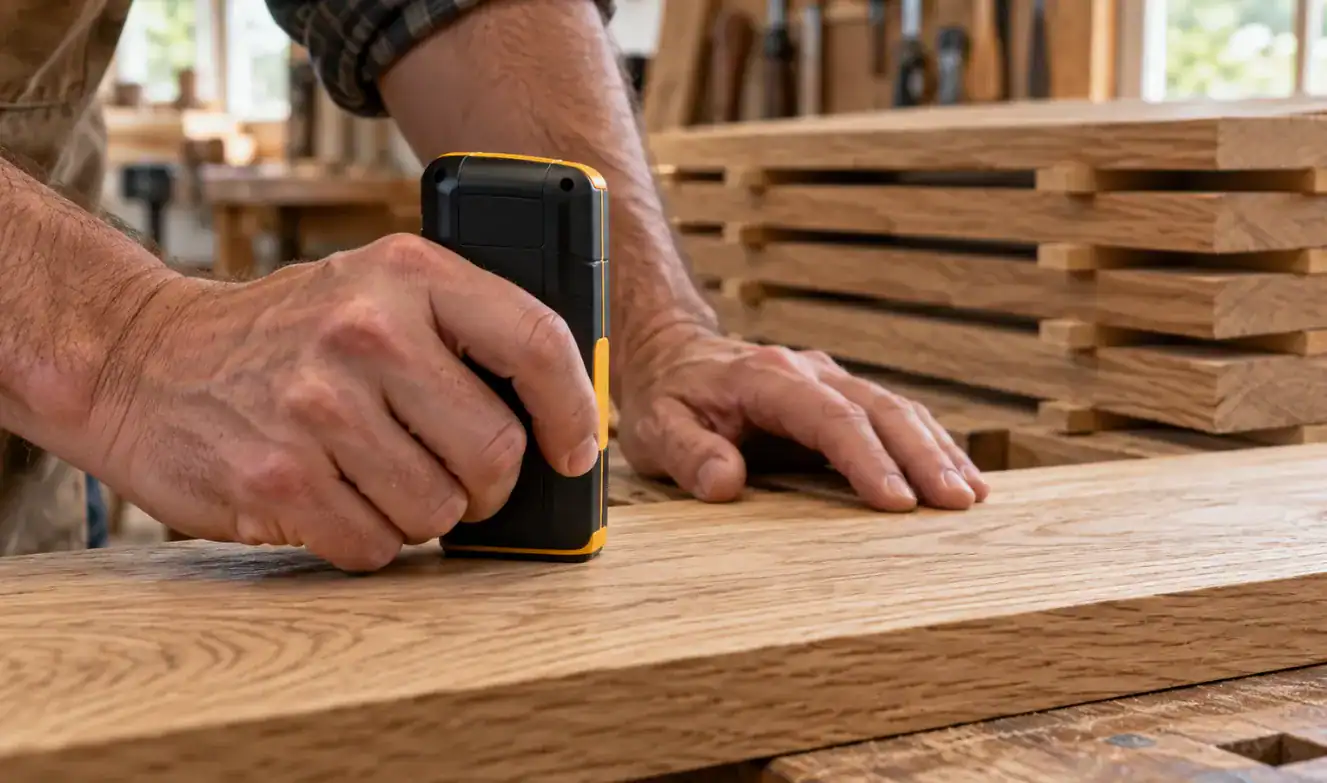
A board can look straight, dry, and ready to use. Then a few months pass, and a drawer sticks or a tabletop develops a crack. What changed? Often, moisture did.
Understanding wood movement across the grain helps you plan for these changes before cutting your first board. Wood can take in moisture from the air and release it later. As it does, its size changes.
At Anawalt Lumber, our advice starts with the project itself. Where will it live? How wide will it be? Those questions matter just as much as choosing a nice grain pattern.
Key Takeaways
- Wood changes size as its moisture level changes.
- Most movement happens across the grain.
- Wider solid wood panels need more room to move.
- Kiln drying does not stop future movement.
- Check moisture before cutting and joining boards.
- Use joints and fasteners that allow seasonal changes.
- Finish slows moisture exchange but does not stop it.
Why Does Wood Expand and Shrink With the Seasons?
Wood responds to the air around it. When the air stays more humid, dry wood usually gains moisture and swells. When conditions become drier, it loses moisture and shrinks.
This is seasonal wood expansion and contraction. It happens gradually, so you might notice a tight cabinet door before you notice any change in the room.
Heating, cooling, and damp storage can affect the pattern too. A garage and a living room may treat the same board differently.
Planning for wood movement across the grain means thinking about the place where your finished project will stay.
What Is Wood Movement Along vs Across the Grain?
The grain generally follows the tree’s length. In a typical board, that direction runs from one end to the other.
Wood usually changes very little along that length. Across its width and thickness, the change is much greater.
Picture a tabletop made from several long boards glued side by side. Its width can change enough to affect how it attaches to the base.
That is why wood movement across the grain deserves attention when building tables, wide shelves, and solid wood doors. A tight fit today may become a problem later.
How Much Does Wood Expand Across the Grain?
There is no single gap that works for every board. The amount depends on the species, grain orientation, board width, and expected moisture change.
A wide panel generally changes more in total width than a narrow board under similar conditions.
Before choosing expansion gaps for solid wood, gather:
- The wood species
- The panel’s full width
- The way the lumber was sawn
- Its current moisture reading
- The likely conditions in the finished space
A reliable wood movement calculator or published movement table can help. Check what information it requires. Guessing from the board’s appearance is not enough. That extra planning time is useful.
For wood movement across the grain, calculate the allowance before making joints that could trap the panel.
Does Quartersawn Lumber Move Less Than Flatsawn Lumber?
Usually, quartersawn lumber changes less across its width than flatsawn lumber of the same species. The difference comes from how the growth rings sit within the board.
Still, quartersawn wood moves. It may also cost more, so the choice depends on your project and budget.
When choosing lumber for dimensional stability, look beyond a label. Species, moisture, grain direction, and the board’s condition all matter.
Perhaps a wide tabletop calls for a different board choice than a narrow picture frame. You do not need the same solution for every project.
How Do You Acclimate Lumber Before Building?
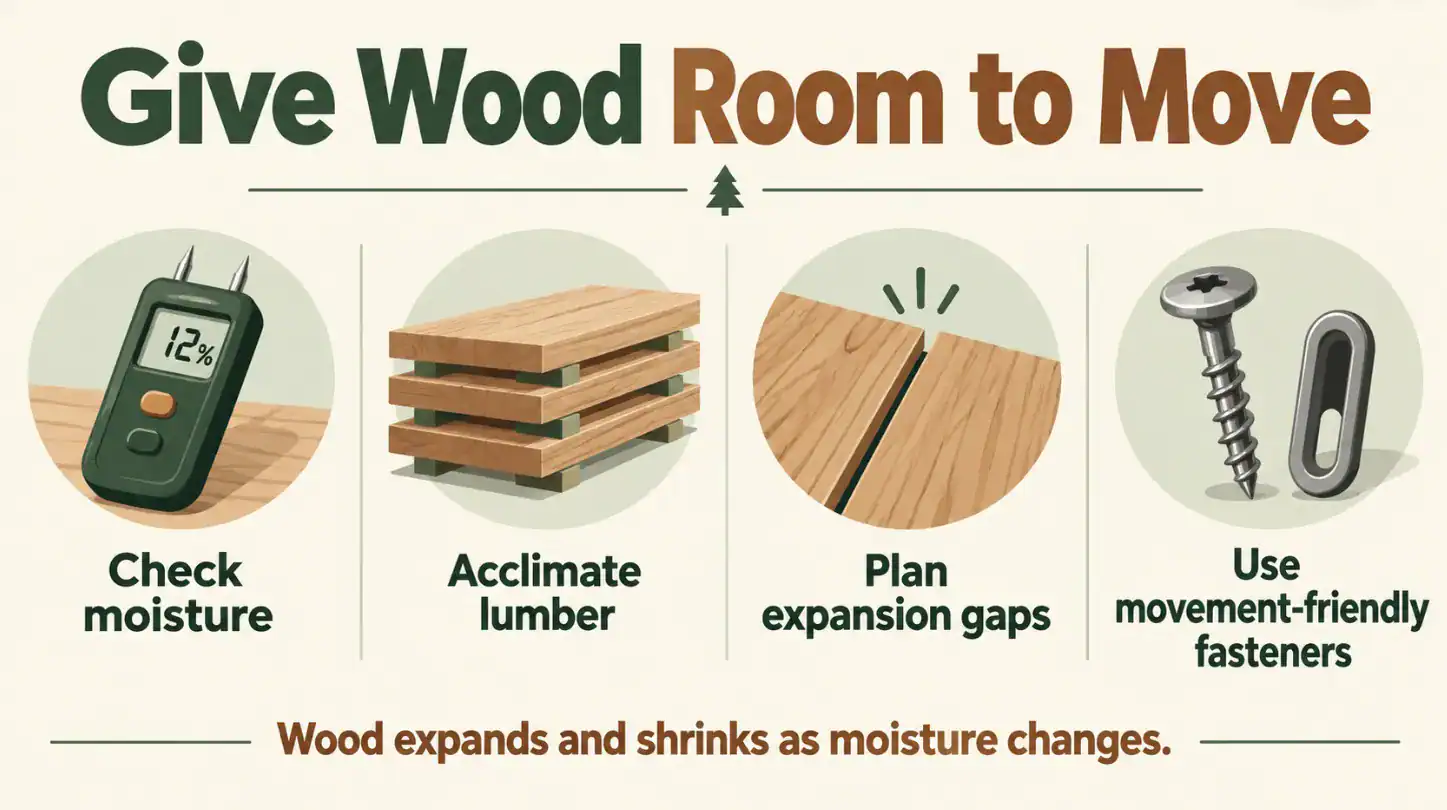
Bring the lumber into conditions close to where the finished piece will be used. Support boards evenly and use dry spacers between layers so air can reach them.
Keep them away from wet floors, rain, and direct heat.
There is no dependable rule that every board needs exactly three days or one week. Thickness, starting moisture, airflow, and room conditions affect the wait.
A moisture meter helps you track changes. Follow its instructions, including any species settings, and check several places on several boards.
Managing wood movement across the grain begins before assembly. Stable readings near the expected service conditions are more useful than simply marking days on a calendar.
Does Kiln Dried Lumber Still Need Moisture Checks?
Yes. Kiln drying removes moisture under controlled conditions, but it does not lock the wood at one moisture level forever.
Storage and shipping can change that level afterward.
Also, lumber dried for framing may not be ready for indoor furniture work. Ask what the material is intended for instead of assuming all dry lumber is alike.
For wood moisture content for woodworking, choose a target suited to the finished location. A covered outdoor bench and an indoor dining table have different needs.
Which Fasteners Allow a Solid Wood Tabletop to Move?
A tabletop needs a secure connection that also lets it change width. Gluing it rigidly across supporting rails can hold back that movement and cause damage.
Depending on the design, options may include:
- Tabletop clips fitted into suitable grooves
- Figure eight fasteners with room to pivot
- Screws through correctly placed slotted holes
Follow the hardware instructions. A fastener that cannot slide or pivot as intended will not solve the problem.
Slotted screw holes for wood movement must allow travel in the direction the top changes size. Slot length and placement depend on the design.
The aim is to accommodate wood movement across the grain while keeping the top firmly attached. Loose, wobbling furniture is not the goal.
Can Finish or Extra Screws Prevent Wood Movement?
No. A finish can slow moisture exchange, but it cannot freeze a board’s size. Extra screws can increase stress if they pin a wide panel where it needs to move.
Use the right finish for the project and follow its application instructions. Then keep the movement allowance in the design.
It is tempting to think more glue means more strength. Sometimes it does. Across parts that move differently, though, it can create a weak point elsewhere.
FAQs
Can I glue boards together to make a wider panel?
Yes. Proper edge joints with the grain running in the same direction are common. The joined panel still changes width, so its attachments must allow that movement.
Does plywood move like solid wood?
Plywood’s layers run in different grain directions, which reduces movement across its face. It still needs suitable storage and installation. Follow the panel manufacturer’s guidance.
Should I leave gaps between every tabletop board?
Not for a typical glued solid wood tabletop. Allow movement where the completed top connects to its base. Outdoor slatted tables use different details.
Will a small crack always mean seasonal movement?
No. Drying damage, impact, poor joints, and other problems can cause cracks. Look at the whole piece before deciding how to repair it.
Plan Your Lumber Purchase With Anawalt Lumber
Bring your dimensions, project sketch, and installation plans when you visit Anawalt Lumber. Tell us whether the piece will stay indoors or outside.
Planning for wood movement across the grain helps you choose materials and hardware with the finished project in mind. A little thought now can save a frustrating repair later.