
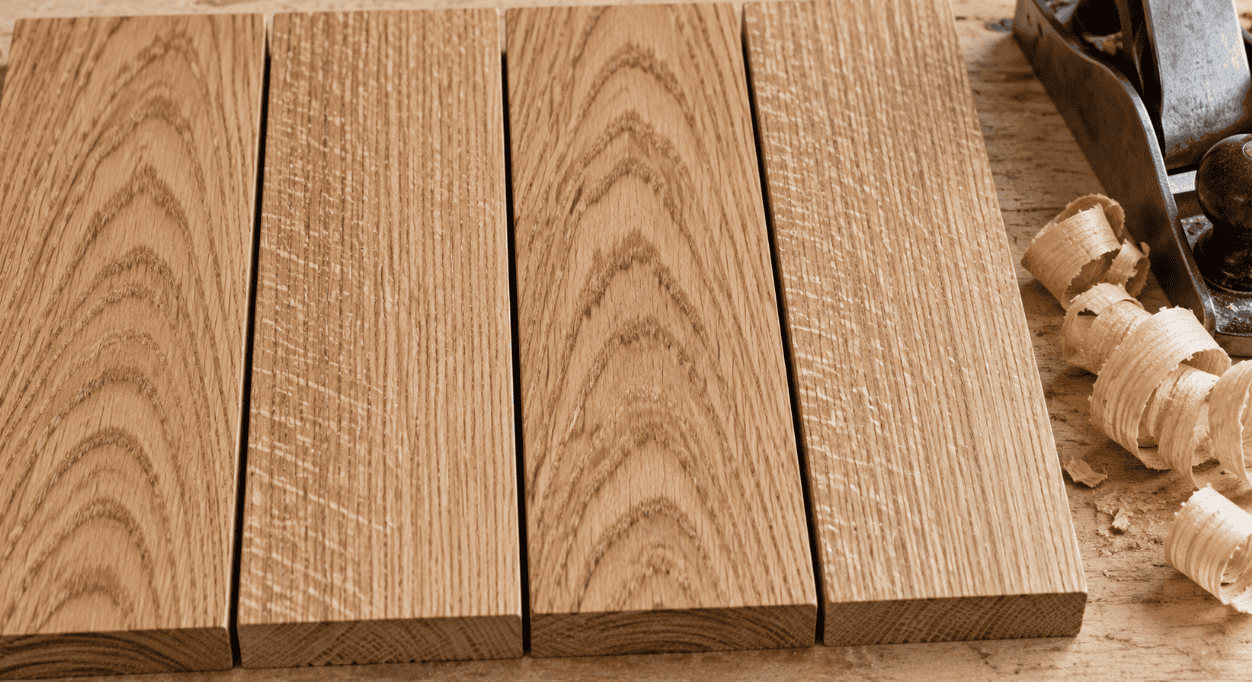
Choosing wood gets easier when you understand flat sawn vs quarter sawn lumber. Both cuts can make good furniture, floors, and cabinets. The difference is how the saw meets the tree’s growth rings, which affects the grain you see and how the board moves as moisture changes.
Flat-sawn boards usually cost less and show broad, curved patterns. Quarter-sawn boards often have straighter grain and change less across their width. Neither is best for every job.
This Anawalt Lumber guide explains what to look for before buying boards for your next project.
Key Takeaways
- The main differences in flat sawn vs quarter sawn lumber are grain, width movement, and cost.
- Flat-sawn wood offers bold patterns and often wider boards.
- Quarter-sawn wood generally has better width stability.
- Both cuts need proper drying and room for movement.
- Choose the cut to fit the project, not just the price tag.
How Are Flat Sawn Lumber and Quarter Sawn Lumber Cut?
Picture the rings on the end of a log. Their angle to a board’s broad face tells you a lot about that board.
With flat sawn lumber, also called plain-sawn lumber, the growth rings meet the face at a shallow angle. Sawing this way makes good use of the log and can produce wide boards.
For quarter sawn lumber, the log is commonly divided into quarters before further cutting. The resulting boards have growth rings closer to a right angle to the face.
That lumber grain orientation is the starting point for understanding flat sawn vs quarter sawn lumber. The cut changes the board’s behavior, even when the species stays the same.
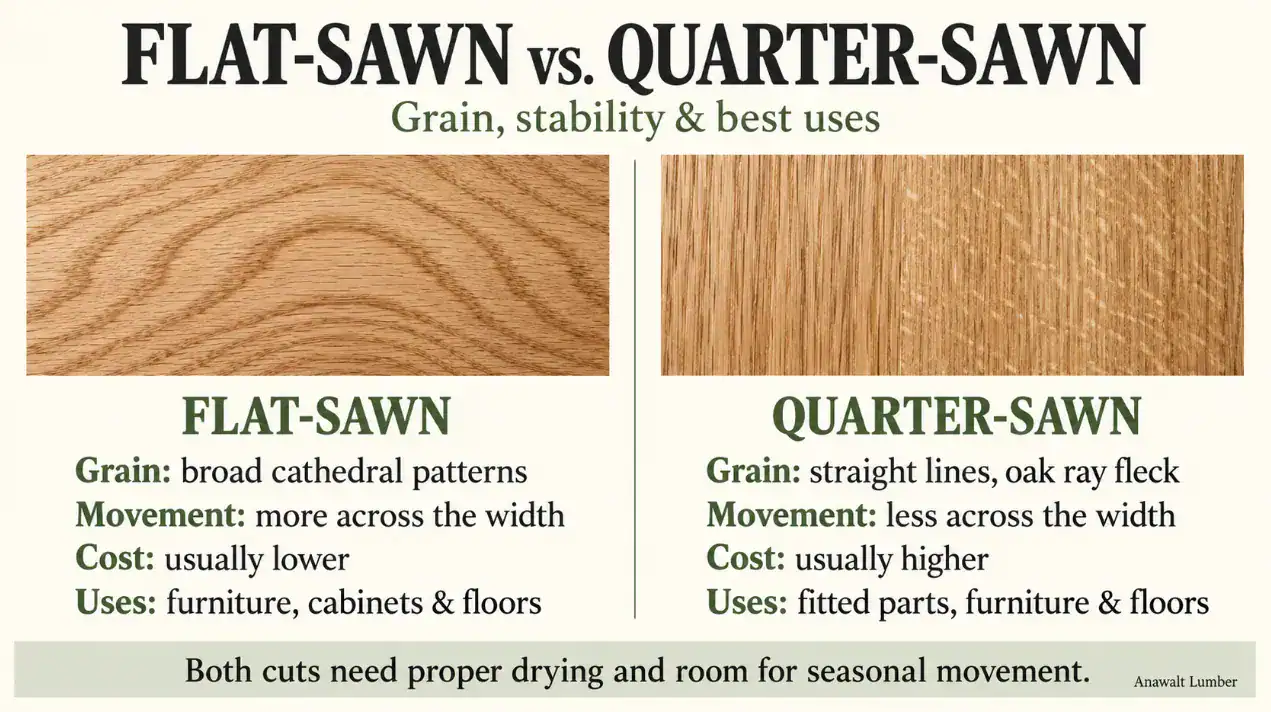
How Do Wood Grain Patterns Differ?
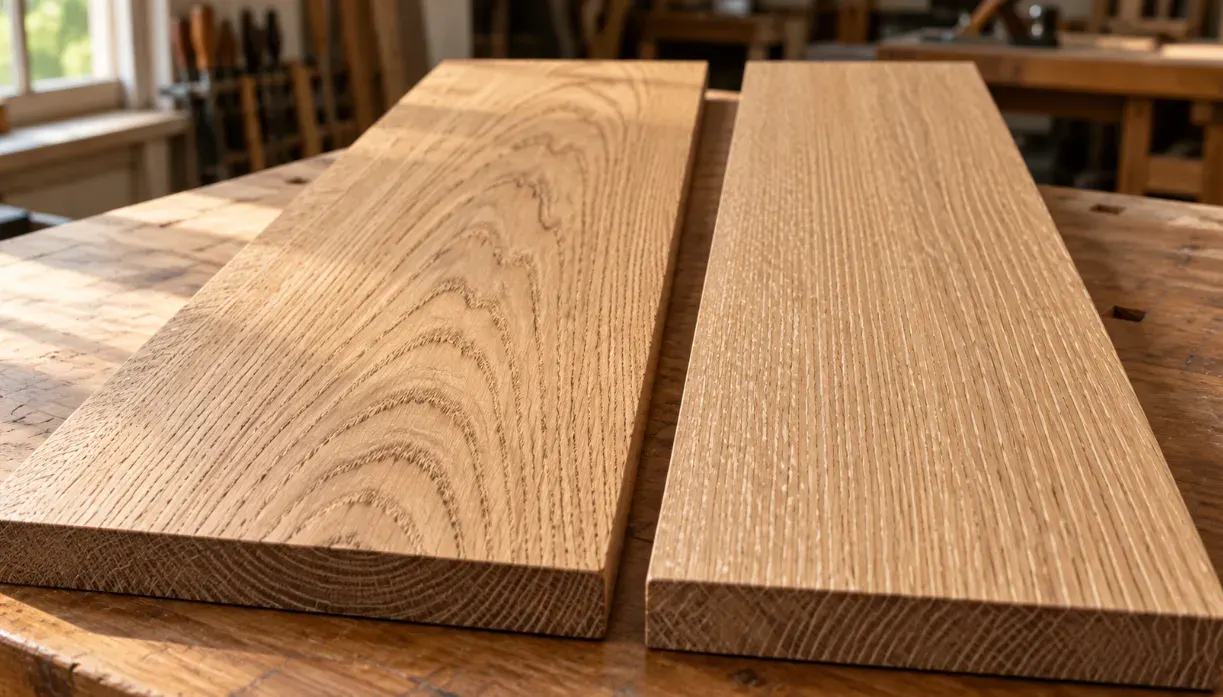
Flat sawn wood often shows arches called cathedral grain. These sweeping lines can give a tabletop a lively look. Quarter sawn wood usually shows straighter lines, which may suit a more even pattern across cabinet doors.
Oak makes the contrast easy to spot. Flat sawn oak often has broad arches, while quarter sawn oak can show bright streaks called ray flecks. These come from natural structures inside the tree exposed by the cut.
When judging flat sawn vs quarter sawn lumber by appearance, look at actual boards. Photos help, but grain can vary within the same stack.
What Does Dimensional Stability of Wood Mean?
Dimensional stability of wood means how well it holds its size as moisture changes. Wood takes in moisture from damp air and loses it in dry air. It can swell or shrink as a result.
Wood movement in lumber happens mostly across the grain. Movement around the growth rings is usually greater than movement across them. This is why quarter-sawn boards generally change less in width than flat-sawn boards of the same species.
The practical benefit in flat sawn vs quarter sawn lumber is less width change, not zero movement. Quarter-sawn boards still move, including through their thickness. Their cut also generally reduces the tendency to cup, where the board curves across its width.
Quarter sawn wood stability helps, but moisture conditions, species, and board width still matter.
Why Does Quarter-Sawn Wood Usually Cost More?
Flat sawn lumber advantages start with efficient cutting. Mills can get wide boards with less waste, which helps keep costs down.
Quarter sawing takes more handling and usually produces fewer wide boards. The extra work and lower yield often mean a higher price
When pricing flat sawn vs quarter sawn lumber, compare the same species, grade, thickness, and usable size. A cheaper board with defects you must cut around may offer less value than it first appears.
Ask about available widths, too. Narrow boards may work perfectly for a small door, but they change the plan for a broad tabletop.
Is Quarter-Sawn Lumber Stronger?
Stability and strength are different. A board that changes less in width is not automatically better at carrying a load.
Strength depends on the species, grade, knots, grain direction, size, and how the load acts on the wood. For shelves, thickness and the distance between supports matter, too.
So flat sawn vs quarter sawn lumber should not be your only strength check. For structural work, use the specified lumber grade and design requirements. A neat grain pattern cannot replace those checks.
What Is the Best Lumber Cut for Furniture and Cabinetry?
The best lumber cut for furniture depends on the part you’re making. A broad tabletop, narrow rail, and drawer front have different needs.
Quarter sawn lumber benefits can be useful for exposed solid-wood parts where width changes affect the fit. Flat-sawn boards remain a good choice when you want curved grain, wider stock, or a lower material cost.
For cabinetry, think about the whole front. Strong arches may look attractive on one door but feel busy across several doors. Straight grain can create a quieter look.
Choosing flat sawn vs quarter sawn lumber does not remove the need for sound joinery. Solid panels need space to move inside their frames, and tabletops need attachments that allow seasonal movement.
What Is the Best Wood Cut for Flooring?
The best wood cut for flooring depends on your budget, preferred grain, and room conditions. Quarter-sawn solid flooring generally changes less across its width. Flat-sawn flooring offers a more varied grain appearance.
For flat sawn vs quarter sawn lumber in flooring, board width matters as well. Wider planks can show greater total width changes than narrow strips under similar conditions.
Follow the flooring maker’s moisture, acclimation, and installation directions. Even a stable cut can develop problems if installed over a damp subfloor or in unsuitable conditions.
How Do You Choose Before Buying?
Bring your measurements and project details when discussing lumber with Anawalt Lumber. Ask about species, grade, moisture condition, and available cuts rather than assuming every option is in stock.
Check the boards for bowing, twisting, cracks, and knots that could affect your layout. Allow for trimming and milling. Sometimes the sensible choice is using quarter-sawn wood for visible parts and less costly stock elsewhere.
If you plan to stain the wood, try the finish on an offcut first. Put it beside the other project materials and check it in the room’s light. A grain pattern you liked unfinished may look quite different with color.
Frequently Asked Questions
Is plain sawn vs quarter sawn the same comparison?
Yes. Plain-sawn and flat-sawn generally mean the same cut. A comparison of quarter sawn vs plain sawn wood covers the same basic differences in grain and movement.
What about rift sawn vs quarter sawn?
Rift-sawn boards have growth rings at an intermediate angle and usually show straight grain with less ray fleck. These types of lumber cuts can suit different looks, especially in oak.
Can flat-sawn boards make lasting furniture?
Yes. In flat sawn vs quarter sawn lumber, either option can work well when the wood is properly dried, the joints suit the job, and the design allows movement.
Does finishing stop wood movement?
No. A finish can slow moisture exchange, but it does not stop it. Leave the movement allowance your project needs, even when every surface has been finished.