
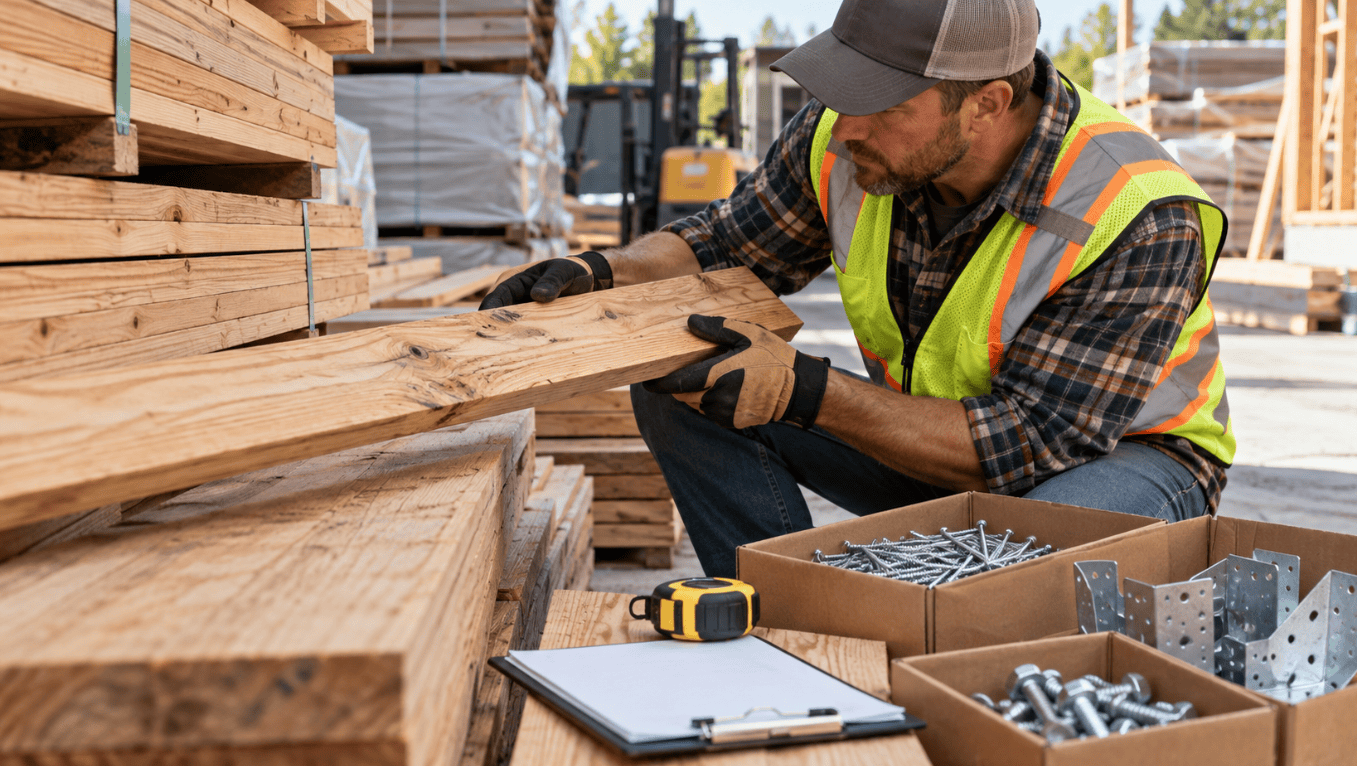
A lumber delivery arrives at a busy construction site. The crew is ready to work, and everyone wants to unload the truck quickly. But what happens if some boards are damaged, the hardware is missing, or the wrong materials were delivered?
This is why construction material delivery inspection matters. A few minutes spent checking materials can help contractors avoid wasted money, installation problems, and unexpected project delays.
At Anawalt Lumber, contractors can find building materials and hardware for different construction needs. Still, checking every shipment before accepting it is an important part of managing a project.
Knowing what to look for makes the process easier. From checking lumber sizes to inspecting screws and fasteners, contractors should make sure everything matches the order and is ready for use.
Why Construction Material Delivery Inspection Matters
Construction projects depend on having the right materials at the right time. Even a small delivery mistake can affect the work schedule.
Imagine ordering framing lumber for a renovation. Everything looks fine from the outside, but several boards are badly twisted. The problem might not become obvious until workers start installing them.
Now the contractor may need replacement materials, which can slow down the entire project.
A proper construction material delivery inspection helps identify these problems before materials are moved into storage or used on the job.
It also helps contractors:
- Confirm the correct materials arrived.
- Identify damaged or defective lumber.
- Check hardware quantities and specifications.
- Document missing materials.
- Reduce unnecessary construction delays.
- Keep accurate delivery records.
These checks may seem simple, but they can prevent bigger problems later.
Start With the Delivery Documents
Before unloading everything, contractors should review the delivery paperwork.
This usually includes the purchase order, packing list, and delivery receipt.
The purchase order shows what was originally requested. The packing list explains what the supplier says was shipped.
Both documents should match the actual materials.
For example, if the order includes 40 pieces of 2×6 lumber, the delivery should contain the correct quantity, length, and specified grade.
Check the product descriptions carefully. Similar materials can have different uses, especially when dealing with structural lumber and specialty hardware.
Contractors should also verify the delivery address and order number. Materials sometimes arrive at the wrong jobsite, particularly when several projects are happening nearby.
If something does not match, document it before signing the delivery receipt.
Check Lumber Quantity, Size, and Grade
One of the most important steps in a construction material delivery inspection is verifying the lumber itself.
Start by counting the boards or checking bundle quantities against the delivery paperwork.
Next, review the lumber dimensions.
A board labeled 2×4 does not measure exactly two inches by four inches after drying and surfacing. Its common actual dimensions are approximately 1.5 inches by 3.5 inches.
Contractors should understand these differences and confirm that the delivered lumber matches the required specifications.
Lumber grade matters too.
Some projects require specific structural grades because the wood must support certain loads. Using a lower grade without approval could create construction or inspection problems.
Look for visible grade stamps when applicable. These markings can provide information about the lumber grade, species group, and grading agency.
Not every lumber product uses the same markings, so check the relevant product specifications.
Inspect Lumber for Warping and Physical Damage
Even properly labeled lumber can arrive with defects.
During a lumber quality inspection, contractors should look at several boards throughout the shipment, not just the pieces sitting on top.
Common problems include:
Bowing and Crooking
Bowing happens when a board curves along its wide face. Crooking occurs when it bends sideways along its edge.
Small variations may be acceptable depending on the application, but severe bending can make installation difficult.
Twisting and Cupping
Twisting occurs when the ends of a board turn in different directions. Cupping happens when the board curves across its width.
Both issues may cause problems with framing alignment, flooring, or finished wood surfaces.
Cracks and Splits
Look for cracks, splits, and damaged ends.
Some natural checking can be acceptable in certain lumber products. However, large splits or defects affecting required strength should be evaluated before use.
If a board looks questionable, set it aside instead of assuming it will work.
Check Lumber Moisture Content and Treatment
Moisture is another important part of construction material delivery inspection.
Wood naturally absorbs and releases moisture. When moisture conditions change, lumber may shrink, swell, or move.
This can affect how the material performs after installation.
For projects requiring a specific moisture level, contractors can use a suitable moisture meter to check representative boards.
The acceptable moisture content depends on the lumber type, intended use, and project specifications.
For example, wood intended for interior finish work may require different moisture conditions than lumber used in certain outdoor structures.
Contractors should also check whether pressure-treated lumber was delivered when required.
Look at the treatment identification marks or end tags. They can help confirm whether the material is appropriate for its intended exposure.
Not all treated lumber is suitable for ground contact or every outdoor application.
Inspect Hardware Before Accepting the Shipment
Lumber often receives most of the attention, but hardware deserves the same care.
A complete construction material delivery inspection should include screws, nails, bolts, connectors, brackets, and other fastening products.
Check the packaging first.
Are the boxes damaged? Are bags torn open? Is anything missing?
Next, verify the hardware specifications.
A contractor might order structural screws designed for a particular connection. Receiving ordinary wood screws instead could create a serious problem.
Important details to check include:
- Fastener diameter and length.
- Bolt sizes and thread types.
- Connector model numbers.
- Corrosion-resistant coatings.
- Package quantities.
- Manufacturer identification.
- Compatibility with specified materials.
For structural connectors, contractors should make sure the products match approved plans and manufacturer requirements.
This is especially important when using engineered connection systems where specific fasteners are required.
Look for Rust, Corrosion, and Packaging Damage
Hardware can be damaged during transportation or storage.
For example, moisture entering an open box may cause unprotected steel hardware to rust.
Not all surface discoloration makes a product unusable, but visible corrosion deserves closer inspection.
Check whether protective coatings are damaged or whether connectors have become bent.
Contractors working on coastal or outdoor projects should pay particular attention to corrosion resistance.
Stainless steel, galvanized steel, and other coated products do not all offer the same protection.
Their suitability depends on exposure conditions, the materials being connected, and manufacturer guidance.
Using the wrong fastener may shorten the life of a connection, even when the rest of the structure is properly built.
Compare the Delivery With Project Plans
Sometimes the correct order arrives, but the order itself does not match the latest project requirements.
This can happen when plans change after materials have already been purchased.
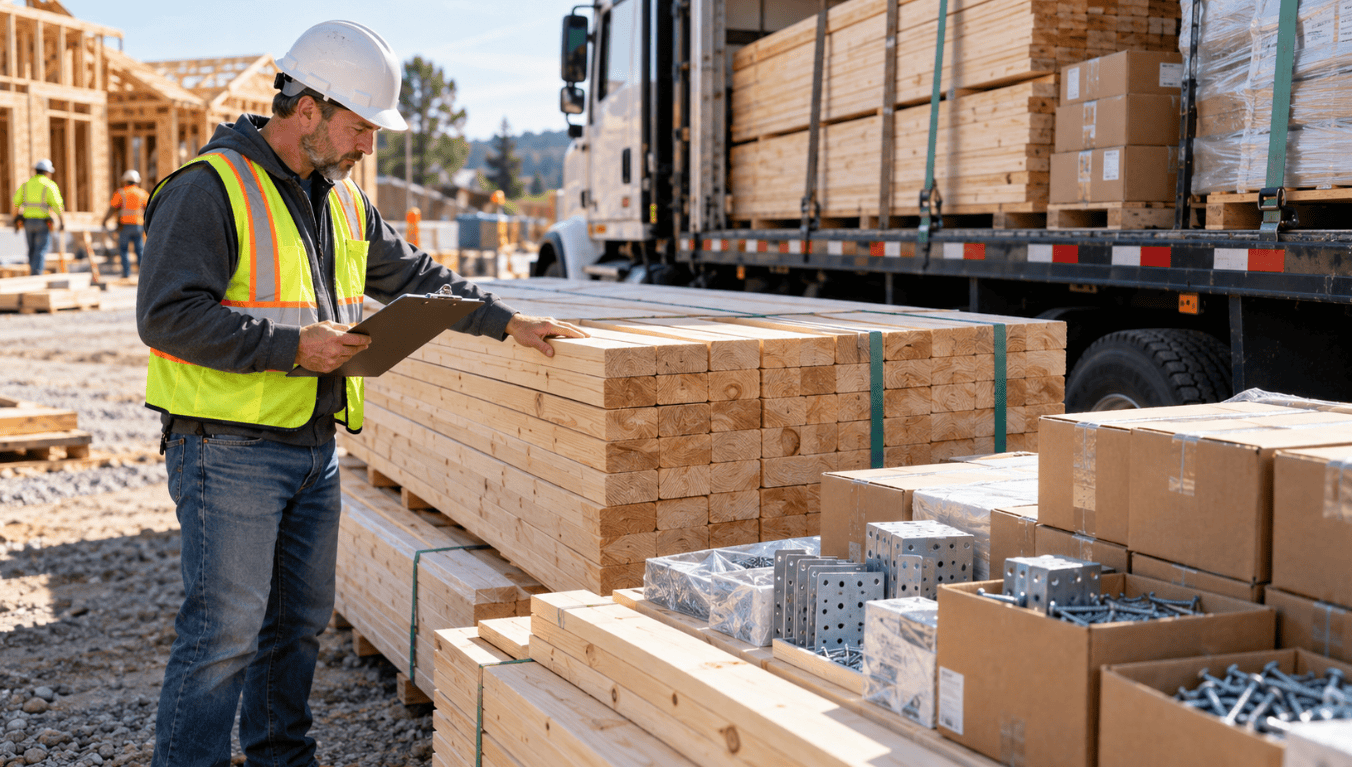
Before accepting a large shipment, contractors should compare important items with current drawings, material schedules, and approved product lists.
For example, a revised framing plan may require longer boards or different connectors.
Finding this problem during receiving allows the team to address it before installation begins.
For expensive or specialty materials, this extra check is especially useful.
It is much easier to resolve an incorrect item while it is still identified and separated from the rest of the shipment.
What Should Contractors Do When Materials Arrive Damaged?
Finding damage does not automatically mean the entire shipment must be refused.
The next step in a construction material delivery inspection is deciding how to document and resolve the problem.
Start by taking clear photographs.
Capture the damaged product, its packaging, visible labels, and any affected bundles.
Then record the quantity and description of the damaged materials.
If the delivery driver is still present, point out visible problems and note them on the receiving documents according to the supplier’s procedures.
Avoid signing a receipt that states everything arrived in good condition if there are known problems.
Contact the supplier to discuss the available options.
Depending on the issue and the supplier’s policies, these may include replacement products, a corrected shipment, or another agreed solution.
Keep damaged materials separate until the problem is resolved.
Store Lumber and Hardware Properly After Delivery
Inspection does not end when the truck leaves.
Materials can become damaged after arriving at the jobsite, especially when storage conditions are poor.
Lumber should generally be stored on suitable supports, away from standing water and direct ground contact.
Use appropriate coverings to protect it from rain while allowing ventilation.
For products that require dry storage, follow the manufacturer’s instructions.
Hardware should remain organized in labeled containers or protected packaging.
Small items such as bolts, washers, and specialty fasteners can easily become mixed together or lost on a busy construction site.
Good storage practices help preserve material quality and make future inventory checks easier.
Why Working With a Reliable Lumber Supplier Helps
A good construction project begins with clear material requirements and communication.
Anawalt Lumber is a family-owned lumber and hardware business serving communities in the Los Angeles area. Its building material and hardware offerings give contractors a place to source products for different types of projects.
Before placing an order, contractors can review material dimensions, grades, hardware requirements, and delivery details with the supplier.
This is particularly helpful when ordering specialty lumber or hardware that must match specific construction plans.
Clear communication also makes it easier to identify differences between what was requested and what actually arrived.
Even when working with an established supplier, contractors should never skip their own receiving checks.
Final Construction Material Delivery Inspection Checklist
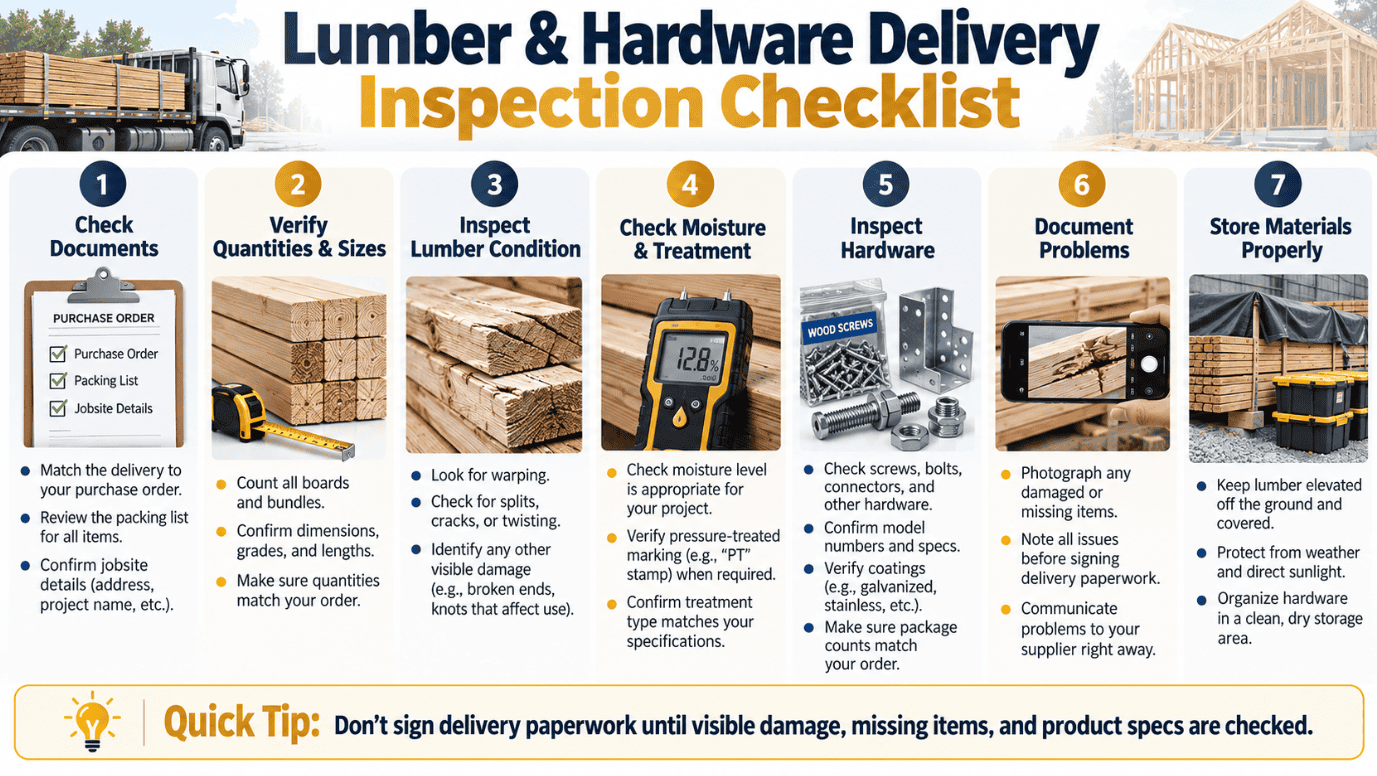
Before accepting a shipment, contractors can use this quick checklist:
- Review the purchase order and packing list.
- Confirm the delivery belongs to the correct jobsite.
- Count lumber pieces and hardware packages.
- Verify lumber sizes, lengths, and grades.
- Look for warped, cracked, or damaged boards.
- Check moisture conditions when required.
- Verify pressure-treatment specifications.
- Inspect fastener sizes and connector model numbers.
- Look for damaged packaging or corrosion.
- Compare important materials with current project plans.
- Photograph missing, incorrect, or damaged products.
- Record delivery issues before signing paperwork.
- Contact the supplier about any discrepancies.
- Store accepted materials safely.
Final Thoughts
Receiving lumber and hardware should involve more than unloading a truck and signing a receipt.
Taking time to check quantities, specifications, material condition, and paperwork can help contractors avoid mistakes that become expensive later.
Whether handling a small renovation or a large construction project, construction material delivery inspection is a useful part of maintaining quality and keeping work organized.
With careful planning, good communication, and access to building materials from suppliers such as Anawalt Lumber, contractors can approach each delivery with greater confidence.
A few careful checks today can save a lot of trouble once construction begins.