
You step outside. The deck looked fine a few weeks ago. Now something feels off.
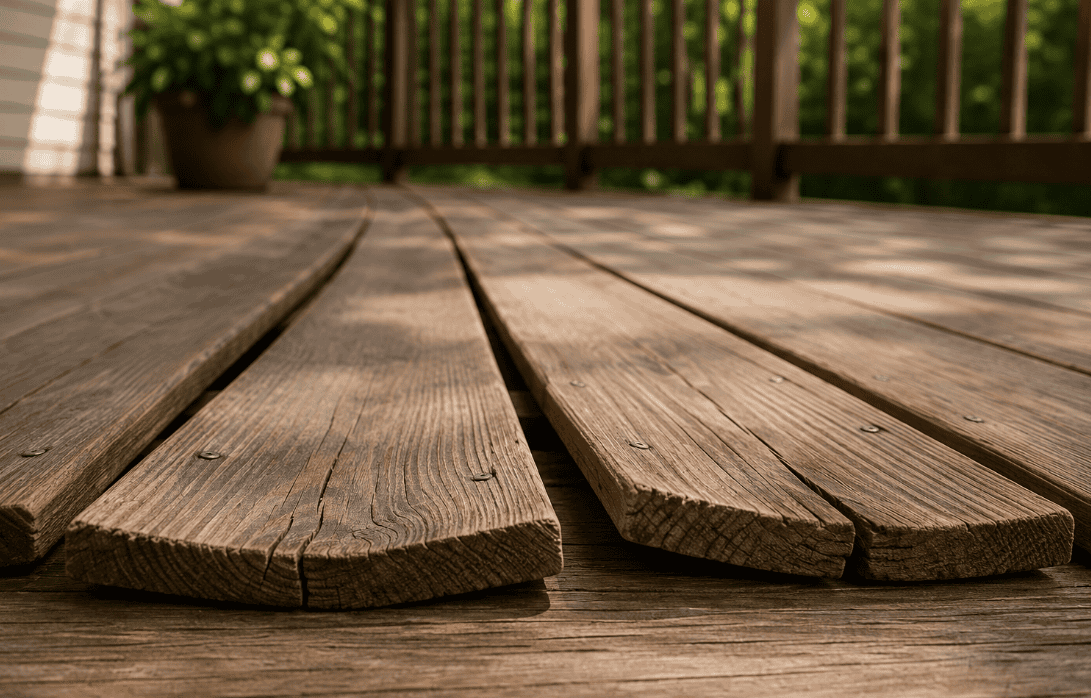
Some boards are not flat anymore. The edges feel higher. The middle dips a bit. You run your hand across it and you notice it more than you expected.
That is usually when people ask about deck boards cupping.
At Anawalt Lumber, we hear this all the time. People think they did something wrong. Sometimes they did. Sometimes the wood just reacted to its environment.
And honestly, wood does that more than most people expect.
Contact Us

Key Takeaways
- Deck boards cupping is usually caused by moisture imbalance
- Uneven moisture in deck boards leads to curling and warping
- Proper deck board installation helps reduce long term issues
- Pressure-treated lumber cupping can still happen over time
- Anawalt Lumber helps you choose better materials from the start
Why are my deck boards cupping after installation?
This is the most common version of the question.
Why are my deck boards cupping even after everything looked fine at first?
It usually comes down to moisture.
Wood absorbs and releases water depending on the environment. When one side of the board gets more moisture than the other, it starts to move.
That movement creates deck boards curling up at the edges.
- Edges lifting
- Center dipping
- Boards feeling uneven
I have seen decks look perfect right after install. Then a few weeks of weather changes and things shift.
What causes deck boards to cup over time?
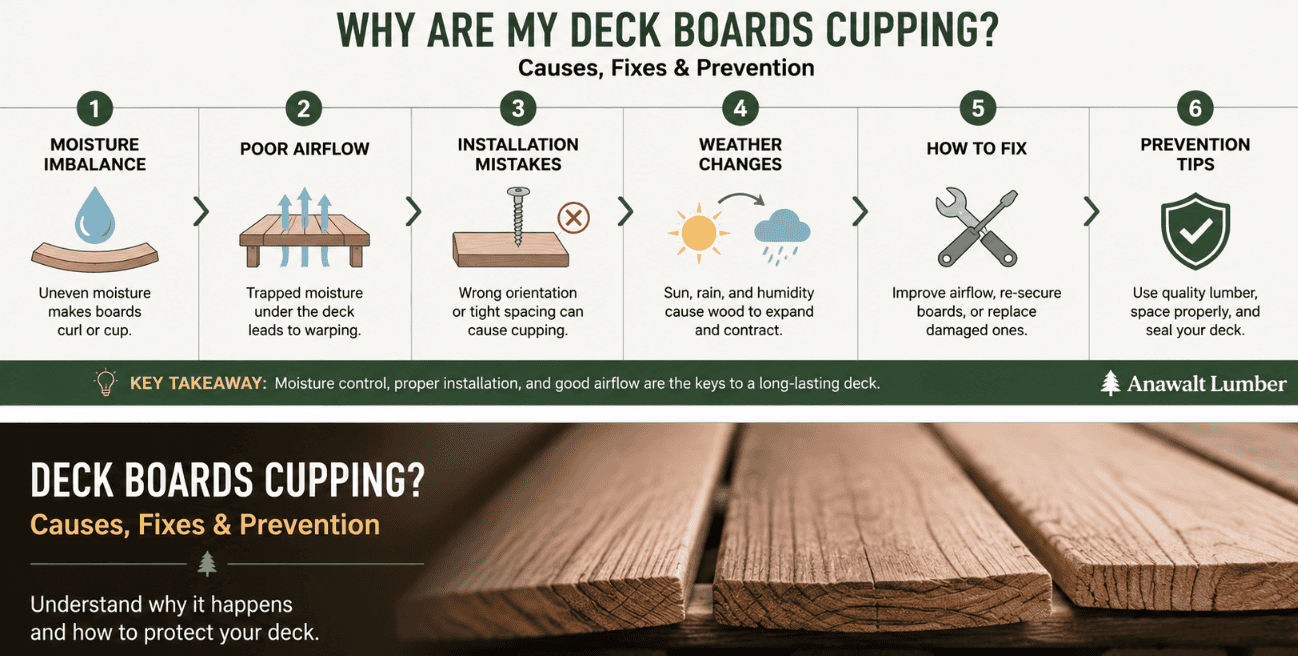
What causes deck boards to cup is not always one thing.
It is usually a mix.
- Uneven moisture exposure
- Poor airflow under the deck
- Installation mistakes
Deck wood expansion and contraction plays a big role.
When one side dries faster than the other, the board pulls in different directions. That is when deck boards bending upward becomes visible.
How does moisture cause deck board damage?
This is where most problems start.
Deck board moisture damage happens when water sits or absorbs unevenly.
- Rain hitting the top surface
- Moisture trapped underneath
- Limited airflow below
Wet deck boards warping is common in these situations.
The top dries faster. The bottom stays damp. That difference creates pressure inside the wood.
And eventually, you see deck boards curling at the edges.
Does pressure-treated lumber cupping still happen?
Short answer. Yes.
Pressure-treated lumber cupping can still occur.
- Humidity changes
- Temperature shifts
- Moisture exposure
Treated wood resists rot better. Though it still moves over time.
Contact Us
Were my deck boards installed the wrong way?
Proper deck board orientation matters.
- Crown up or crown down deck boards
Many installers prefer crown up so water runs off instead of sitting in the middle.
Deck board installation mistakes can make cupping worse.
How does spacing affect deck boards cupping?
Deck board spacing for moisture helps control movement.
- Too tight traps moisture
- Too loose affects structure
- Proper spacing allows airflow
Spacing may seem small. Though it affects everything.
How to fix cupped deck boards without replacing everything?
How to fix cupped deck boards depends on severity.
For minor cupping:
- Allow drying time
- Improve airflow
- Clean and seal boards
For severe cases:
- Sand high edges
- Re-secure boards
- Replace damaged boards
Forcing boards flat rarely works long term.
Should you replace or repair warped deck boards?
Replace or repair warped deck boards depends on condition.
- Check structural strength
- Look at severity of cupping
- Watch for water pooling
Light damage can be repaired. Severe warping usually needs replacement.
How to prevent deck boards from cupping in the future?
How to prevent deck boards from cupping starts early.
- Choose quality lumber
- Store wood properly
- Let boards acclimate
Also consider:
- Proper spacing
- Correct installation
- Good airflow design
What is the best lumber for deck boards?
Best lumber for deck boards depends on your needs.
- Pressure-treated lumber
- Hardwood decking
- Composite decking
Each option has trade-offs. There is no perfect material. Only better choices for your setup.
FAQs
Why are my deck boards cupping so quickly?
Rapid moisture changes and poor airflow are the most common causes.
Can deck boards flatten back out?
Sometimes, if moisture levels balance. Though not always completely.
Does sealing help prevent cupping?
Yes, sealing slows moisture absorption and helps protect the wood.
Is cupping a sign of bad lumber?
No, even high quality lumber can cup under certain conditions.
Should I flip cupped deck boards?
In some cases, though it depends on installation and damage.
Deck boards cupping feels frustrating when you first notice it.
You expect things to stay flat. Then the wood reminds you it is not static.
It moves. It reacts. And once you understand that, it starts to make more sense.
Contact Us