
The table saw is an indispensable woodworking tool.
It’s also the most dangerous, causing about 42% of woodworker injuries.
A common failure is kickback. When the wood binds or pinches and is expelled backward, it can pull the operator’s hand into the spinning blade.
Other power tools can cause severe injuries, but the table saw is the primary hazard in most woodworking shops.
Kickback in Detail
Kickback occurs when a piece of wood becomes trapped or misaligned during a cut and is forcefully ejected toward the operator. If the wood pinches against the blade or is not properly supported, it often disrupts the smooth motion of the cutting process.
Kickback can hurl the workpiece back at speeds exceeding 100 mph. The force can cause operators to lose their grip or control over the wood and nearby tools, leading to further accidents.
If the operator’s hands are drawn toward the spinning blade during kickback, lacerations, amputations, or other serious injuries are likely.
Causes of Table Saw Kickback
- Incorrect blade height
- Poorly aligned fence
- Dull blades
- Lack of support for longer or heavier pieces of wood
- Improper feeding technique
- Absence of safety devices (riving knives, anti-kickback pawls, and blade guards)
Personal Safety & Workshop Prep
Your safety routine should start before the saw is even plugged in.
1. Wear Proper Protection
Safety glasses are mandatory. A full-face shield is even better, especially when making numerous cuts that generate dust and debris.
Hearing protection, like earmuffs or foam plugs, is also essential. A table saw is loud enough to cause permanent hearing damage over time.
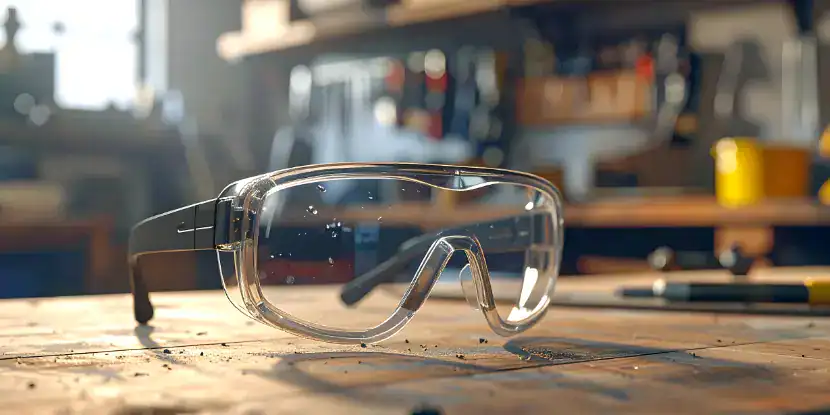
Eye goggles are essential safety equipment.
2. Dress for the Job
Loose clothing, dangling jewelry, and long, untied hair can get caught in a spinning blade instantly. Roll up your sleeves, take off any rings or watches, and tie back your hair.
3. Use Non-Slip Footwear
A workshop floor with sawdust can be slippery. Wear sturdy, non-slip shoes to maintain secure footing and control the workpiece as you feed it through the saw. We know you love your Crocs, but save them for the house.
4. Keep Your Workspace Clean
Before you start, clear the saw table, the surrounding floor, and the outfeed area behind it of all obstructions. Clutter, tools, and stray offcuts create tripping hazards and can interfere with a cut.
5. Disconnect Power for Adjustments
Always unplug the saw before changing the blade, installing a dado stack, or performing any maintenance. Never trust the power switch alone. If your shop has a breaker panel, you can lock it out as an extra precaution.
Blade, Fence & Guard Setup
The saw must be set up correctly for every single cut.
1. Use a Sharp, Appropriate Blade
A dull blade requires more force to cut, which increases the risk of burning, binding, and kickback.
Select the right type of blade for the material, whether it’s a dedicated ripping blade for solid wood or a fine-finish blade for plywood and cabinetry.
2. Set the Blade Height Correctly
For most cuts, the blade should be set with the top of one tooth about 1/8″ to 1/4″ above the surface of the workpiece. This allows the blade to cut efficiently without exposing more of it than necessary.
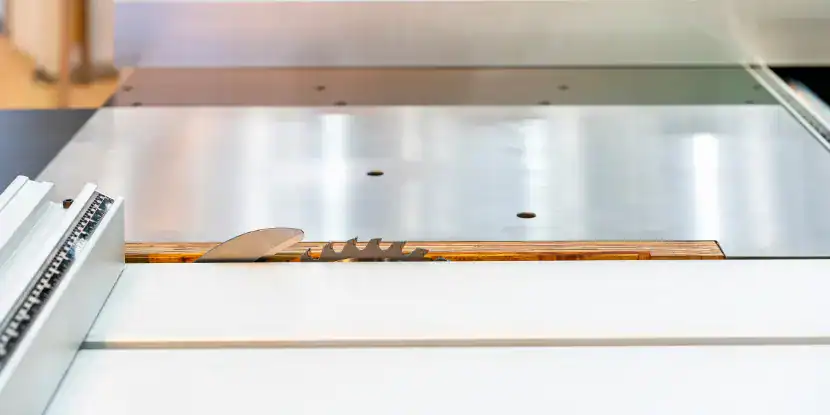
Never expose more of the blade than is necessary for the cut.
3. Use the Riving Knife or Splitter
This is arguably the most important safety device on a modern table saw. The riving knife is a metal fin that sits just behind the blade. It keeps the cut (the kerf) from closing behind the blade, which is a primary cause of kickback.
4. Keep the Blade Guard in Place
The blade guard covers the spinning blade and helps prevent accidental contact. Remove it only when an operation, like a non-through cut, absolutely requires it. Put it back on immediately afterward.
5. Check Your Alignments
The rip fence must be perfectly parallel to the blade. Otherwise, it can pinch the wood against the blade, leading to kickback.
Use a reliable combination square or a dial indicator to periodically check the alignment.
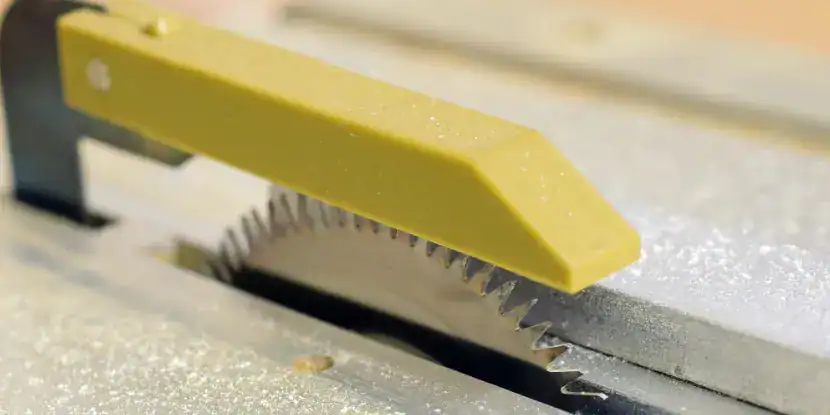
A plastic blade guard shields a saw blade and reduces the risk of accidents.
Body Position & Hand Placement
Always be mindful of your position relative to the blade.
1. Stand to the Side of the Blade
Never stand directly in line with the blade. If kickback occurs, the workpiece is launched straight back. Standing to the left or right of the blade line keeps your body out of the path of a potential projectile.
3. Establish a “No-Hands Zone”
Imagine a three-inch-wide lane on either side of the blade. Your hands should never enter this zone while the blade is spinning.
4. Use Push Sticks & Blocks
When your hands need to get close to the blade, always use a push stick or push block instead. This is especially important when ripping narrow boards — a common task in flooring installation or cabinetmaking.
Tools like the GRR-RIPPER provide better control and significantly increase safety.
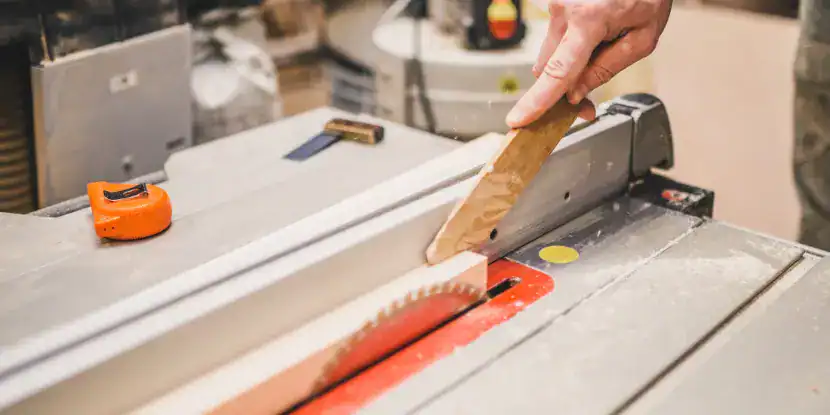
When working close to the blade, always use a push stick or push block.
5. Maintain a Controlled Feed
Use a firm grip and feed the workpiece into the blade smoothly and steadily. Don’t force it. If you feel resistance, stop, turn off the saw, and figure out what’s wrong.
6. Never Reach Over a Running Blade
If you need to clear an offcut or make an adjustment, wait for the blade to come to a complete stop before proceeding. Reaching over a spinning or coasting blade is a recipe for disaster.
Feeding Stock Safely
The way you guide the material through the cut determines its accuracy and safety.
1. Use the Fence for Rips, Miter Gauge for Crosscuts
These two guides should never be used together for the same cut. Using the fence and miter gauge simultaneously can trap the wood between the fence and the blade, resulting in it binding and kickback.
2. Keep the Workpiece Flat
Hold the board down firmly on the table and flat against the fence throughout the entire cut. Any rocking or twisting can make the blade bind.
3. Avoid Freehand Cutting
The rip fence, a miter gauge, or a sled must guide every cut on a table saw. Never attempt to cut a piece of wood freehand.
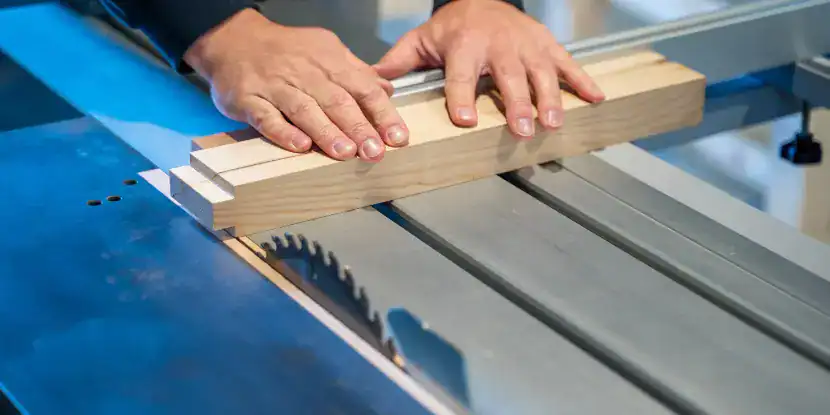
A woodworker uses a guide rail to secure his cut.
4. Don’t Cut Warped or Twisted Boards
Lumber from big-box stores is often bowed or twisted. Feeding a warped board through the saw is dangerous because it can shift unexpectedly mid-cut.
If possible, flatten one face and one edge on a jointer before cutting it on the table saw.
FAQs: Table Saw Safety
Q: What is the single most important safety device on a table saw?
The riving knife (or splitter on older saws). It prevents the wood from pinching the back of the blade, which is the primary cause of kickback.
Q: Can I use the rip fence and miter gauge at the same time?
No. Using both for the same cut can trap the wood between the blade and the fence, creating a dangerous binding situation that almost guarantees kickback.
Q: How high should the table saw blade be?
A good rule of thumb is to set the blade height so that the top of one tooth extends about 1/8″ to 1/4″ above the surface of the material you are cutting.
Q: Why is a dull blade more dangerous than a sharp one?
A dull blade requires more force to push the wood through, which can lead to loss of control. It also generates more heat, which can cause burning and blade binding, increasing the risk of kickback.
Q: What is kickback on a table saw?
Kickback is when the workpiece is suddenly and violently thrown back toward the operator. It happens when the wood gets pinched, lifts onto the back of the spinning blade, and is launched forward at high speed.
Q: Do I really need to use a push stick?
Yes. Any time your hands come within a few inches of the blade, you must use a push stick or push block. It keeps your hands a safe distance away from the blade.
Q: Is it okay to cut warped wood?
You should never cut warped, cupped, or twisted boards without first flattening them. The board can rock or shift during the cut, causing the blade to bind and kick back.
Q: What should I do if the saw feels like it’s struggling during a cut?
Stop immediately. Turn off the power and wait for the blade to come to a complete stop. Then, safely investigate the cause. It could be a dull blade, an improper feed rate, or tension in the wood.