
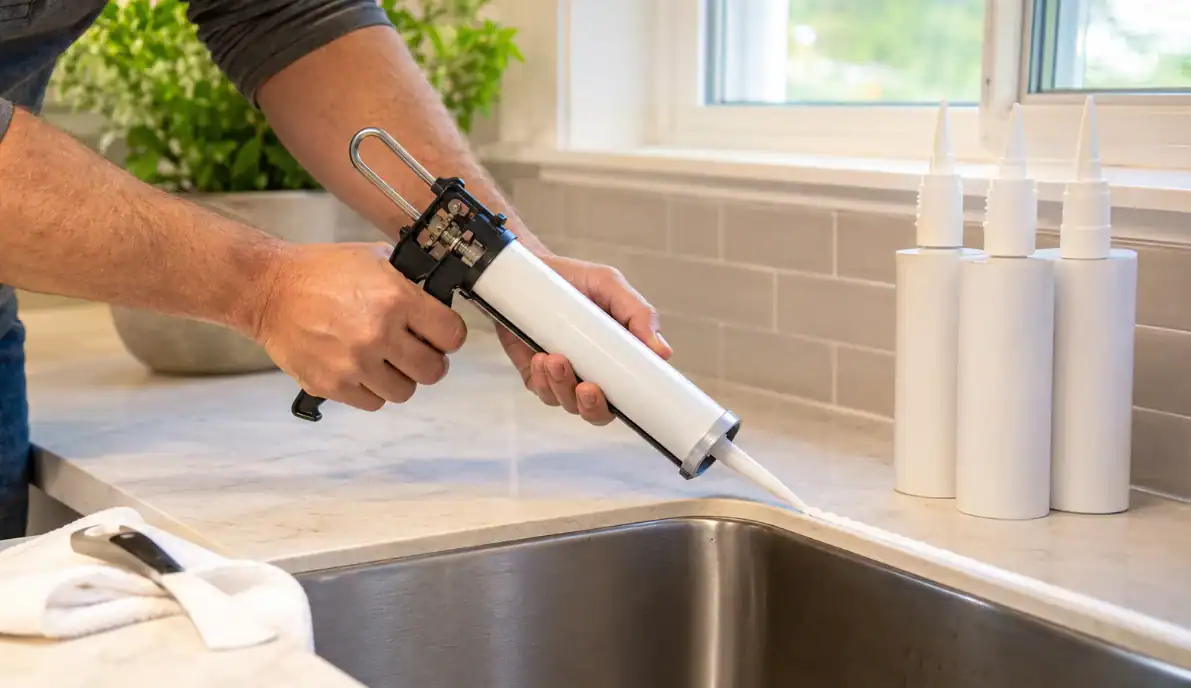
Caulk looks like a small thing. A thin line around a sink, tub, window, or door. Easy to ignore, honestly. But when it fails, you notice fast.
Water gets behind the counter. Air slips through a window gap. The bathroom starts looking stained around the tub. Sometimes the old caulk cracks, peels, or turns dark. That is usually when people start asking what type of caulk or sealant they should use.
At Anawalt Lumber, we know this choice can feel a little confusing because the tubes all look similar at first. But they are not the same. The best product depends on where you are using it, how much moisture is in the area, and whether the joint needs to stay flexible.
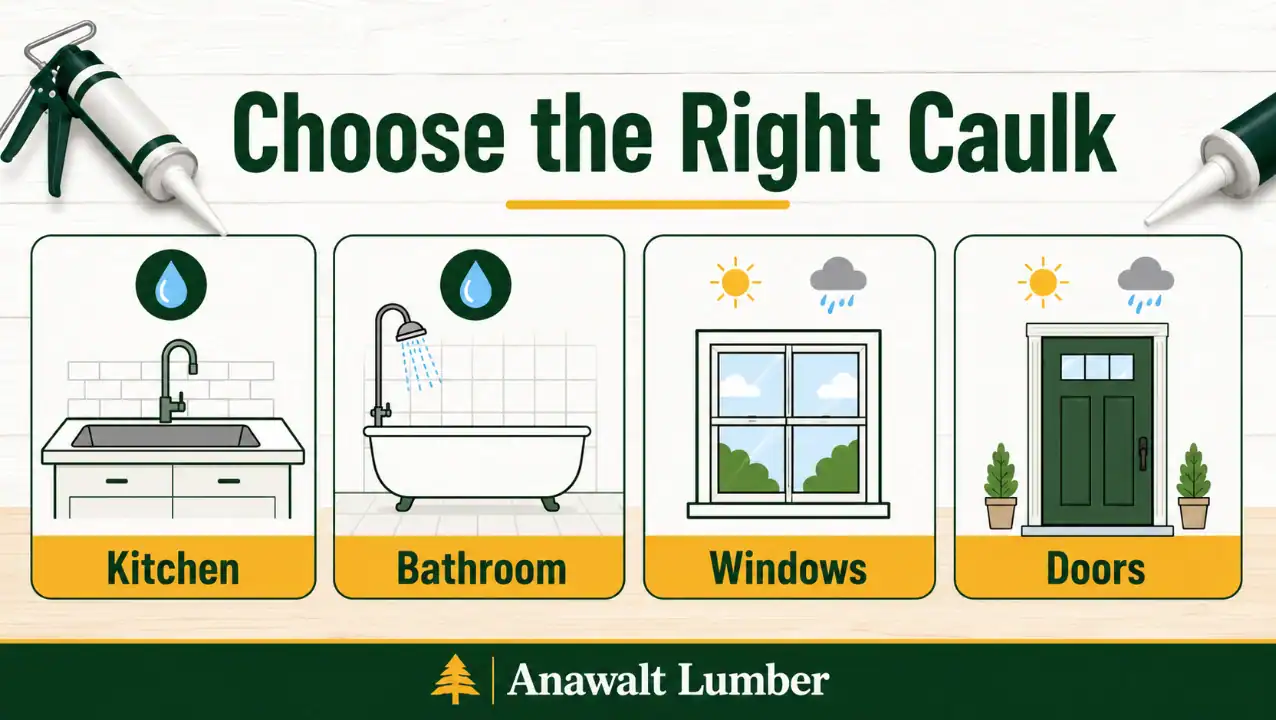
If you are choosing Caulk and Sealant for Kitchens, bathrooms, windows, or doors, the main thing is to match the product to the job. A kitchen sink needs moisture resistance. A bathroom tub needs mildew resistance and flexibility. A window or door may need weather protection. One product does not always fit every surface.
Contact Us

Key Takeaways
- Caulk and Sealant for Kitchens should handle moisture, cleaning, and small movement.
- Bathrooms usually need waterproof or mildew-resistant caulk.
- Windows and doors need flexible sealants that can handle weather changes.
- Silicone, acrylic latex, and hybrid sealants each work best in different places.
- Old caulk should be removed before applying a new bead.
- Choosing the wrong product can lead to cracking, peeling, leaks, or mildew.
What Is The Difference Between Caulk And Sealant?
People often use the words caulk and sealant like they mean the same thing. In everyday talk, that is fine. But there is a small difference.
Caulk is often used for filling gaps where less movement happens. It is common around trim, baseboards, small wall gaps, and some indoor projects. Sealant is usually more flexible and durable. It is better when the gap may expand, shrink, or face water and weather.
That said, many products today are labeled as both. So the label matters more than the name. Look for what the product is made for: kitchen, bath, window, door, exterior, paintable, waterproof, or mildew resistant.
What Is The Best Caulk And Sealant For Kitchens?
Kitchens deal with water, steam, food splashes, grease, and frequent cleaning. So you want something that can hold up.
The best Caulk and Sealant for Kitchens is usually a waterproof silicone or a kitchen-and-bath sealant. These products work well around sinks, backsplashes, countertops, and areas that get wet often.
For kitchen use, look for:
- Waterproof protection
- Mold and mildew resistance
- Strong adhesion
- Flexibility
- Easy cleaning once cured
A kitchen sink is a good example. That area gets wet every day. If the caulk cracks or pulls away, water can sneak under the sink edge or behind the countertop. You may not see the damage right away, which is the annoying part. It can hide until the surface starts swelling, staining, or smelling musty.
For areas you plan to paint, acrylic latex caulk may be better. But around wet kitchen zones, silicone often performs better.
Is Silicone Caulk Best For Bathrooms?
For bathrooms, silicone is often the safest choice. Bathrooms have constant moisture. Showers, tubs, sinks, and tile edges all need a product that can handle water.
A bathroom caulk should be:
- Waterproof
- Mildew resistant
- Flexible
- Made for wet areas
- Strong enough for tile, porcelain, fiberglass, or glass
This matters around tubs and showers because those surfaces move a little when weight or temperature changes. If the caulk is too stiff, it may crack.
One small mistake people make is adding new caulk over old caulk. It seems faster. I get why people do it. But it usually does not last. Old caulk may have soap residue, mildew, or loose edges. New caulk needs a clean surface to bond well.
Contact Us
What Caulk Should You Use Around Windows?
Windows need a seal that can handle air leaks, rain, sunlight, and temperature changes. That is different from sealing a bathroom sink.
For windows, use a flexible exterior-rated sealant if the gap is outside. Silicone, polyurethane, or hybrid sealants are common choices. These products are made to expand and contract as the frame and wall materials shift.
For indoor window trim, paintable acrylic latex caulk may work well, especially if you want a clean painted finish.
Use exterior window sealant for:
- Gaps around window frames
- Small cracks where water may enter
- Drafty exterior joints
- Areas exposed to sun and rain
A good window seal helps with comfort too. It can reduce drafts and help keep cooled or heated air inside. It is not magic, of course, but it can make a real difference when several windows have small gaps.
What Sealant Works Best For Doors?
Doors need a flexible seal, especially exterior doors. The frame moves a little over time. Weatherstripping also wears out. Gaps can let in air, water, bugs, and dust.
For exterior doors, look for a weatherproof sealant. It should bond to wood, metal, vinyl, brick, or concrete, depending on the surface around the door.
For interior door trim, paintable acrylic latex caulk is often enough. It fills small gaps and gives the trim a finished look.
Use door sealant around:
- Exterior door frames
- Threshold gaps
- Trim joints
- Small cracks near siding or masonry
- Areas where drafts come through
If the gap is large, caulk alone may not solve it. You may need backer rod first. Backer rod fills deeper gaps so the sealant can sit properly on top.
Silicone Vs Acrylic Latex Vs Hybrid Sealant
Choosing the right product is easier when you know the basic types.
Silicone caulk
Best for wet areas like kitchens, bathrooms, tubs, showers, sinks, and tile. It is waterproof and flexible, but many silicone products are not paintable.
Acrylic latex caulk
Best for trim, baseboards, molding, interior gaps, and paint projects. It is easy to apply and usually paintable, but it may not last as long in wet areas.
Hybrid sealant
Best for areas needing strength, flexibility, and sometimes paintability. It can be useful for windows, doors, exterior gaps, and mixed materials.
Polyurethane sealant
Best for exterior or high-movement joints. It is tough and flexible, but it can be messier to apply and may take longer to cure.
How Do You Know If Old Caulk Needs Replacing?
Old caulk does not have to look terrible before it becomes a problem. Sometimes the first signs are small.
Replace caulk if you notice:
- Cracks
- Peeling edges
- Gaps
- Black mildew stains
- Soft or loose areas
- Water getting behind the surface
- Drafts near windows or doors
- Caulk pulling away from one side
If the caulk has failed, do not just patch the obvious spot. Check the full line. If one section is loose, nearby areas may be close to failing too.
How To Apply Caulk The Right Way
You do not need to be a pro to apply caulk, but you do need patience. Rushing makes the bead messy and weak.
Basic steps:
- Remove the old caulk.
- Clean the surface.
- Let the area dry fully.
- Cut the tube tip at a small angle.
- Apply a steady bead.
- Smooth it with a caulk tool or finger.
- Wipe extra product before it cures.
- Let it dry based on the label instructions.
The drying time matters. Some products feel dry on the surface quickly but need longer before water exposure. For showers and sinks, this is important. If you use the area too soon, the seal may not cure correctly.
Why Buying The Right Product Matters
It is tempting to grab the cheapest tube and move on. Sometimes that works for small interior gaps. But for water and weather areas, the wrong product can fail early.
That means you may have to scrape it out and redo the job. Nobody enjoys that. I think most people would rather choose the right caulk once than fix the same line three times.
For Caulk and Sealant for Kitchens, choose a product that can handle water and cleaning. For bathrooms, look for waterproof and mildew-resistant formulas. For windows and doors, focus on flexibility and weather protection.
Final Thoughts
The best caulk or sealant depends on the location. Kitchens need moisture protection. Bathrooms need waterproof and mildew-resistant sealing. Windows and doors need flexible products that can handle air, rain, and temperature changes.
At Anawalt Lumber, homeowners and contractors can find caulk and sealant options for common indoor and outdoor projects. A small tube may not look like much, but the right one can help protect your home from leaks, drafts, stains, and early repairs.
Contact Us