
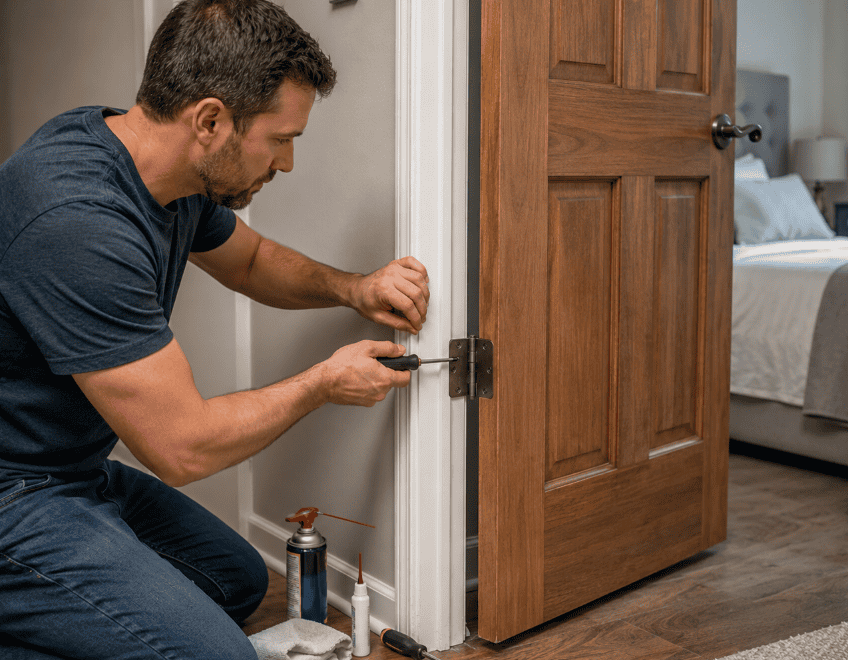
A lot of home problems start small. A squeak when you open the bedroom door. A hinge that feels a little loose. A lock that sticks for a second before turning. At first, you ignore it. Then it happens every day. Then it gets annoying. Then one day the door will not close right, the screw pulls out farther, or the key takes two tries instead of one. That is usually when people start looking into door repair.
At Anawalt Lumber, we know this kind of fix is common. It is also one of those jobs that feels harder than it is, at least in the beginning. A good door repair does not always mean replacing the whole door or calling for a major service. Sometimes the problem comes down to a dry hinge, a loose screw, or a lock that needs cleaning and alignment. Still, it helps to know what to check first, because a squeak, a wobble, and a sticking lock do not all come from the same cause.
This guide walks through the basics in a simple way. If your goal is to handle minor door repair at home, these steps will help you figure out what is wrong, what tools to grab, and when a small fix is enough.
Contact Us

Key Takeaways
- Door repair often starts with finding the exact source of the problem.
- A squeaky door repair usually needs cleaning and lubrication first.
- Loose door hinge repair often means tightening screws or replacing stripped ones.
- Sticking lock repair often starts with checking dirt, misalignment, or a worn latch.
- Small door issues get worse when they are ignored.
- A few basic tools handle many common door problems.
- If the door frame, latch, or wood is damaged, the repair may be larger than it first looks.
What Tools Do You Need For Basic Door Repair?
The direct answer is this. You only need a small group of basic tools for most minor door repair jobs.
Start with these:
- Screwdriver, both Phillips and flathead if possible
- Drill or driver
- Lubricant for hinges and locks
- Clean rag
- Toothbrush or small brush
- Wood glue
- Replacement screws
- Utility knife
- Pencil
- Small hammer
You may not need every item for every repair. Still, having them nearby makes the work easier. A lot of people start a door repair, then stop halfway because they do not have a longer screw or a rag for cleanup. That slows everything down.
How To Fix A Squeaky Door?
The direct answer is this. A squeaky door repair usually starts with the hinge, not the door panel itself.
Most squeaks come from metal rubbing at the hinge pin. Dust, dryness, and age all add to it. Sometimes the squeak is mild. Sometimes it sounds sharp enough to wake the whole house. Either way, the repair is usually simple if you catch it early.
Here is how to fix a squeaky door:
- Open and close the door slowly.
- Listen closely to find which hinge is making the noise.
- Wipe the hinge with a clean rag.
- Apply lubricant to the hinge pin area.
- Move the door back and forth several times.
- Wipe off any extra lubricant.
If the squeak stays, remove the hinge pin if you are comfortable doing that. Clean the pin, apply lubricant, then reinstall it. In many cases, that solves the problem fast.
This is why squeaky door repair often feels satisfying. The noise is annoying, but the fix is usually pretty manageable. Still, if the hinge is bent, cracked, or badly worn, lubrication alone may not be enough.
Why Does A Door Keep Squeaking After Lubrication?
The direct answer is this. The hinge may be dirty, worn out, bent, or slightly loose.
Some people try one spray and expect the problem to disappear right away. Sometimes it does. Sometimes the squeak comes back because the hinge has a bigger issue.
Check for these problems:
- Dirt packed around the hinge pin
- Rust on the hinge
- Loose screws
- Bent hinge leaves
- Poor door alignment
If one hinge is under extra strain because the door is sagging, the squeak may return until the alignment issue is fixed. That is why door repair is easier when you look at the whole setup, not only the sound.
How Do You Handle Loose Door Hinge Repair?
The direct answer is this. Tighten the screws first, then check whether the screw holes are stripped.
Loose door hinge repair is common in older doors and high-traffic areas. Doors get opened and closed thousands of times. Over time, screws back out or the wood around them gets worn. Then the hinge starts shifting.
To check a loose hinge:
- Open the door.
- Hold the edge of the door steady.
- Look for hinge movement at the frame or door.
- Tighten each screw by hand first.
- Test the door again.
If the screw keeps spinning and never tightens, the hole may be stripped. That means the screw no longer has enough wood to bite into.
A simple fix is to remove the screw, fill the hole with a wood toothpick or small wood sliver and a little wood glue, then reinstall the screw once the filler is set enough to grip. In some cases, a longer screw is the better solution, especially on the frame side.
Loose door hinge repair often looks minor, but it affects how the whole door swings and closes.
What Happens If You Ignore A Loose Hinge?
The direct answer is this. The door may sag, scrape, stick, or stop latching right.
This is where small problems grow. A loose hinge changes the angle of the door. Then the latch hits wrong. Then the top or bottom edge starts rubbing. Then the lock feels like the problem, even though the hinge caused it in the first place.
Signs the hinge problem is affecting more than one area:
- The door rubs the frame
- The latch misses the strike plate
- The top gap looks uneven
- The door feels heavy or crooked
- The lock turns harder than it used to
That is why door repair often works best when you fix the hinge issue before you start adjusting the lock.
Contact Us
How To Fix A Sticking Lock?
The direct answer is this. Start by checking dirt, dry parts, and latch alignment before assuming the lock is broken.
A sticking lock repair can come from the key, the lock cylinder, the latch, or the way the door sits in the frame. If the door has shifted because of loose hinges, the lock may stick even though the lock itself is still fine.
Here is how to fix a sticking lock:
- Check if the key goes in smoothly.
- Clean the key and remove dirt or grime.
- Apply lock-safe lubricant inside the keyway.
- Insert and remove the key several times.
- Test the key again.
- Close the door slowly and see whether the latch lines up with the strike plate.
If the key turns well with the door open but sticks when the door is closed, the issue is often alignment, not the lock cylinder. That is an important detail. It saves time.
Sticking lock repair is often easier once you separate lock trouble from door-position trouble.
Why Is The Lock Sticking Only When The Door Is Closed?
The direct answer is this. The latch and strike plate may be out of line.
This is a common problem. People think the lock is failing, but the real issue is the door hitting the frame at the wrong angle. That slight misalignment puts pressure on the latch.
Look for these clues:
- The latch rubs the strike plate
- You need to push or pull the door to turn the key
- The door closes with resistance
- The problem got worse after hinge looseness
If this is happening, the best door repair may involve tightening hinges, adjusting the strike plate, or slightly repositioning the hardware.
What If The Latch Still Sticks After Cleaning?
The direct answer is this. The latch may be worn, damaged, or installed too tightly.
A sticking lock repair sometimes goes beyond lubrication. If the latch bolt moves poorly even with the door open, the latch assembly itself may be worn out.
Possible causes include:
- Dirt packed inside the latch
- Internal spring wear
- Bent latch parts
- Paint buildup around the latch plate
- Screws tightened too hard against the mechanism
Try removing the latch plate and checking for visible damage. If the latch still feels rough or delayed after cleaning, replacement may be the smarter move.
How Do You Know If The Whole Door Needs Repair, Not Only The Hardware?
The direct answer is this. Look for wood damage, frame shift, swelling, or visible warping.
Not every door repair stays small. Sometimes a squeak or sticking lock is the first sign of a bigger problem.
Watch for:
- Cracked wood near the hinges
- Soft wood around the screw holes
- Water swelling at the bottom of the door
- Door edge rubbing badly
- Frame movement
- Gaps that changed over time
If the wood is damaged or the frame has shifted, replacing screws and adding lubricant may only help for a short time. In those cases, the hardware is reacting to a structural problem.
What Are The Best Habits To Prevent Future Door Repair Issues?
The direct answer is this. Check the door early, tighten hardware when needed, and do not wait for the problem to get loud.
A little routine maintenance helps a lot. You do not need a full inspection every month, but you should pay attention when a door starts acting different.
Good habits include:
- Tighten hinge screws when they begin to loosen
- Lubricate hinges before they squeak badly
- Keep locks clean
- Use the right lubricant for the right part
- Watch for rubbing or sagging early
- Avoid slamming the door
- Check exterior doors for moisture damage
This kind of care keeps a small door repair from turning into a larger hardware or frame problem. It also makes daily use feel smoother, which is nice. Maybe that sounds obvious, but people notice it.
When Should You Stop And Get Help?
The direct answer is this. Stop when the repair involves major wood damage, frame movement, or a lock that still sticks after basic checks.
Some problems are still small but need more skill. Some are no longer small at all. If the hinge area is cracked, the strike plate area is split, or the lock is not working right after cleaning and alignment checks, it may be time for a more advanced fix.
Get more help if:
- The door is sagging heavily
- The frame is damaged
- The lock jams often
- The latch area is split
- The hinges are pulling out of weak wood
- The key sticks even after lubrication and alignment checks
At Anawalt Lumber, we know home repairs feel better when you know where the line is. There is nothing wrong with doing a simple door repair yourself. There is also nothing wrong with stopping before a small issue turns into a bigger one because the fix went sideways.
FAQs
How to fix a squeaky door fast?
Start by lubricating the hinge pin and moving the door back and forth. Clean the hinge first if dirt has built up.
What causes a loose hinge?
Repeated use, worn screw holes, and wood damage are the most common causes.
How do you do loose door hinge repair?
Tighten the screws first. If the holes are stripped, reinforce them with wood filler material or use a longer screw.
How to fix a sticking lock?
Clean the key, lubricate the lock, and check whether the latch lines up with the strike plate.
Why does the lock stick only when the door closes?
The door may be sagging or the latch may be rubbing against the strike plate because of hinge or alignment trouble.
When is door repair more than a small DIY job?
When the frame is damaged, the wood is split, or the lock still fails after basic cleaning and adjustment.
Contact Us