
Choosing the best material to build a house shapes your budget, comfort, upkeep, and long-term value. Many people start with style. A smarter first step looks at structure, climate, and repair needs. The best material to build a house depends on where you live, how long you plan to stay, and how much upkeep you accept.
Some homes need strong storm resistance. Some need lower upfront cost. Some need better energy use. This is why the best material to build a house does not have one fixed answer for every lot and every family. At Anawalt Lumber, many buyers start with one question, then end up comparing cost, durability, fire risk, and weather exposure before making a final choice.
Contact Us

Key Takeaways
- The best material to build a house depends on climate, budget, upkeep, and lifespan.
- Wood stays popular because crews know the system, supply stays strong, and framing moves fast.
- Concrete and brick often last longer and resist fire and weather better.
- Steel offers strength and pest resistance, yet price and thermal transfer matter.
- Energy use and repair cost deserve equal weight during planning.
- A smart choice matches your site, your goals, and your long-term budget.
What Is The Best Material To Build A House With For Most Homeowners?
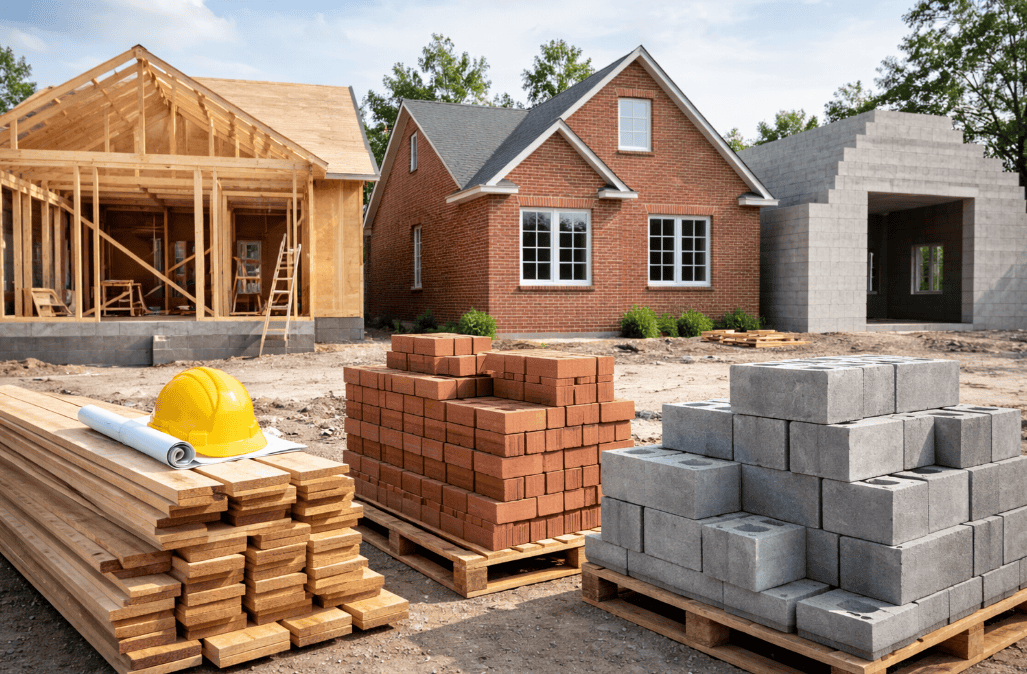
For many buyers, wood framing stays the best building material for a house. Wood costs less in many markets, crews work with wood every day, and design changes feel easier during the build. When people ask what is the best material to build a house with, wood often leads the list for one reason. Wood gives a strong balance of cost, speed, and design freedom.
Still, wood does not win every category. Wood needs good sealing, proper flashing, and routine inspection. Moisture and pests hurt neglected framing. So, the best material to build a house shifts once climate and upkeep enter the picture.
A short comparison helps here.
- Wood offers lower upfront cost in many projects.
- Concrete offers strong weather and fire resistance.
- Brick offers long life and lower exterior upkeep.
- Steel offers high strength and termite resistance.
Which Option Works As The Cheapest Material To Build A House?
Many first-time builders focus on price first, and that makes sense. In many cases, wood framing ranks as the cheapest material to build a house. Lumber supply remains wide, labor stays common, and most residential crews know the process well.
Yet low price at the start does not always mean low cost over twenty years. You should compare the full cost of house building materials, not only the first invoice.
Think about these cost factors.
- Framing material
- Labor
- Insulation
- Exterior finish
- Repairs
- Pest treatment
- Insurance
- Energy bills
A cheaper frame with higher repair needs may lose ground later. So the best material to build a house should match both your first budget and your future budget.
Wood VS Concrete House, Which One Gives Better Long-Term Value?
The wood vs concrete house debate shows up in almost every planning stage. Wood often wins on speed and price. Concrete often wins on strength and long-term resistance.
Concrete house pros and cons deserve a close look. Concrete resists rot, pests, and fire better than wood. Concrete also handles harsh weather well in many regions. On the other side, concrete often costs more, needs specialized crews, and takes longer to change once the layout is set.
Wood frame house pros and cons look different. Wood feels easier to work with, easier to modify, and often easier on the budget. Yet wood needs more attention in wet, buggy, or fire-prone areas.
So, which side wins? For many buyers, the best material to build a house depends on the problem they want to solve. Lower upfront cost points toward wood. Higher resistance points toward concrete.
Brick VS Wood House, Which One Lasts Longer?
A brick vs wood house comparison often centers on lifespan and upkeep. Brick usually lasts longer with less exterior maintenance. Brick also stands out as one of the most durable house building material choices for many climates.
Brick house pros and cons matter, though. Brick resists fire well. Brick handles weather well. Brick also costs more up front, and repairs or layout changes often take more effort. Wood gives more flexibility during design and remodeling.
You should ask yourself a few direct questions.
- Do you want lower upfront cost?
- Do you want lower exterior upkeep?
- Do you expect frequent design updates later?
- Do you face heavy rain, strong wind, or wildfire risk?
Those answers help narrow the best material to build a house for your lot and your long-term plans.
Contact Us
Steel Frame VS Wood Frame House, Which One Gives More Strength?
A steel frame vs wood frame house comparison leans toward steel for raw strength. Steel resists termites, rot, and warping. Steel also gives straight framing and strong structural performance.
Still, steel brings tradeoffs. Thermal transfer affects comfort unless the wall system handles insulation well. Cost often runs higher too. Wood still leads many residential builds because crews know the material and supply remains simple.
If strength ranks first on your list, steel deserves serious review. If budget, speed, and ease of change rank first, wood often stays in front. Once again, the best material to build a house depends on your priorities, not a one-line rule.
What Are The Best Home Building Materials For Hot Climates?
Heat changes the equation fast. The best home building materials for hot climates often include concrete, brick, and other dense systems with strong thermal mass. Those systems help slow heat movement through the wall. Good insulation still matters, of course, though wall mass helps too.
Weather resistant house building materials matter in hot regions with storms, heavy sun, and long dry seasons. Fire resistant materials for homes matter in wildfire-prone areas as well.
For hot climates, many buyers look for these traits.
- Heat resistance
- Fire resistance
- Low exterior upkeep
- Strong insulation support
- Storm durability
In many warm regions, the best material to build a house may shift away from wood and toward concrete or masonry systems.
What Are The Best Home Building Materials For Cold Climates?
The best home building materials for cold climates need strong insulation value and tight air sealing. Wood framing performs well here because wall cavities hold insulation well. Concrete and masonry systems work too, though those systems need smart insulation design.
Cold-weather planning should focus on:
- Insulation depth
- Air sealing
- Moisture control
- Window performance
- Roof and wall assembly
A wall system fails fast in winter when drafts, condensation, and poor insulation stack up. So the best material to build a house in cold regions often comes down to the full wall assembly, not only the frame.
How to choose building materials for a house without wasting money
Many buyers feel overwhelmed during this stage. A shorter process helps. When you ask how to choose building materials for a house, start with four factors.
- Climate
- Budget
- Upkeep
- Lifespan
Then ask a second round of questions.
- Do you want a lower first cost or lower repair cost later?
- Do you face termites, heavy rain, snow, or wildfire risk?
- Do you want low maintenance house building materials?
- Do you care about sustainable materials to build a house?
- Do you want energy efficient house building materials?
That process usually leads toward the best material to build a house for your site instead of a trend from another region.
Which Materials Work Best For Low Upkeep And Energy Savings?
Low maintenance house building materials often include brick, concrete, and some steel systems. Those choices resist pests, rot, and exterior wear better than wood in many settings.
Energy efficient house building materials depend on the whole system. Dense materials help in hot climates. Deep insulated wood walls help in cold climates. The right answer depends on region, wall design, roof design, and air sealing quality.
If you want long-term value, look beyond the frame alone. Look at siding, insulation, roofing, drainage, and finish quality. The best material to build a house works best when the full system works together.
At Anawalt Lumber, many buyers find a clear answer after weighing budget, climate, and future repair needs side by side. That step often removes guesswork and leads toward a smarter build.
FAQs
What is the best material to build a house for most budgets?
Wood framing often fits most budgets because labor stays common and supply stays wide.
What is the strongest material to build a house?
Concrete and steel rank near the top for strength and resistance.
What is the most durable house building material?
Brick and concrete often deliver long life with lower upkeep.
Are sustainable materials to build a house worth the cost?
Many buyers choose sustainable materials for lower waste, better sourcing, and long-term value.
How do you compare the cost of house building materials?
Compare upfront price, labor, insulation, repairs, energy use, and expected lifespan before making a final choice.