
Prevent wood warping sounds simple at first. Keep it dry, right? That is what most people think. I used to think that too. Then you leave a board in the garage, come back later, and it is slightly bent. Not ruined. Just off enough to notice.
Wood moves. That is the part people miss. It reacts to moisture, temperature, and how it is stored. If you want to prevent wood warping, you need to control those factors early, not after the damage shows up.
At Anawalt Lumber, this comes up a lot. Someone buys good lumber, brings it home, and stores it in a way that seems fine. A few days later, the boards shift. It feels frustrating because nothing obvious went wrong. Still, small conditions changed the wood.
Contact Us

Key Takeaways
- Prevent wood warping by controlling moisture and storage conditions
- Wood warping prevention starts before you use the lumber
- Wood expansion and contraction causes movement over time
- Proper wood storage reduces cracking and splitting
- Sealing wood ends helps slow moisture loss
- Wood acclimation prepares lumber for its final environment
Why Does Wood Warp In The First Place?
Why wood warps comes down to moisture. Wood absorbs and releases moisture depending on the environment. When one part of the board dries faster than another, the shape changes.
This uneven drying leads to:
- Bending
- Twisting
- Cupping
- bowing
Wood movement in lumber is natural. You cannot stop it completely. You can manage it.
That part feels important. You are not fighting wood. You are working with how it behaves.
How To Prevent Wood Warping Before You Even Start A Project?
Prevent wood warping early by planning ahead. Once wood starts moving, it is harder to fix.
Steps to follow:
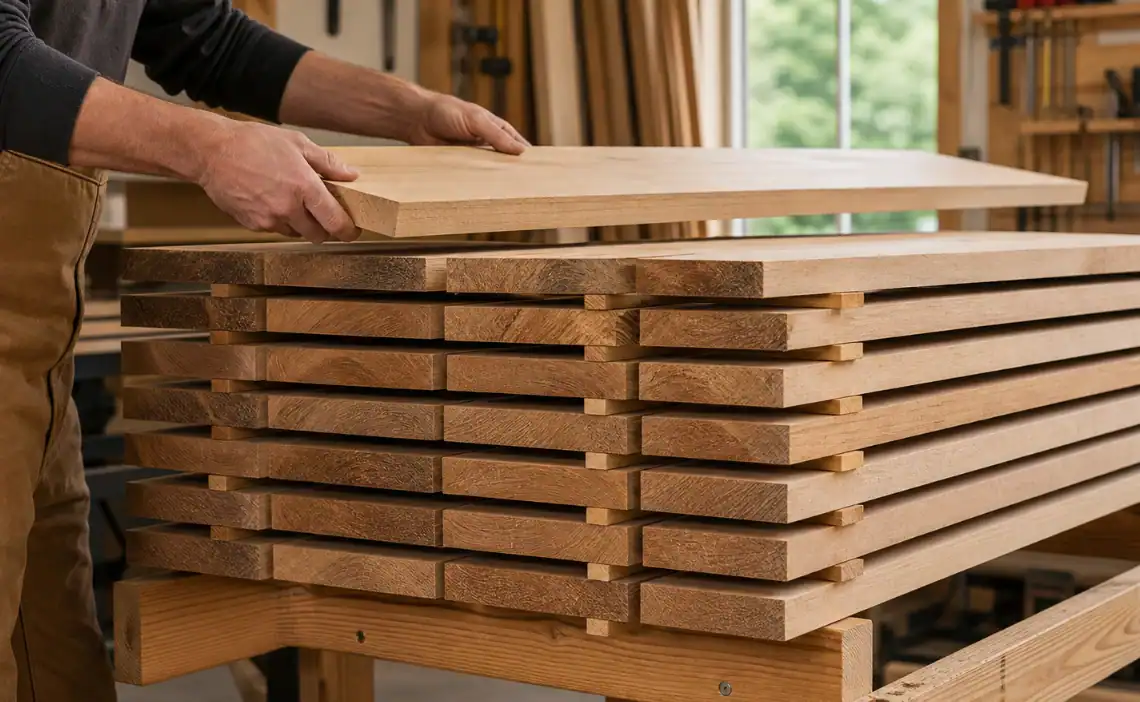
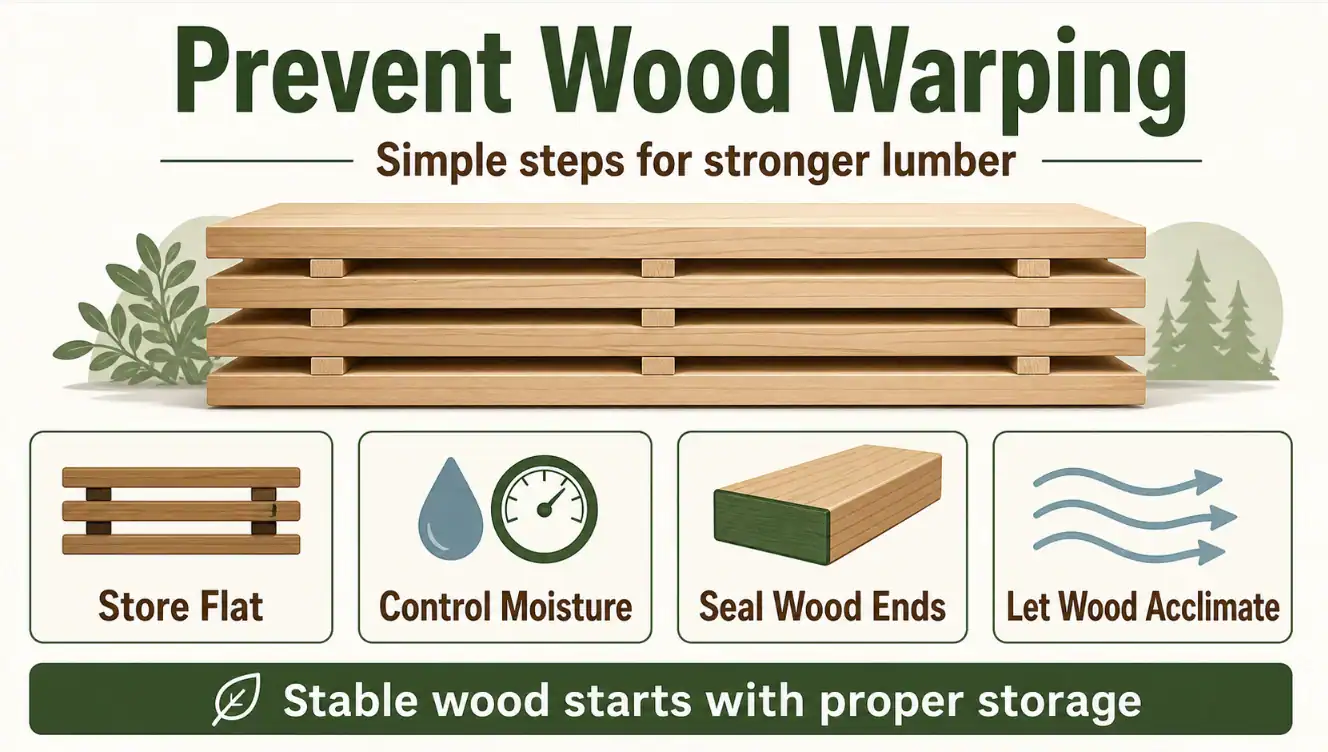
- store lumber flat on a level surface
- keep boards off the ground
- use spacers between layers for airflow
- avoid direct sunlight exposure
- keep moisture levels consistent
The best way to store lumber is in a dry, stable environment. Not too humid. Not too dry. That balance matters more than people expect.
I have seen boards stored against a wall. It feels convenient. Over time, gravity pulls unevenly, and the board warps. Flat storage works better.
What Is Wood Acclimation And Why Does It Matter?
Wood acclimation means letting lumber adjust to the environment where it will be used. This step helps prevent wood warping later.
Before using wood:
- place it in the room where it will be installed
- leave it there for several days
- allow moisture levels to stabilize
Wood acclimation reduces sudden changes. Sudden changes cause stress inside the wood.
Sometimes people skip this step to save time. The project looks fine at first. Then small gaps or warping appear later.
How To Prevent Wood Cracking And Splitting?
Prevent wood cracking by controlling how fast moisture leaves the wood. When wood dries too quickly, it cracks.
To prevent wood cracking:
- avoid rapid drying conditions
- keep wood out of direct heat
- maintain steady humidity
- seal exposed surfaces when needed
Prevent wood splitting by protecting the ends. The ends lose moisture faster than the rest of the board.
To prevent wood splitting:
- seal wood ends with a coating
- avoid dropping or stressing boards
- pre-drill holes before fastening
Seal wood ends early. That slows down moisture loss and reduces stress.
What Role Does Wood Moisture Control Play?
Wood moisture control is one of the most important factors in wood warping prevention.
Wood reacts to moisture changes constantly. When humidity rises, wood absorbs moisture. When humidity drops, it releases moisture.
This cycle causes:
- Expansion
- Contraction
- internal stress
To manage this:
- store wood in stable conditions
- avoid extreme humidity swings
- use moisture meters if needed
Protect wood from moisture during storage and use. That helps maintain shape and strength.
Contact Us
How To Stop Wood From Warping During Storage?
How to stop wood from warping during storage comes down to support and airflow.
Follow these lumber storage tips:
- stack wood flat and level
- use stickers between layers
- keep weight evenly distributed
- avoid leaning boards vertically
- store in a covered area
Proper wood storage prevents uneven pressure. It also allows air to move around each board.
I have seen stacked wood without spacers. The top boards stayed straight. The middle ones warped. Airflow makes a difference.
What Are Simple Wood Sealing Tips?
Wood sealing tips help protect lumber from moisture changes.
Basic sealing steps include:
- apply sealant to exposed surfaces
- seal wood ends first
- use appropriate finishes for the environment
- reapply when needed
Sealing does not stop movement completely. It slows it down. That helps maintain stability.
How Does Wood Expansion And Contraction Affect Projects?
Wood expansion and contraction affect fit and structure. Boards may expand in humid conditions and shrink in dry ones.
This movement impacts:
- Joints
- Fasteners
- surface alignment
When planning a project:
- allow small gaps for movement
- avoid tight fittings
- use flexible joinery when needed
Understanding wood movement in lumber helps you design better projects.
What Are Common Mistakes That Lead To Warped Lumber?
Some mistakes happen often.
These include:
- storing wood in direct sunlight
- placing wood on uneven surfaces
- skipping wood acclimation
- exposing wood to moisture changes
- sealing only one side of the board
Wood care tips often focus on consistency. Sudden changes cause problems.
Sometimes people think more sealing solves everything. Still, uneven sealing can create uneven drying.
How To Protect Wood From Moisture Long Term?
Protect wood from moisture by maintaining stable conditions over time.
Steps include:
- control indoor humidity
- avoid water exposure
- use protective finishes
- inspect wood regularly
Prevent lumber from warping by keeping conditions steady. Stability matters more than perfection.
FAQs
What is the main cause of wood warping?
The main cause is uneven moisture loss or gain across the wood.
How do I prevent wood warping?
Store wood flat, control moisture, and allow proper acclimation.
Why does wood crack over time?
Wood cracks when it dries too quickly and internal stress builds up.
Should I seal wood before using it?
Sealing helps slow moisture changes and reduce movement.
How long should wood acclimate?
Usually a few days to a week, depending on conditions.
Can warped wood be fixed?
Some warping can be corrected, though prevention works better.
Contact Us