

Southern California’s climate is almost a near-perfect match for the freesia. These fragrant, low-maintenance flowers are native to the Cape Floristic Region in South Africa, a Mediterranean climate with:
- Cool, moist winters
- Warm, dry springs
- Hot, dry summers
Sound familiar? That’s SoCal in a nutshell.
Because of this, freesias grow easily and reliably in the region, rewarding gardeners with stunning color and irresistible fragrance from late winter through spring.
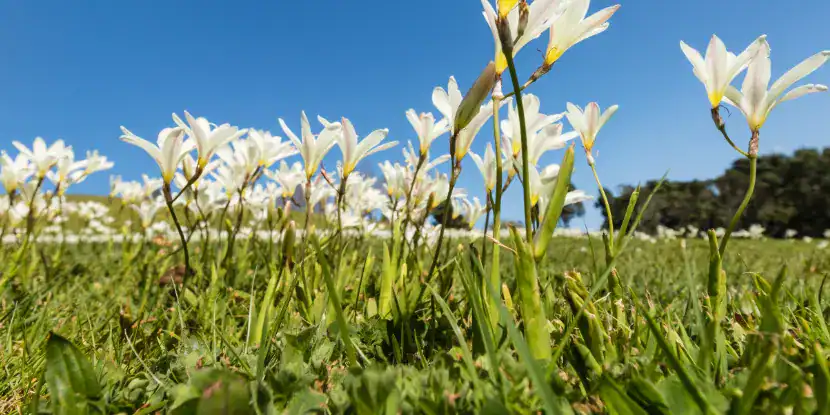
Wild freesias in a field.
When & How to Plant Freesia Bulbs in SoCal
Because freesias grow and bloom during the cooler months, timing is everything.
Best Planting Time
Plant freesia corms (bulbs) from October through December. This timing allows them to establish roots before blooming in late winter and spring.
Where to Plant
Choose a location that offers:
- Full sun or very light shade: Generally, more sun leads to more blooms.
- Well-draining soil: Soggy conditions may cause rot. If your soil is heavy clay, amend it with compost or plant corms in raised beds or containers.
Planting Depth & Spacing
- Plant corms 1–2 inches deep.
- Space them 2–3 inches apart.
- Plant in clusters or groups for the most dramatic visual impact.
- Water thoroughly after planting.
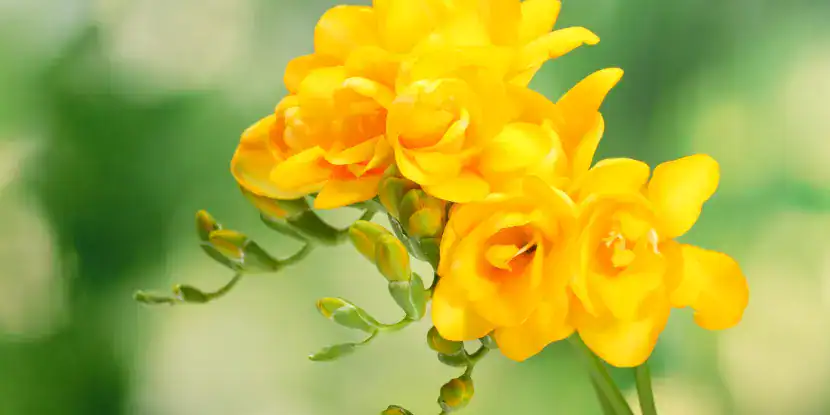
Close-up of vibrant yellow freesias blossoms.
Caring for Freesias Throughout the Year
Freesias require little maintenance. Following their natural growth cycle is the key to health.
During Growth (Winter–Spring)
- Keep the soil evenly moist but not waterlogged while the plants are growing.
- If your soil is poor, apply a balanced liquid fertilizer every 3–4 weeks during the growth period.
- Some taller freesia varieties may need support with small stakes or cages.
After Blooming
- After flowering, let the foliage die back naturally. Don’t cut green leaves; the corms need them to store energy for next year’s blooms.
- Reduce watering as the leaves begin to yellow.
- Stop watering once the foliage has died. You can leave the corms in the ground for next season.
Growing Freesias in Pots
Freesias are an excellent choice for container gardening if you want to enjoy their fragrance on a patio or balcony.
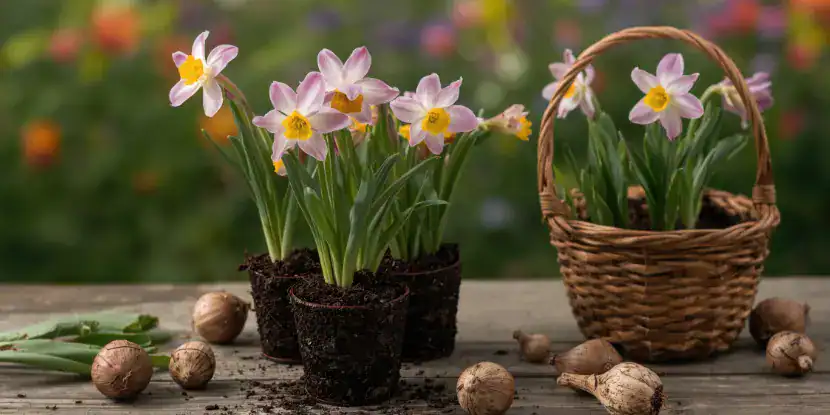
Freesias are easy to grow in pots or the garden. Your choice!
Container Requirements
- Use pots that are at least 6–8 inches deep.
- Ensure the pot has drainage holes.
- Choose a high-quality, well-draining potting mix. A mix formulated for bulbs is a good option.
Planting in Containers
- Plant corms close together, about 1–2 inches apart, to create a full, lush display.
- Water thoroughly after planting.
- Keep the soil lightly moist throughout the winter growing season.
Container-grown freesias bloom slightly earlier than those in the ground because the soil in pots warms up faster.
Propagating Freesias
Freesias naturally propagate by forming a new corm atop the old and producing small cormels at the base each year.
You can leave them in the ground to naturalize and form larger clumps, or you can dig them up after the foliage has died back.
Separate the cormels and replant them in the fall to expand your collection.
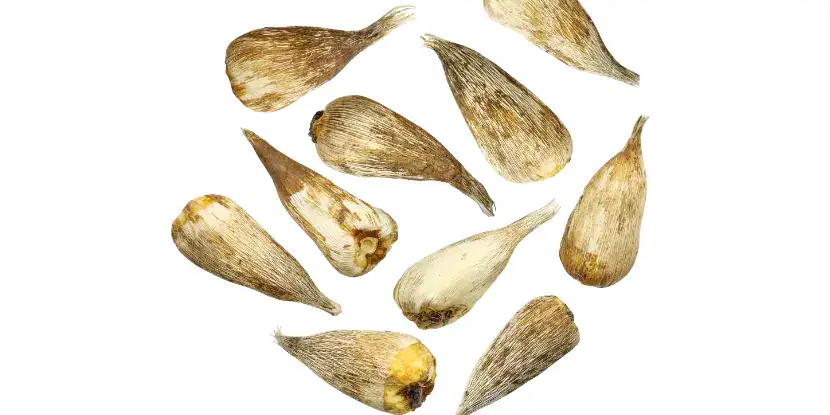
To store freesias corms, allow them to dry slightly and keep them in a cool, dark location. Your dungeon, maybe?
Little-Known Facts About Freesias
- Named for Friendship: The flower was named by botanist Christian Ecklon to honor his friendship with Dr. Friedrich Freese, making it a symbol of friendship and trust.
- Different Colors, Different Scents: White and yellow freesias are typically the most fragrant, while purple and red varieties have a more subtle, peppery scent.
- A Symbol of Innocence: Their delicate appearance and sweet fragrance have made them a popular choice for wedding bouquets, symbolizing innocence and purity.
- Excellent Cut Flowers: Freesias have a long vase life and can last up to three weeks, which is rare for such fragrant flowers.
- Sequential Blooming: The flowers on a freesia stem open sequentially from the bottom up, extending the bloom time and visual interest.
- A Model for Perfumers: The scent of freesia is so popular that it’s often used in soaps, lotions, and perfumes to create a “fresh” or “clean” fragrance.
- Bird-Pollinated in the Wild: In their native South Africa, freesias are pollinated by long-beaked sunbirds, not bees. Their trumpet-like shape evolved to accommodate bird pollination.
- Thousands of Hybrids: While there are only about 16 species of wild freesia, there are over 1,400 hybrids available today, bred for their wide range of colors and powerful scents.
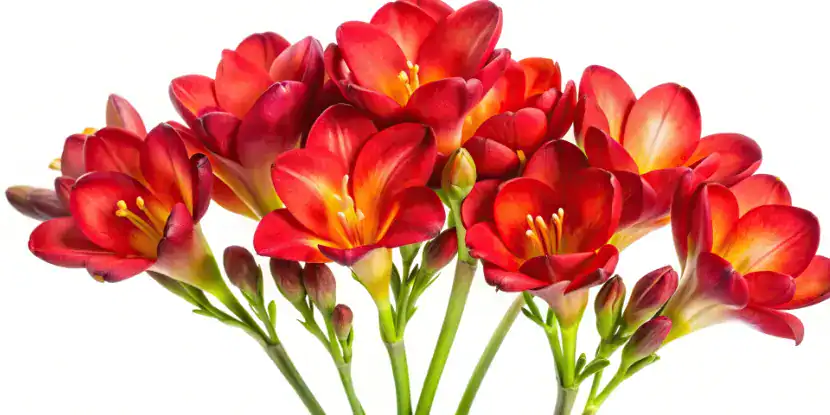
Freesias are excellent cut flowers and can last up to three weeks in a vase.
FAQs: How to Grow Freesias
Q: Do freesias come back every year in Southern California?
Yes, freesias are perennials and will come back every year if left in the ground. Their ability to naturalize makes them a reliable choice for local gardens.
Q: Should I soak freesia bulbs before planting?
Soaking freesia corms isn’t necessary and can increase the risk of rot, especially if the soil isn’t perfectly drained. Plant them directly into the soil.
Q: Why don’t my freesias bloom?
Common reasons include a lack of sun, corms being planted too deep, or cutting back the foliage too soon the previous season. Ensure they get at least six hours of direct sunlight.
Q: Can I plant freesia bulbs in the spring?
You can, but they probably won’t bloom the same year. Freesias need cool weather to trigger flowering, which is why fall planting is recommended in Southern California.
Q: How do I store freesia corms?
Wait until the foliage has completely died back. Brush off the soil, let the corms dry for a few days, and store them in a cool, dark, and dry place in a mesh bag until it’s time to replant in the fall.
Q: Are freesias deer-resistant?
Generally, yes. Bambi won’t bother you.
Q: Why are my freesia stems falling over?
Some hybrid varieties produce large, heavy blooms that overload the stems. You can support them with small stakes or choose shorter, more compact varieties.
Q: What pests or diseases affect freesias?
Freesias are usually trouble-free, but they can be affected by aphids or spider mites. Corm rot can also be an issue if the soil is too wet.
Q: Can I grow freesias indoors?
Yes, you can force freesias to bloom indoors. Plant the corms in a pot in late fall and place them in a cool, dark spot for several weeks before moving them to a sunny window.