
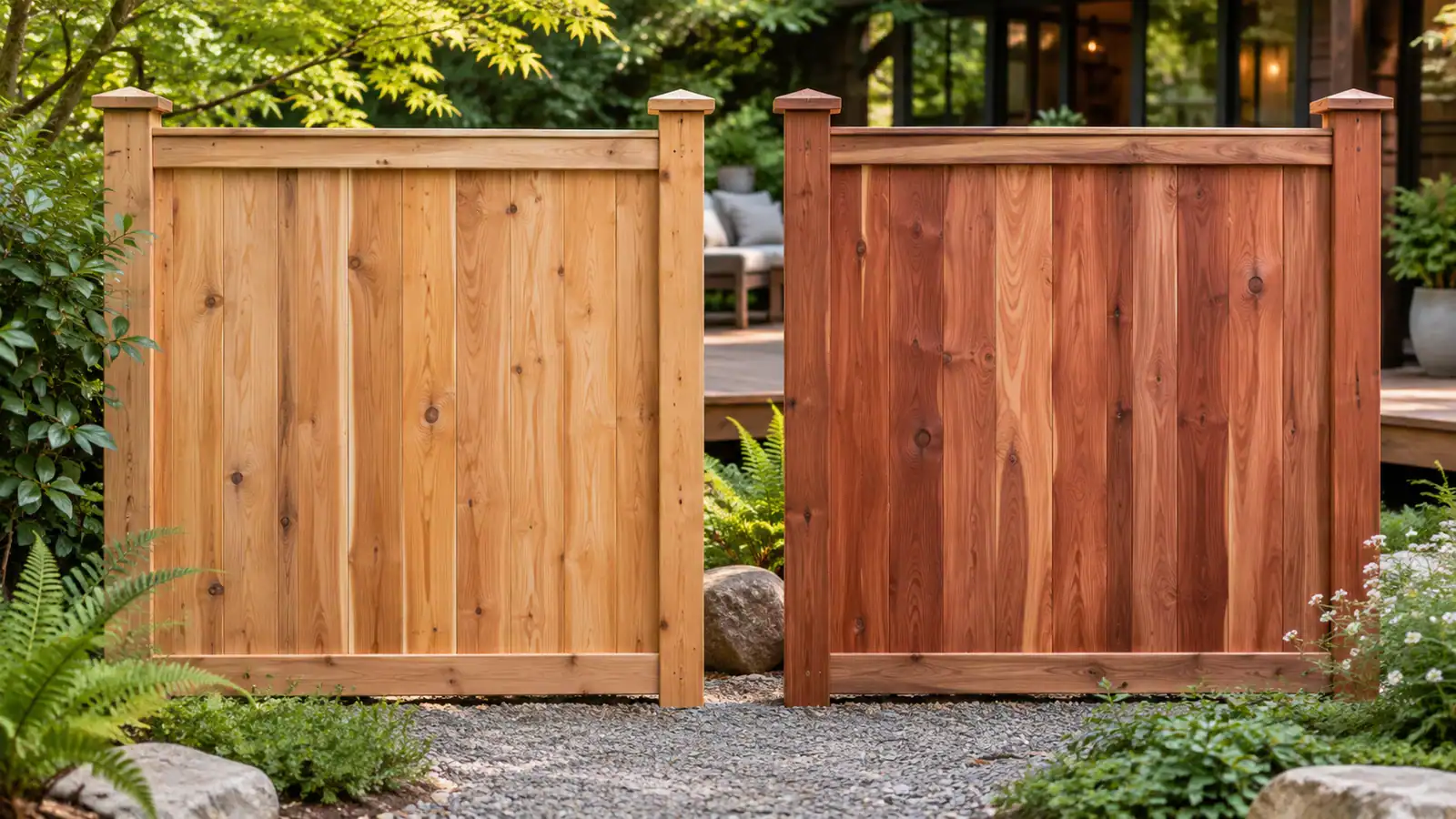
Choosing between cedar vs. redwood is less about finding one universally “better” wood and more about matching the lumber to the project.
Both are popular for fences and outdoor construction because their heartwood has natural resistance to decay. Redwood is known for its rich color, straight grain, and dimensional stability. Western red cedar is lightweight, easy to work with, and commonly used for fencing, siding, decks, and other exposed outdoor projects.
For Los Angeles homeowners and contractors, the better choice usually comes down to appearance, grade, budget, availability, and how the finished wood will be maintained.
For more project ideas, lumber tips, and home improvement guidance, visit the Anawalt Lumber Blog.
Cedar and redwood are both good choices for fences and outdoor projects. Western red cedar is lightweight, easy to cut, naturally decay-resistant, and often a practical choice for fencing. Redwood offers a distinctive reddish appearance, good dimensional stability, and natural durability, especially in higher-heartwood grades. For either species, grade and heartwood content matter almost as much as the name of the wood.
Key Takeaways
- Both western red cedar and redwood are naturally suited to many exterior projects.
- Cedar is lighter and particularly easy to cut, fasten, and handle on a jobsite.
- Redwood offers a distinctive color and relatively low shrinkage and swelling.
- Heartwood is generally more decay-resistant than sapwood, so grade selection matters.
- For fences, decks, and gates, compare actual boards, grades, dimensions, and price rather than choosing by species name alone.
Cedar vs. Redwood: Quick Comparison
| Factor | Western Red Cedar | Redwood |
| Natural decay resistance | High in heartwood | Varies; stronger in heartwood and older-growth material |
| Weight | Lightweight | Generally somewhat heavier |
| Workability | Very easy to cut and shape | Easy to work |
| Dimensional movement | Low | Low |
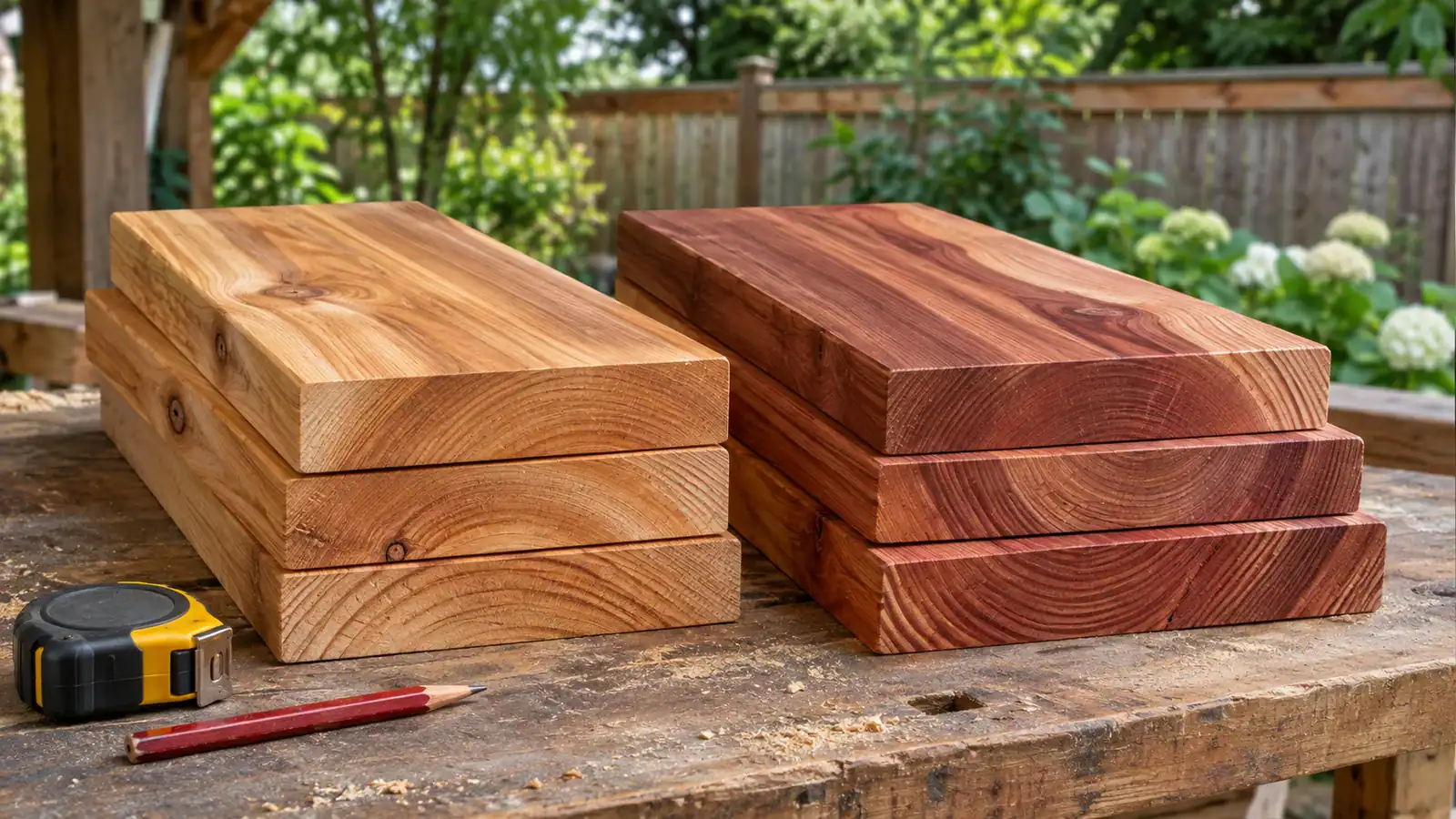
| Color | Pinkish/red-brown to brown | Light red to deeper reddish-brown |
| Common outdoor uses | Fences, siding, decking, posts, landscape structures | Fences, decking, siding, outdoor furniture |
| Best reason to choose | Ease of handling and versatile exterior use | Appearance and stable outdoor performance |
What Do We Mean by “Cedar”?
“Cedar” can refer to several different species, so a useful cedar vs. redwood comparison needs to be more specific.
For outdoor construction in the western United States, western red cedar is one of the most familiar options. It is lightweight, generally straight-grained, easy to work with, and widely used for exterior applications such as fences, siding, patio structures, and other outdoor projects.
If you are buying lumber for a fence, gate, planter, or outdoor structure, check the species and grade rather than assuming every board labeled “cedar” has identical characteristics.
If you are still comparing grades, dimensions, and material options, our guide to finding a lumber yard in Los Angeles can help you prepare before placing an order.
How Is Redwood Different?
Redwood comes from Sequoia sempervirens, a species native to coastal California.
Its appearance is one of the obvious differences. Redwood heartwood can range from light cherry red to a deeper reddish-brown. It is also known for being relatively easy to work with and dimensionally stable.
There is an important durability detail, though.
Not all redwood performs the same. Heartwood content and grade can make a noticeable difference in outdoor durability, which means the word “redwood” alone does not tell you everything about a particular board.
The grade matters.
Which Is Better for a Fence?
For most residential fences, either cedar or redwood can work well when the right grade is selected, and the fence is properly built.
Cedar has some practical jobsite advantages. It is light, easy to cut, and commonly available in dimensions suited to fencing.
Redwood is also widely used for fences and can be especially appealing when the natural reddish color is an important part of the design.
Cedar may make more sense when:
- you want lighter boards that are easy to handle;
- cedar grades and dimensions fit the project budget;
- the fence design requires plenty of field cutting;
- you prefer cedar’s lighter brown and reddish tones.
Redwood may make more sense when:
- you want its distinctive California appearance;
- clear or higher-heartwood grades fit your budget;
- the fence is a highly visible landscaping feature;
- you prefer the deeper red color and grain.
For posts or components exposed to especially demanding moisture conditions, ask what material and grade are appropriate rather than assuming every untreated board is suitable for ground contact.
Your lumber is only part of the fence build. Fasteners, connectors, tools, and other supplies matter too, so it can help to review your options through a local hardware store in Los Angeles before finalizing the material list.
Which Wood Handles Outdoor Exposure Better?
Both species have strong reputations for exterior use, but the comparison is more complicated than saying one always lasts longer.
Natural durability comes primarily from the heartwood.
Sapwood generally does not provide the same level of decay resistance. Durability can also vary between individual boards.
A better way to compare lumber is:
Species + Grade + Heartwood Content + Installation + Exposure
A lower-grade board with a large amount of sapwood should not be expected to perform exactly like a premium heartwood board just because they come from the same species.
Which One Is Easier to Work With?
Western red cedar is particularly easy to handle.
It is relatively soft and lightweight, cuts easily, and works well for projects that require plenty of on-site trimming or fitting.
That can be useful when you’re installing fence boards, building gates, cutting around landscaping, or working on a project without heavy equipment.
Redwood is also easy to cut and shape and is commonly selected for outdoor projects where appearance matters.
For DIY projects, board quality may matter more than the species itself. Straight, properly stored lumber is far easier to work with than twisted, checked, or damaged boards.
What About Color and Weathering?
Fresh cedar and redwood have noticeably different appearances.
Cedar tends toward pink, reddish-brown, and warm brown tones. Redwood often has stronger red and reddish-brown coloring.
Left unfinished outdoors, both woods will gradually weather and change color.
If you want to preserve more of the original tone, plan for an appropriate exterior finish and periodic maintenance. If you prefer the naturally weathered look, allowing the wood to age may be part of the design.
The right approach depends on the project.
A backyard privacy fence does not necessarily need the same finish strategy as a prominent gate, pergola, or decorative screen.
Is Cedar or Redwood Cheaper?
There is no permanent winner on price.
Lumber cost changes with:
- species;
- grade;
- dimensions;
- quantity;
- availability;
- heartwood content; and
- local inventory.
Clear material can cost considerably more than knotty grades, and specialty dimensions can shift the comparison again.
Instead of comparing species names alone, compare similar products side by side. Our overview of building materials in Los Angeles can also help when your project requires more than lumber alone.
Use this buying checklist:
- Species
- Grade
- Board dimensions
- Heartwood and sapwood characteristics
- Surface quality
- Quantity needed
- Fasteners and hardware
- Finish or sealer
For fencing projects, remember to include posts, rails, pickets, gates, fasteners, concrete, and finishing products in the overall budget.
Which Is Better for Other Outdoor Projects?
The better wood depends on how the project will be used.
| Project | What Matters Most |
| Privacy fence | Grade, straightness, cost, appearance |
| Gate | Weight, stability, hardware, frame design |
| Deck | Grade, fastening, exposure, maintenance |
| Pergola | Appearance, dimensions, structural requirements |
| Planter | Moisture exposure and material selection |
| Outdoor furniture | Grain, appearance, workability |
| Decorative screen | Color, grade, dimensional stability |
For structural projects, do not choose lumber based only on color or decay resistance. Required grades, dimensions, spans, connections, and local construction requirements also matter.
Cedar vs. Redwood: Which Should You Buy?
There is no reason to force the decision before seeing what material is actually available.
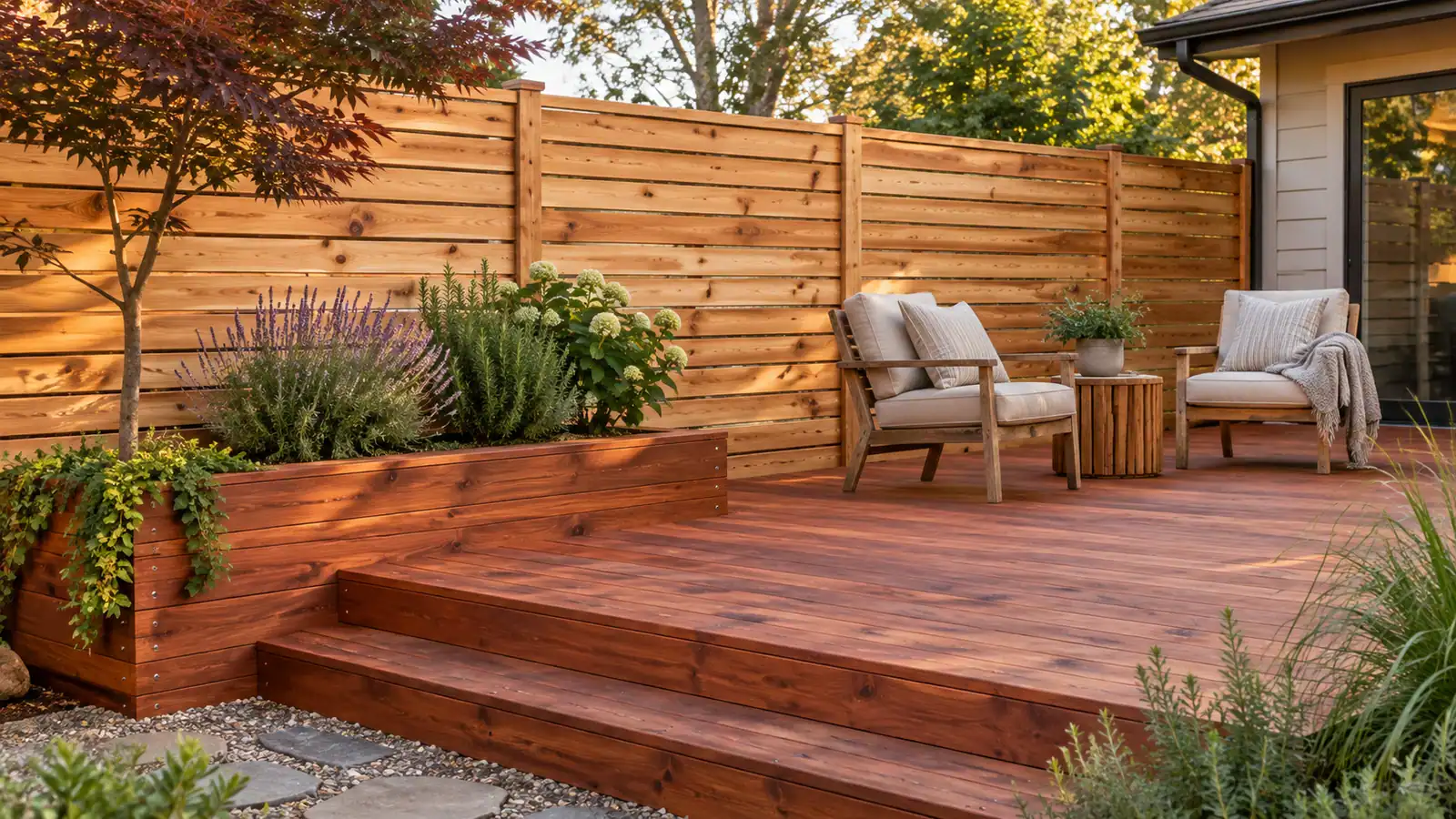
Choose western red cedar when easy handling, exterior durability, and versatility are priorities.
Choose redwood when you particularly value its deeper color, California character, and stable outdoor performance.
Then inspect the lumber itself.
For many outdoor projects, the better stack of boards—in the right grade, dimensions, condition, and price range—is more important than winning a theoretical cedar-versus-redwood debate.
Find Cedar, Redwood, and Outdoor Building Materials at Anawalt Lumber
At Anawalt Lumber, we’ve served Los Angeles-area contractors, builders, homeowners, and DIY customers since 1923.
Our stores serve communities including West Los Angeles, West Hollywood, Hollywood/Highland, Malibu, and Pacific Palisades. Inventory can vary by location, so checking availability before starting a larger project can save time.
Need directions or want to visit a store? Find Anawalt Lumber on Google Maps.
We can help you compare lumber, hardware, fasteners, finishes, and other materials needed for fences and outdoor projects. Anawalt Lumber also offers project quotes, delivery, special-order assistance, and product guidance for both professional and DIY customers.
Bring us your material list—or just your project idea—and our team can help you narrow down the lumber and supplies that fit the job.
Frequently Asked Questions
Is cedar or redwood better for a fence?
Both can work well. Cedar is lightweight and easy to handle, while redwood offers a distinctive appearance and good dimensional stability. Grade, heartwood content, installation, and budget should guide the final decision.
Which lasts longer, cedar or redwood?
There is no single lifespan that applies to every cedar or redwood product. Natural durability varies by grade, heartwood content, moisture exposure, installation quality, and maintenance.
Does cedar need to be sealed outdoors?
Cedar can be used outdoors unfinished, but an appropriate exterior finish may help maintain its original color and appearance longer.
Does redwood turn gray?
Yes. Unfinished redwood naturally changes color as it weathers. Applying a suitable exterior finish can help preserve more of its reddish appearance.
Is cedar lighter than redwood?
Western red cedar is notably lightweight, which is one reason it is popular for fences, siding, and other outdoor projects requiring frequent handling and cutting.
Where can I buy cedar or redwood in Los Angeles?
Anawalt Lumber serves contractors, homeowners, builders, and DIY customers across several Los Angeles-area communities. Contact your preferred store before visiting if you need a particular species, grade, dimension, or quantity because inventory can vary by location.