
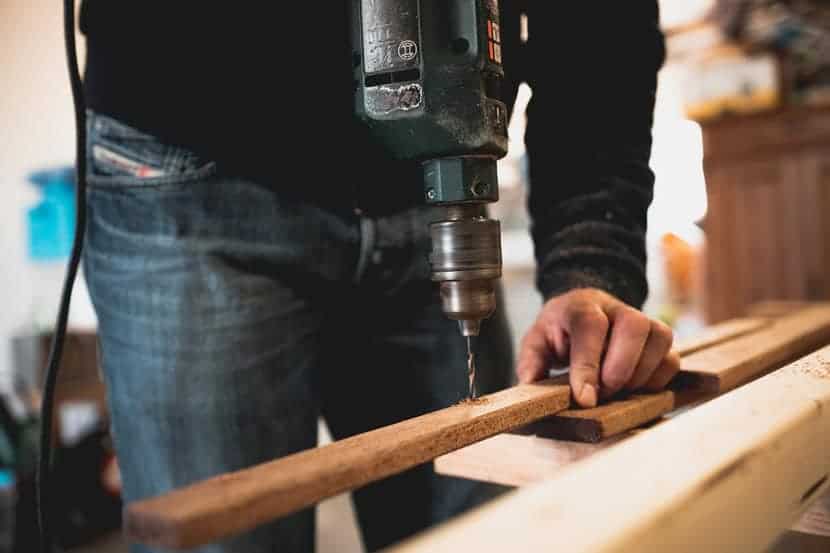
People ask us at the counter all the time which cordless drill is the best one, and the honest answer is that it depends. A drill that’s perfect for putting together bookshelves will wear you out on a deck, and the batteries you already own matter more than most people think. So instead of naming one model, here’s how we help people narrow it down.
What Voltage Do You Need?
Most cordless drills you’ll see are 12-volt or 18-volt. Some brands call their 18-volt tools “20V Max,” but they’re in the same class and are just measured a different way. There are higher-voltage lines too, mostly for heavy drilling and mixing.
A 12V drill is light and easy to control, which is nice for furniture, cabinets, and working in tight spots, but it can struggle with big bits and long screws, though. An 18V or 20V Max drill is heavier, but it has the power for decks, framing and general building. If you’re mostly hanging shelves and doing small repairs, 12V is plenty. If you’re boring holes through studs or driving long screws all afternoon, go with 18V or 20V Max.
Is a Brushless Motor Worth It?
If you use a drill often, we think it is, because a brushless motor is controlled by electronics instead of small carbon brushes, so it runs with less friction and less heat. That usually means more work out of each battery charge and a drill that doesn’t slow down as much in hard wood.
Brushed drills still work fine for someone who only pulls one out a few times a year, since they’re simpler and they get the job done. For weekend projects or regular use, brushless usually pays for itself over time.
What Do the Chuck and Clutch Do?
The chuck is the part on the front that holds the bit. Most drills have either a 3/8-inch or a 1/2-inch chuck. The bigger one fits larger bits and holds them tighter, which helps a lot with hole saws and spade bits, while the smaller one keeps the drill compact and light for overhead work.
The clutch is the ring with numbers on it just behind the chuck, and it controls how much twisting force the drill uses before it slips. On a low setting, it stops a screw before it goes in too deep or strips the head, which is handy for cabinets, trim, and drywall. The drill setting gives you full power for making holes.
Most drills also have two speed settings, where the low one gives more torque for screws, and the high one is better for drilling. Anawalt Lumber guide to types of drill bits explains which bits work best with each.
Why Does the Battery Brand Matter?
Brands build a whole family of tools that run on the same battery. Once you have two or three of those batteries, it usually makes sense to keep buying tools from that brand so they all work together.
Before you buy, it helps to think about what else you might want down the road, maybe an impact driver, a circular saw, or a work light, and pick a brand that makes those too. We carry Milwaukee, Makita, and DeWalt, and our staff can tell you how the lines compare.
Battery size matters as well, since the amp-hour rating gives you a rough idea of how long the drill will run. A 2.0Ah pack keeps the tool light, and a 5.0Ah pack lasts longer but is heavier. Plenty of people keep one of each on hand.
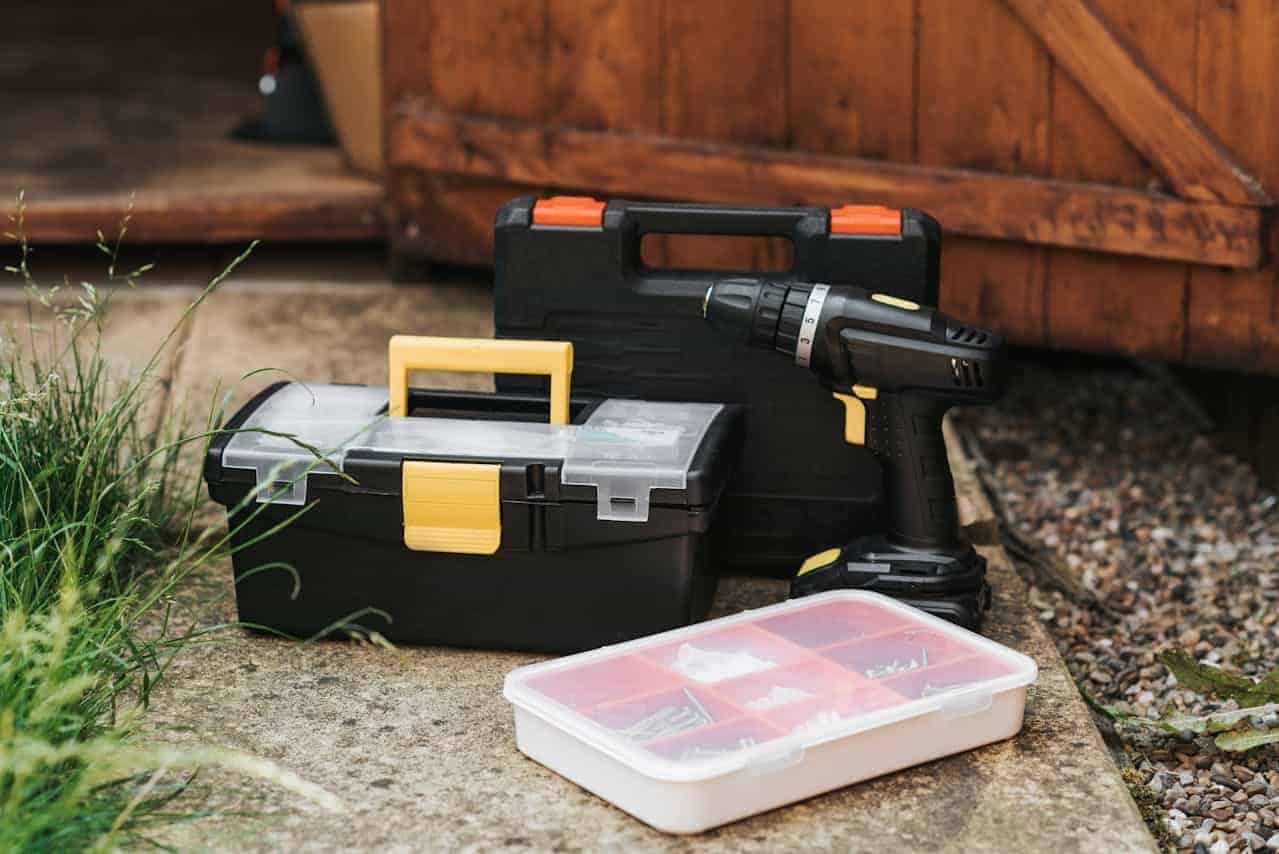
Drill, Impact Driver or Hammer Drill?
A regular drill driver covers most jobs around the house. An impact driver is made for driving screws and lag bolts, and it uses quick bursts of force to do that. A hammer drill adds a pounding motion so it can drill into brick, block, and concrete. You can read more in our comparison of an impact driver vs. a hammer drill and our overview of the types of drills. A lot of people end up buying a drill and impact driver as a kit, since the two together handle most of what comes up.
What Else Should You Check Before You Buy?
Pick up the drill and hold it for a minute before you buy it, because weight and balance feel a lot different in your hand than they look on the shelf, and that matters by the end of a long day. A built-in LED light is more useful than it sounds when you’re working inside a cabinet, and a belt hook keeps the drill close when you’re up on a ladder, and a battery gauge tells you when it’s time to swap packs. It’s also worth looking at the warranty.
How Do You Make a Drill Last?
Keep the batteries inside, out of a hot garage or truck, and charge them before they’re completely empty. Every so often, you should blow the dust out of the vents and wipe off the chuck so it keeps a good grip. Using the right bit for the material puts less strain on the motor, and our guide on drill bits for wood, metal, and masonry can help you choose.
So Which One Should You Get?
If you live in an apartment and mostly build furniture and hang pictures, a compact 12V drill will do almost everything you need without tiring out your wrist. If you own a house and have a deck or fence project coming up, look at an 18V or 20V Max brushless drill, and think about adding an impact driver. People who use their tools on the job every day usually go with a full-size brushless drill and bigger batteries, since sitting around waiting for a charge costs them time.
Find the Right Drill at Anawalt Lumber
Choosing the best cordless drill comes down to the work you do, the power you need, and the battery platform you’ll grow with. Stop by one of our Los Angeles area stores in West LA, West Hollywood, Hollywood, Malibu, or Pacific Palisades, and our team will help you compare models. You can also call our West LA store at (310) 478-0324 or contact us online.
Frequently Asked Questions
Q: Is 12V or 18V better for a homeowner?
A: A 12V drill is great for light jobs and tight spaces. An 18V or 20V Max drill is the better choice for decks, framing or long screws.
Q: Is 20V Max more powerful than 18V?
A: No. Both labels describe the same voltage class. The difference is mostly in how brands measure and market the battery.
Q: Do I need a brushless drill?
A: If you use your drill often, brushless is worth it for runtime and tool life. For occasional use, a brushed drill can be fine.
Q: What size chuck should I get?
A: A 1/2-inch chuck handles larger bits and heavier work. A 3/8-inch chuck keeps the drill smaller for lighter jobs.
Q: Should I buy a drill and impact driver combo?
A: Many people do, since the two tools together cover most drilling and driving around the house.