
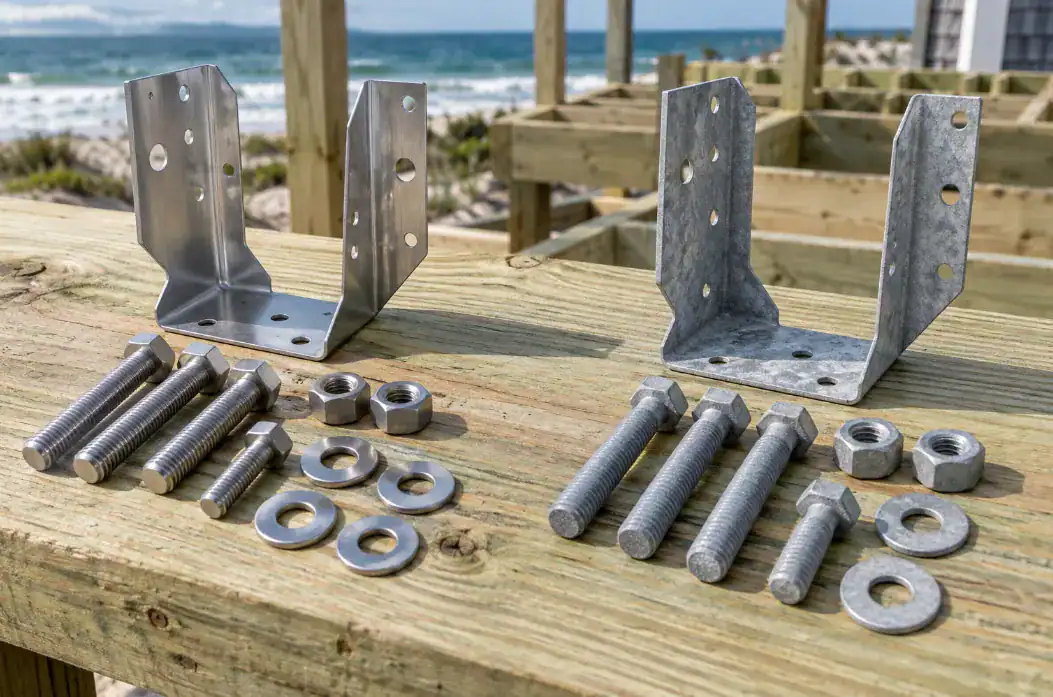
A box of screws seems like a small part of a building project. Near the coast, though, that choice deserves attention. When comparing stainless vs galvanized fasteners, we start with where the hardware will live, what it will touch, and how wet it may stay.
At Anawalt Lumber, our advice is simple: choose the connection before choosing the cheapest box. Salt, damp wood, and mixed metals can create problems that are hard to see until repairs become difficult.
The right answer depends on the project. Here is what matters.
Key Takeaways
- Type 316 stainless steel generally suits harsh coastal exposure better than Type 304.
- Hot-dip galvanized fasteners use zinc to protect the steel underneath.
- A thin zinc plating is not the same as hot-dip galvanizing.
- Treated lumber and connectors need compatible fasteners.
- Corrosion resistance does not replace structural strength requirements.
- Follow the project specifications and hardware manufacturer’s instructions.
Why Are Coastal Construction Fasteners Different?
Salt carried by wind can reach outdoor hardware even without direct ocean spray. Add moisture, and corrosion becomes a bigger concern.
Some connections dry quickly. Others stay damp under decking or behind boards. That difference matters.
When weighing stainless vs galvanized fasteners, describe the actual conditions instead of simply saying the property is near the beach.
Ask yourself:
- Will salt spray reach the connection?
- Can water collect around it?
- Will the wood remain damp?
- Can the hardware be inspected later?
A sheltered location may still collect salt. Being under a roof does not automatically make a connection low risk.
How Do Hot-Dip Galvanized Fasteners Work?
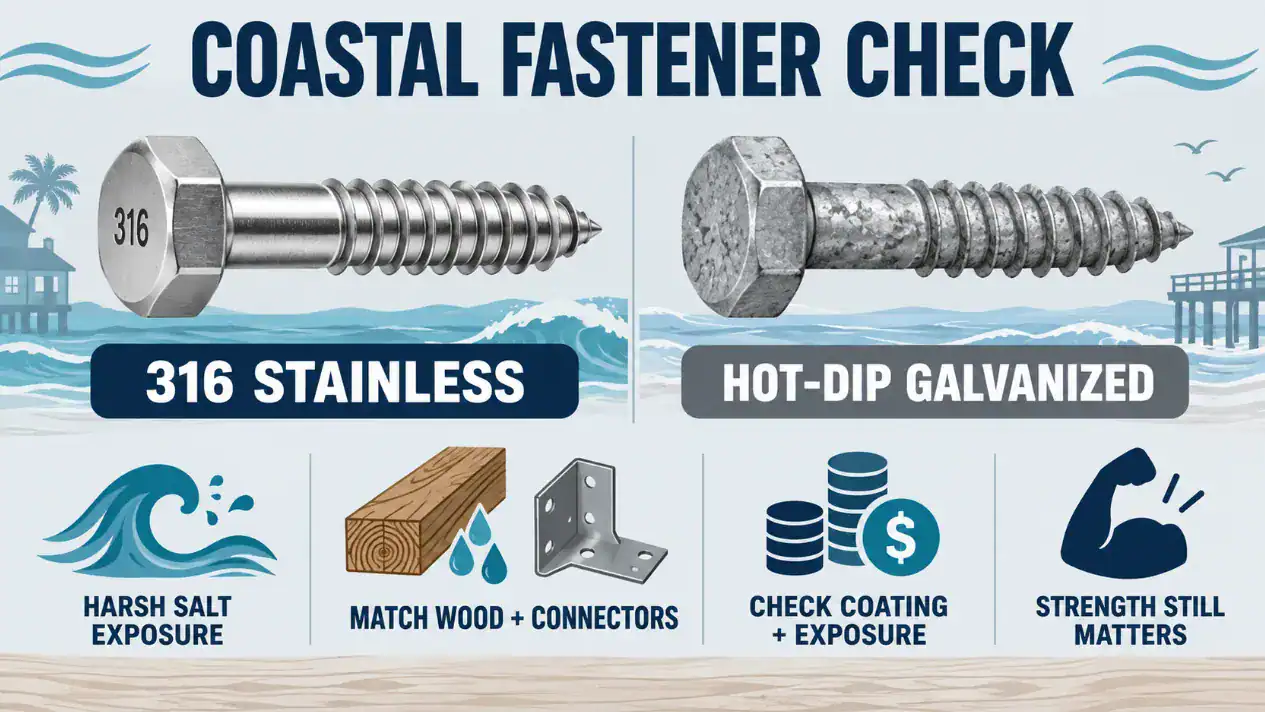
Hot-dip galvanizing covers steel with a protective zinc coating. The zinc acts as a barrier and corrodes before the underlying steel, helping protect it.
That protection has limits. Exposure and coating thickness affect how long it lasts.
Do not treat every silver screw as equal. Electroplated zinc coatings are often thinner than hot-dip coatings. Check the product specifications, not its shine.
For stainless vs galvanized fasteners, the word “galvanized” needs more detail. Ask which coating the fastener has and whether the manufacturer approves it for your wood, connector, and exposure.
What Is the Difference Between 304 and 316 Stainless Steel?
Stainless steel gets its corrosion resistance from its alloy composition and protective surface film. It does not depend on a zinc coating.
Type 304 works well in many settings. Type 316 contains molybdenum, which improves resistance to chloride attack, including the pitting associated with salty conditions.
That makes 316 an important option for stainless steel fasteners for coastal construction.
Still, stainless does not mean immune to corrosion. Trapped moisture and harsh exposure can create problems.
When comparing stainless vs galvanized fasteners, verify the actual stainless grade. “Marine-grade” is a label worth checking, not a complete product specification.
Which Fasteners Work With Pressure-Treated Wood?
Wood preservatives can affect metal corrosion. The treatment type, chemical amount, moisture, and intended use all matter.
Some treated lumber applications allow suitable hot-dip galvanized hardware. More demanding conditions may call for stainless steel.
Keep the lumber’s treatment tag and check its fastening guidance. Then compare that information with the fastener and connector instructions.
Our approach to stainless vs galvanized fasteners is to check the wood and the environment together. Approval for treated wood alone does not prove that a screw suits direct salt exposure.
Perhaps the box says “exterior.” We would still read the details.
Why Do Compatible Connectors and Fasteners Matter?
A hanger, its nails, and the wood form one connection. Upgrading only one piece can create a mismatch.
Galvanic corrosion can occur when different metals touch in the presence of moisture that carries electrical current. Saltwater makes that concern especially relevant.
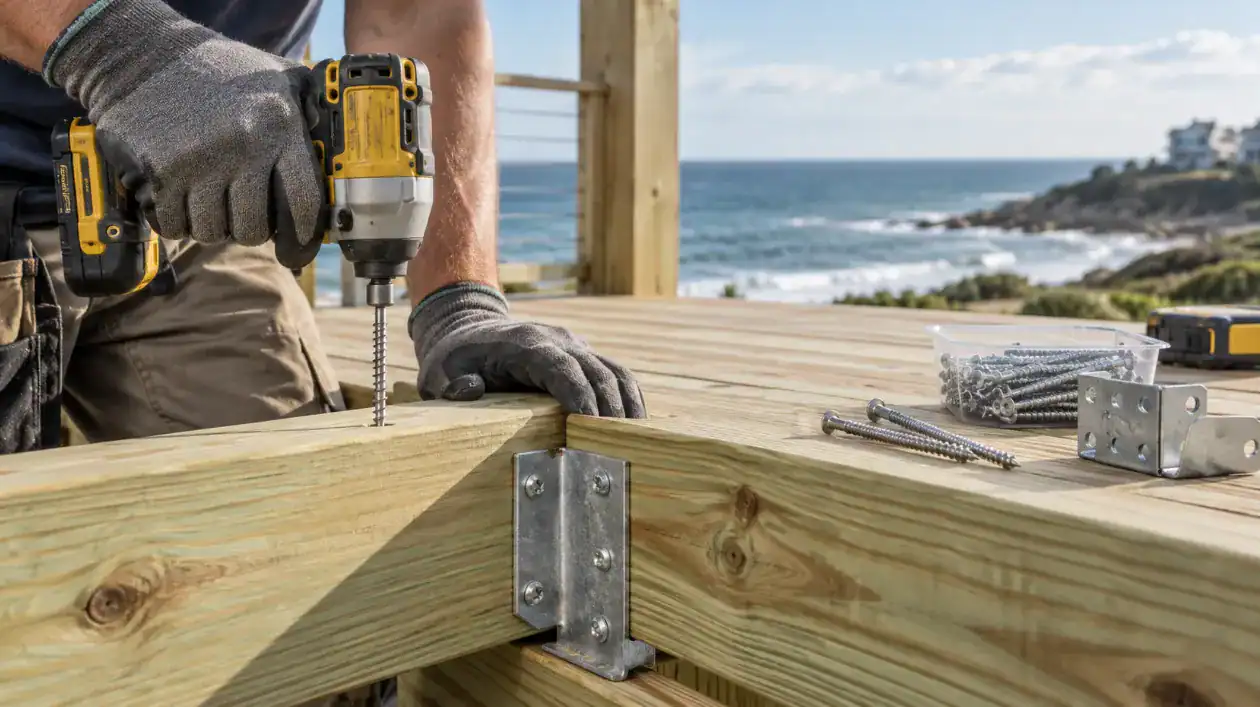
Use the connector manufacturer’s approved fasteners. For example, Simpson Strong-Tie specifies Type 316 fasteners for its Type 316 stainless connectors.
Do not assume stainless screws improve a galvanized hanger. Do not replace specified connector nails with ordinary deck screws either.
Material, diameter, length, and installation pattern all affect the connection.
How Should You Compare Galvanized vs Stainless Steel Cost?
Stainless hardware usually costs more upfront. The difference depends on grade, size, product design, and quantity.
But the box price is only part of the expense. Reaching buried connections or taking apart finished decking can make replacement costly.
Compare stainless vs galvanized fasteners using the complete job cost. Include compatible connectors, required hardware, installation, and future access.
For an exposed coastal deck, paying more for a suitable system may be sensible. For another project, approved galvanized hardware may meet the requirements.
We would rather explain that difference than suggest one material fits everything.
Plan for inspections after installation too. Look for rust, loose hardware, staining, or damaged coatings where connections are visible. If a structural connection looks corroded, have it assessed before covering it or replacing a few fasteners and assuming everything is sound.
FAQs
Are Stainless Fasteners Always Stronger?
No. Corrosion resistance and strength are different properties. Use the specified fastener grade and published structural ratings. A stainless screw is not automatically a replacement for a structural steel screw.
Can Galvanized Bolts Be Used Near the Ocean?
Sometimes, if the product guidance and project specifications allow them for that exposure. Direct spray or persistent salt and moisture may require a different material. Confirm the complete connection, including nuts and washers.
Does a Corrosion Rating Predict Exact Service Life?
No. Test results help compare products under stated conditions. They do not promise a fixed number of years on your deck. Actual exposure and installation can differ greatly.
What Should You Bring to Anawalt Lumber?
Before choosing stainless vs galvanized fasteners, bring the lumber treatment tag, connector model, project plans, and photos of the location.
Tell us whether the hardware will face salt spray, trapped moisture, or difficult access. We can discuss the product information with you and identify questions for the manufacturer or project designer.
A little checking now can prevent a frustrating mismatch later. Small hardware deserves careful thought, especially when it holds the larger project together.