
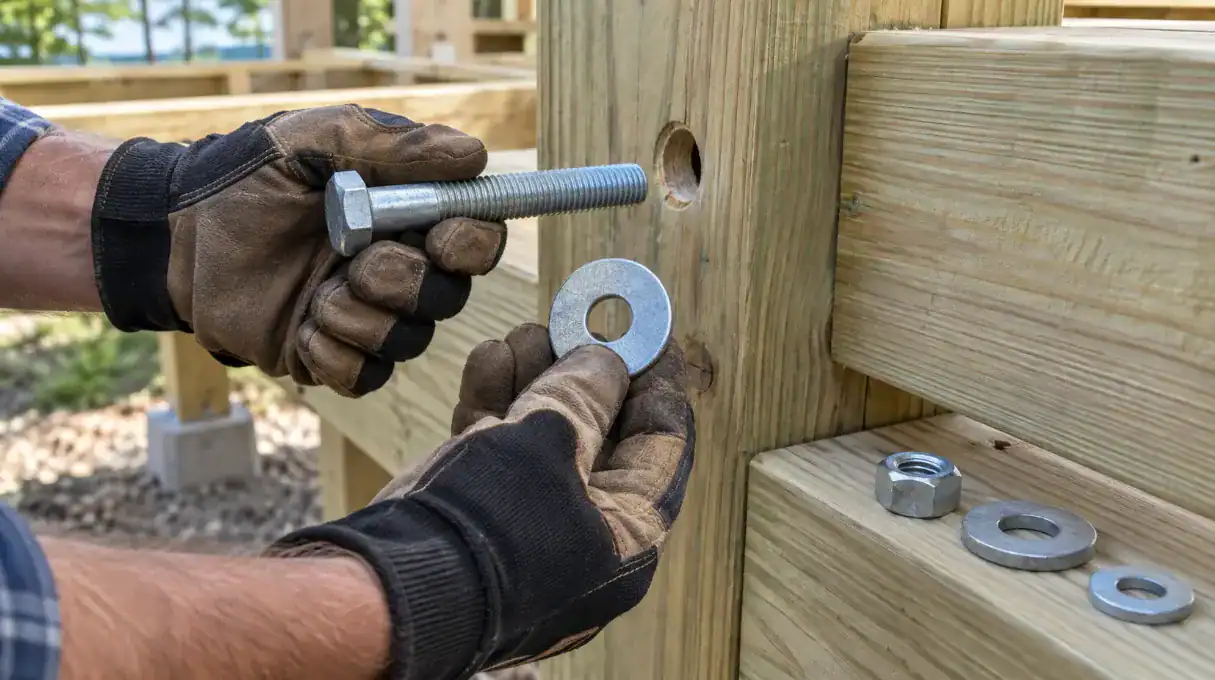
A washer may be one of the smallest pieces in a building project. It looks simple too. Just a flat metal ring. Still, that little piece can make a real difference when a bolt is tightened against wood. Knowing when to use washers with bolts can help protect the wood, support the connection, and keep the bolt or nut from sinking into the surface.
At Anawalt Lumber, we often see projects where the main focus is placed on the bolt. That makes sense. The bolt does most of the holding. But the hardware around it matters as well. Understanding when to use washers with bolts is especially important for decks, beams, posts, outdoor structures, and other connections that carry weight.
A washer does not make a weak connection strong by itself. It cannot correct the wrong bolt size or damaged lumber. What it can do is spread pressure across a wider part of the wood.
What Does a Washer Actually Do?
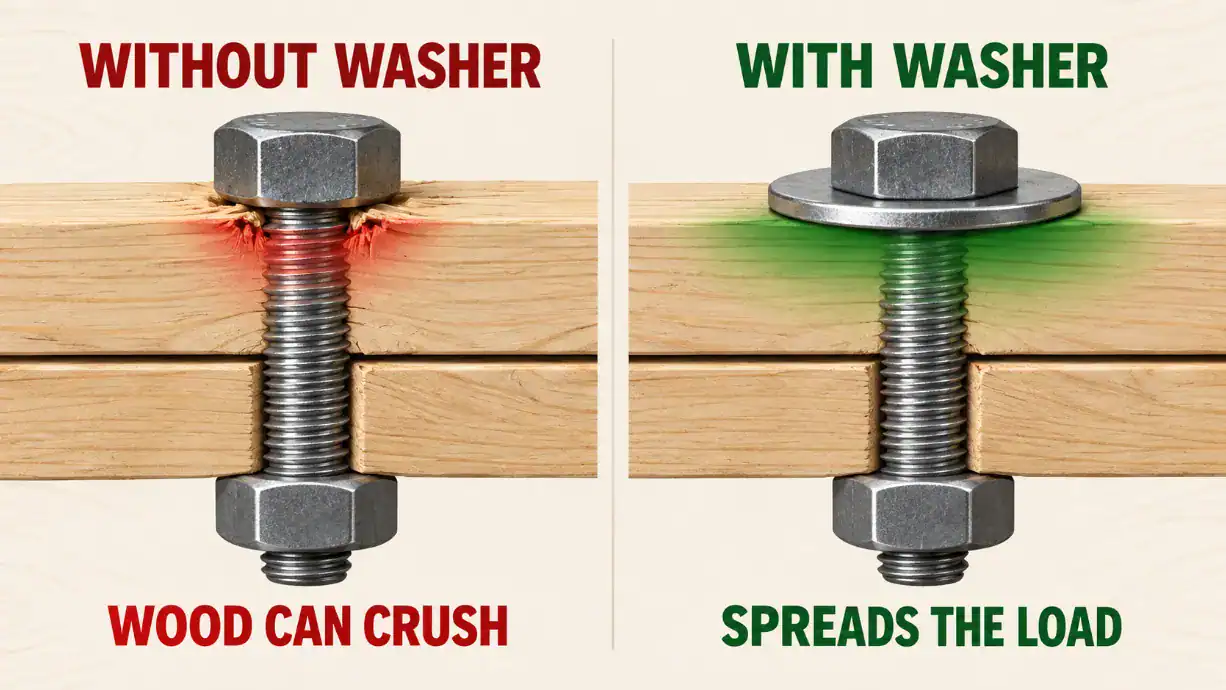
When you tighten a bolt, the head of the bolt and the nut press against the material. Steel can handle a great deal of pressure in a small area. Wood is different.
Wood fibers can compress under a small metal surface. If the bolt is tightened too much, the head or nut may begin to sink into the lumber. The connection might still look secure, but the crushed area can reduce its ability to remain tight.
A washer creates a larger washer bearing surface. Instead of placing all the force beneath a small bolt head or nut, it spreads the force over more wood. This is known as washer load distribution.
Better load distribution can reduce bolt bearing pressure at the surface. It also helps with preventing bolts from crushing wood, especially when the lumber is soft or the connection carries a heavy load.
This is the basic answer to when to use washers with bolts. Use them when the connection needs a broader bearing surface or when the plans, hardware instructions, or building requirements call for them.
Why Wood Connections Often Need Washers
Wood is strong, but it is not equally hard in every direction. It also changes over time.
Lumber can shrink as it dries. Outdoor wood may swell during wet weather and shrink during dry weather. These small movements can affect how tightly a bolted connection fits.
Washers for wood connections help protect the surface while the bolt is tightened. They may also give the nut or bolt head a more even place to rest. This is useful when the wood surface is a little rough.
Bolt washers for wood are commonly used in connections involving posts, beams, deck framing, ledgers, outdoor stairs, pergolas, and heavy timber. They may also be needed where a bolt passes through more than one piece of lumber.
Of course, not every hole needs the largest washer available. Hardware should be selected for the actual connection.
Washers Under Bolt Heads and Nuts
Should washers go on both ends of a bolt? Sometimes yes.
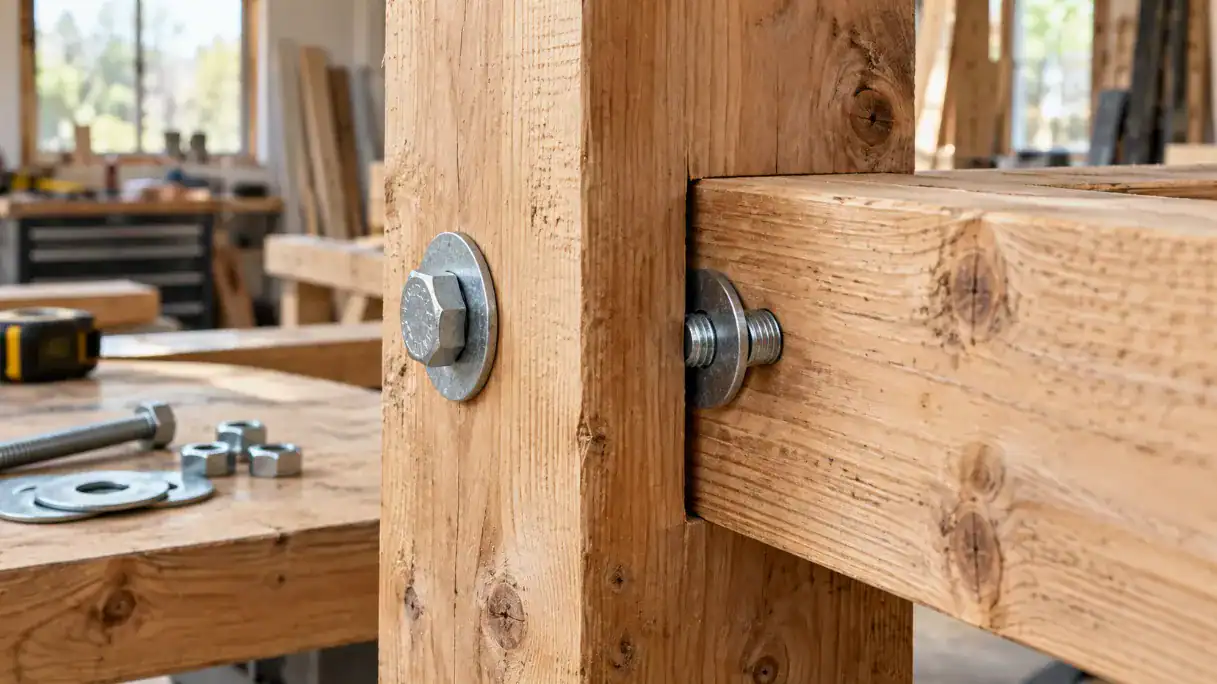
Washers under bolt heads protect the wood on the head side. Washers under nuts protect the surface where the nut is tightened. If both sides of the connection press directly against wood, placing a washer on both ends is often sensible.
There are exceptions. A bolt head may sit against a steel plate or another approved piece of hardware that already provides a broad bearing surface. In that case, an additional washer may not be needed.
The project plans may also show exactly where each washer belongs. For engineered connections, follow those details instead of making a guess.
When deciding when to use washers with bolts, look at both sides of the connection. Ask what the bolt head touches and what the nut touches. If either side presses against bare wood, a washer may be needed to protect that surface.
Flat Washers, Fender Washers, and Plate Washers
Not all washers are the same. Their outside diameter, thickness, material, and intended use can vary quite a bit.
Flat Washers for Bolts
Standard flat washers for bolts are common in general construction. They spread the clamping force beyond the bolt head or nut and help protect the surface underneath.
The washer must fit the bolt correctly. A hole that is far too large may allow the washer to shift. A washer that is too small on the outside may not spread enough pressure.
Fender Washers for Wood
Fender washers for wood have a larger outside diameter compared with their center hole. They spread force across a wider area than many standard washers.
They may help with preventing fastener pull-through in certain light-duty or nonstructural projects. Still, a wide washer is not automatically a structural washer. Some fender washers are thin and can bend under heavy pressure.
Plate Washers for Wood
Plate washers for wood are usually thicker and wider. They may be square or rectangular rather than round. Their large surface can distribute heavy loads across more wood.
Structural washers for wood are often specified for timber framing, hold-down systems, anchor bolts, and other load-carrying connections. Their dimensions and strength should match the approved design.
For serious washers for structural connections, do not replace a specified plate washer with a thinner hardware-store washer simply because the bolt fits through it.
Choosing the Correct Washer Size
The correct washer size for bolts involves more than matching the center hole to the bolt diameter.
The opening should fit around the bolt without leaving an excessive gap. The outside diameter should provide enough bearing area for the wood and the expected load. The washer must also be thick enough that it will not bend or dish when the connection is tightened.
A very wide but thin washer may bend around the bolt head. Once that happens, it may stop spreading the load evenly.
This is another part of understanding when to use washers with bolts. First decide whether a washer is needed. Then select a washer made for the fastener, material, and load involved.
For structural work, the construction plans, connector manufacturer, engineer, or applicable building requirements should determine the final size.
Washers for Lag Bolts and Structural Screws
Washers for lag bolts are often used when the head would otherwise press directly into wood. The washer gives the head a wider surface and may reduce crushing as the lag bolt is tightened.
A pilot hole is usually important too. Driving a large lag bolt without the proper pilot hole can split the lumber or make the fastener difficult to install. The required hole depends on the wood, fastener diameter, and product instructions.
Washers for structural screws work a little differently. Many modern structural screws come with wide built-in heads designed to spread pressure. Some products need separate washers, while others do not.
Do not automatically add a washer to every structural screw. An extra washer could interfere with a tested connector or keep the head from seating correctly. Follow the screw manufacturer’s instructions.
Wood connection hardware works as a system. The bolt, screw, washer, nut, connector, and lumber all need to suit one another.
Outdoor Projects Need the Right Metal
Exterior hardware has to deal with rain, humidity, and sometimes salty air. The washer should have corrosion resistance that is compatible with the bolt, nut, connector, and surrounding material.
Galvanized washers for treated lumber are commonly used because some wood treatments can be corrosive to unprotected steel. The exact coating should match the other fasteners and meet the recommendations for the lumber being used.
Stainless steel washers for exterior wood may be a good choice in wet or coastal environments. But mixing stainless steel with other metals requires care. Dissimilar metals can react when moisture is present.
Try to keep the bolt, nut, washer, and connector within a compatible hardware system. A strong connection is not helped much if one small part begins rusting early.
Can a Washer Fix an Oversized Hole?
Not really.
A larger washer may cover an oversized hole, but that does not mean the connection is safe. The bolt may still move inside the hole. That movement can damage the wood and reduce the way loads transfer through the connection.
The same warning applies to cracked, rotted, or badly crushed lumber. A washer can distribute pressure over sound wood. It cannot restore wood that has already lost its strength.
If a structural hole was drilled too large or in the wrong place, pause before continuing. The correct repair may need guidance from the project designer, connector manufacturer, or a qualified professional.
Avoid Tightening the Bolt Too Much
Washers help protect wood, but overtightening can still cause damage.
The goal is usually to bring the connected pieces together firmly without crushing the fibers. If the washer begins sinking deeply into the lumber, the bolt may be too tight or the washer may be too small.
Power tools can make this happen quickly. A large impact wrench has enough force to bury a washer before the installer realizes it.
Wood can also shrink after installation. A connection that felt tight on the first day may loosen later. Some bolted wood connections should be inspected and tightened again after the lumber has had time to dry or settle. Follow the project instructions because not every connection should be handled in exactly the same way.
A Simple Washer Checklist
Before assembling a bolted wood connection, check the following:
- Does the plan or hardware manufacturer require a washer?
- Will the bolt head press directly against wood?
- Will the nut press directly against wood?
- Is the washer opening sized correctly for the bolt?
- Is the outside diameter large enough to distribute the load?
- Is the washer thick enough to resist bending?
- Is the metal suitable for treated lumber or outdoor exposure?
- Are all metal parts compatible with one another?
- Is the wood sound and free from serious cracks or decay?
- Can the connection be tightened without crushing the wood?
This quick check can prevent a small hardware choice from becoming a larger problem.
Get the Right Wood Connection Hardware
Knowing when to use washers with bolts is partly about protecting the surface and partly about following the complete connection design. Washers distribute pressure, reduce crushing, and provide a better bearing area beneath bolt heads and nuts.
Still, size and material matter. A thin washer should not replace a required structural plate. Exterior hardware should resist corrosion, and treated lumber may require approved coatings or compatible stainless steel.
Anawalt Lumber can help customers find lumber and wood connection hardware for decks, fences, renovations, outdoor structures, and other building projects. Bring the project plans, fastener information, and connection details when possible. Those details make it easier to select hardware that fits the job.
The final decision about when to use washers with bolts should follow the approved plans, product instructions, and local building requirements. It is a small part of the project, perhaps, but it helps the entire connection do its job.