
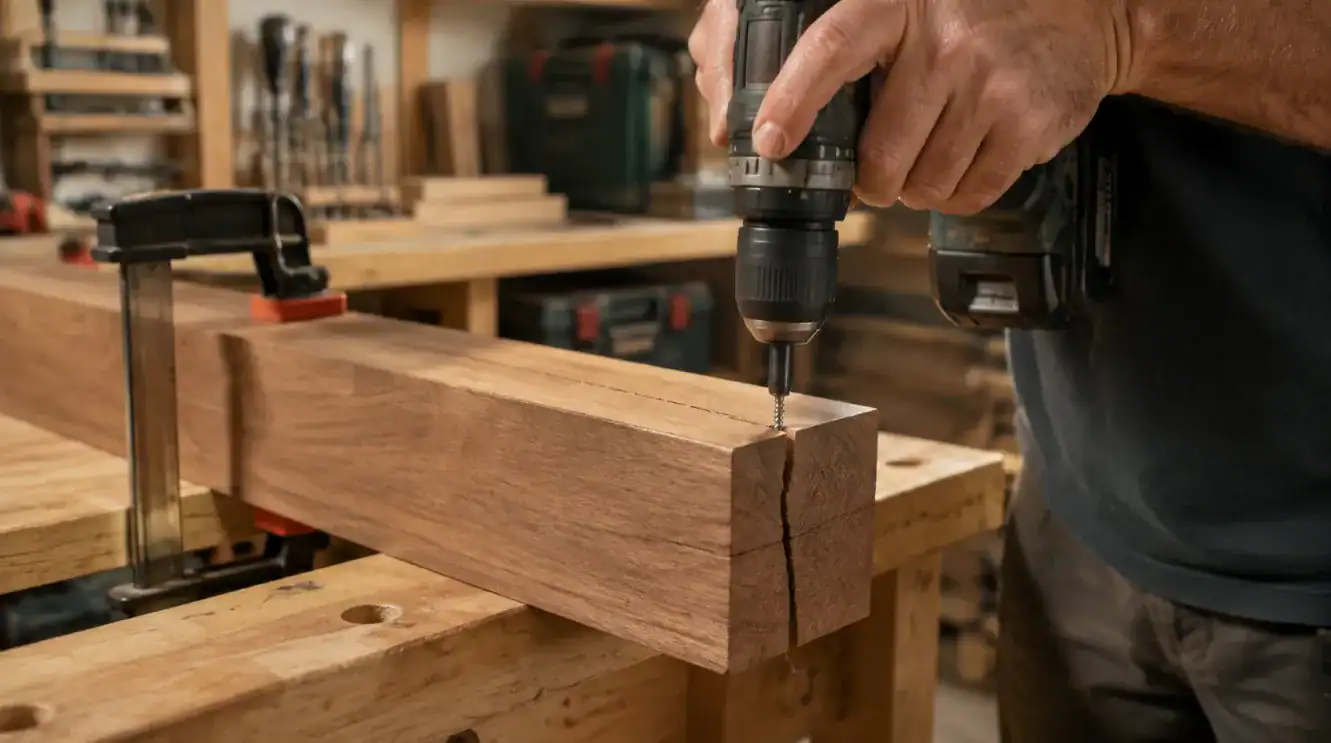
The screw is lined up, then you begin driving it, and everything is fine for a few seconds. Then, a crack begins to run across the screw hole towards the other end of the panel. It can be frustrating, particularly in the case of a board that was made to the size required. At Anawalt Lumber, we often find screws splitting wood when the fastener is placed near the edge or end of a plank.
The screw pulls wood fibers apart when it moves into. At the end of a piece, there’s not much left to keep the fibers.
The good news is that the majority of splits can be avoided. An opening for a pilot, improved screw positioning, the correct fastener, and some caution when driving the screw can make a huge difference.

Takeaways
- Screws can split wood as they force wood fibers outward after they have entered.
- The risk is higher when drilling close to the edge of the board.
- Pre-drilling screw holes can be one of the most efficient ways to stop cracks.
- Hardwood typically requires more work than softer wood.
- The size of the screw, the dimension of the pilot hole, as well as the distance from the edge of the board all play a role.
- Countersinking can help reduce the pressure around screws head.
- A damaged board can be repaired using the use of clamps and wood glue.
Why Are Screws Splitting Wood Near The End Of A Board?
The simplest solution is to use pressure.
Screws don’t just cut through wood. Their threads also press against the fibers surrounding it. If you are in the center of a piece, there’s plenty of space around the screw to withstand the pressure.
Near the edge or end, the wood is thinner.
That is why screws splitting wood tends to happen more often in these areas.
The grain of wood also plays a role. Most boards will separate more easily in the direction of the grain than across it. When a tiny crack starts, it could follow those fibers for a couple of inches.
This is the reason why a split screw of the board may appear more serious than the diameter of the screw.
Why Does Wood Splitting Near A Screw More Often In Hardwood?
It is possible for hardwood to be durable, but that doesn’t mean that it won’t crack.
In reality, splitting of hardwood when screwed is quite commonplace when the pilot hole is left unchecked. The dense woods don’t expand around a screw as quickly as soft species.
Maple, oak, and other woods may be less tolerant.
Softwoods like pine might expand more around the threads, but splitting of softwood close to screws is still possible, particularly near dry ends.
The condition of the lumber is an issue too.
Dry boards can crack more quickly. A board with an end check or small cracks already has an area of weakness. By putting a fastener on it, you could further open the crack.
Why Does Wood Splitting Near A Screw More Often In Hardwood?
Usually, yes.
The pre-drilling of screw holes will remove certain materials prior to the time that the screw is inserted. This allows the screw to enter the board without pushing the surrounding fibers apart as much.
This is one of the simplest ways to prevent screws splitting wood, particularly when working near the end of a board.
A pilot hole can be beneficial in the following situations:
- Woodworking using hardwood
- Using larger screws
- Installing screws close to the edge
- Fastening thin pieces
- Working with dried lumber
- Using several screws close to each other
You don’t need an extra-large hole.
The objective is to provide enough space to accommodate the screw’s center while giving the threads room to sink through the timber.
What Is The Right Size Of The Pilot Hole Dimension For Wood Screws?
The choice of the right size of the pilot hole can be a bit confusing initially.
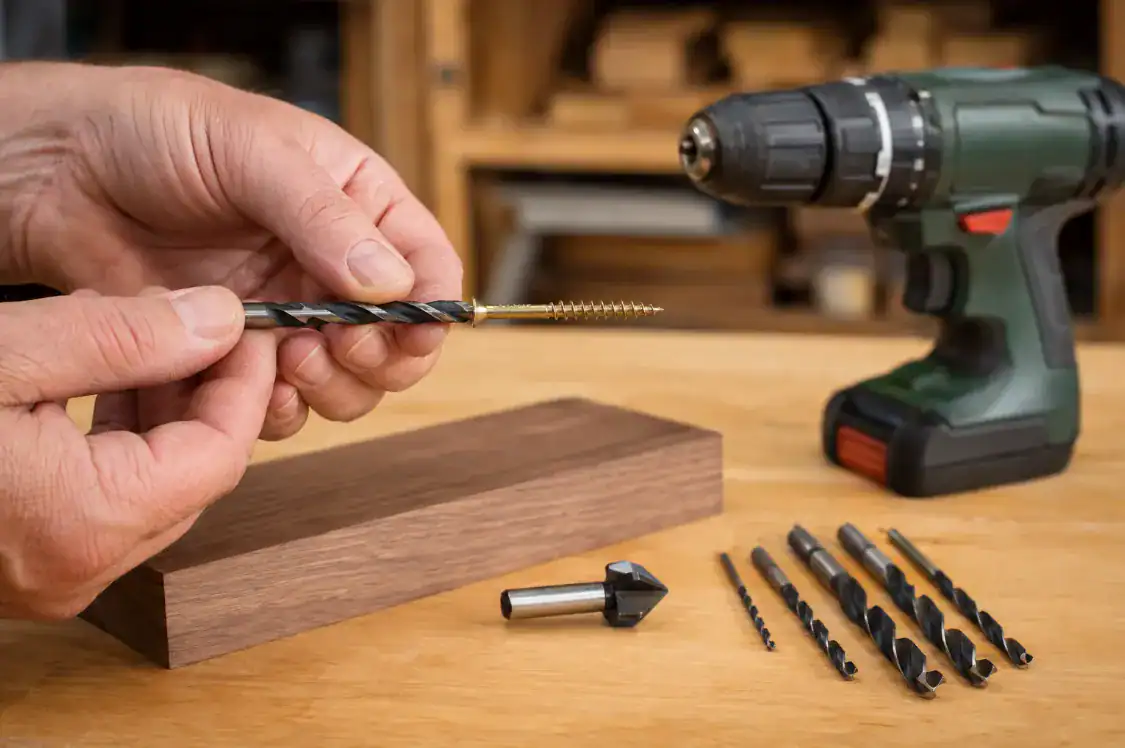
One method to do this is to check the drill bit to the center shaft that is the part of your screw.
Place the drill bit in front of the screw.
In the ideal scenario, you will be able to see threads that extend beyond the bit, while the majority of the screw shaft is coated.
For softwood, a smaller pilot hole is often sufficient.
For hardwoods, the pilot hole may need to be closer to the screw’s diameter because the wood tends to be less likely to expand.
There are charts to help you determine the right screw gauges however the exact measurement can be determined by the wood species and fastener type.
If you’re not sure you are not sure, try the screw on a scrap of wood first. I think this test is worth the extra time, particularly if the final board is pricey.
How Close Can Screws Be To The Edge Of Wood?
A screw placed too close to the edge of the board is among the most common reasons for cracking.
There isn’t a single distance that works for each board and each screw. The diameter of the screw, the timber species, grain directions, and the thickness of the board all influence the safe spacing.
In the most practical sense, you should provide the fastener with enough space between the end and edge depending on the size of the project.
The spacing of wood screws from the edge becomes more critical with structural screws that are large.
If the plans indicate the exact location for fasteners, be sure to follow the installation instructions provided by the manufacturer or construction plans that have been approved by the manufacturer.
If you are flexible by moving the screw a bit further backwards may avoid a split.
Countersinking Wood Screws Can Help To Prevent Cracks?
Yes, especially close to the screw head.
When a flat-headed screw is at the surface, the tapered head presses against the wood. If you continue to drive it without making sure the surface is prepared, the pressure could result in cracks.
Countersinking wood screws makes a small recess where the head is able to sit.
This reduces pressure on the surface and makes the final connection more appealing.
Be cautious not to countersink excessively.
It is important to ensure that the head is sitting correctly, and not in the ground.
Can Choosing Different Screws Prevent Splitting?
The choice of wood screws is more crucial than many may realize.
A screw that is too big for a board that is thin can result in significant outward pressure.
Modern self-drilling wood screws come with cutting tips, or even special thread designs that are designed to prevent splitting. They can be very useful, but I would think about drilling a pilot hole while you are working close to the end, in particular with hardwood.
The best screws for preventing splitting are determined by the task at hand.
Check out:
- Screw diameter
- Length of the screw
- Thread design
- Hairstyle
- Wood thickness
- Wood species
- Indoor or outdoor use
For projects on the exterior, you will also require screws made of materials or coatings suited to water exposure.
How Do You Stop Wood From Splitting When Driving Screws?
If screws splitting wood has happened more than once on your project, slow down before driving the next fastener.
Just a few minor changes can aid.
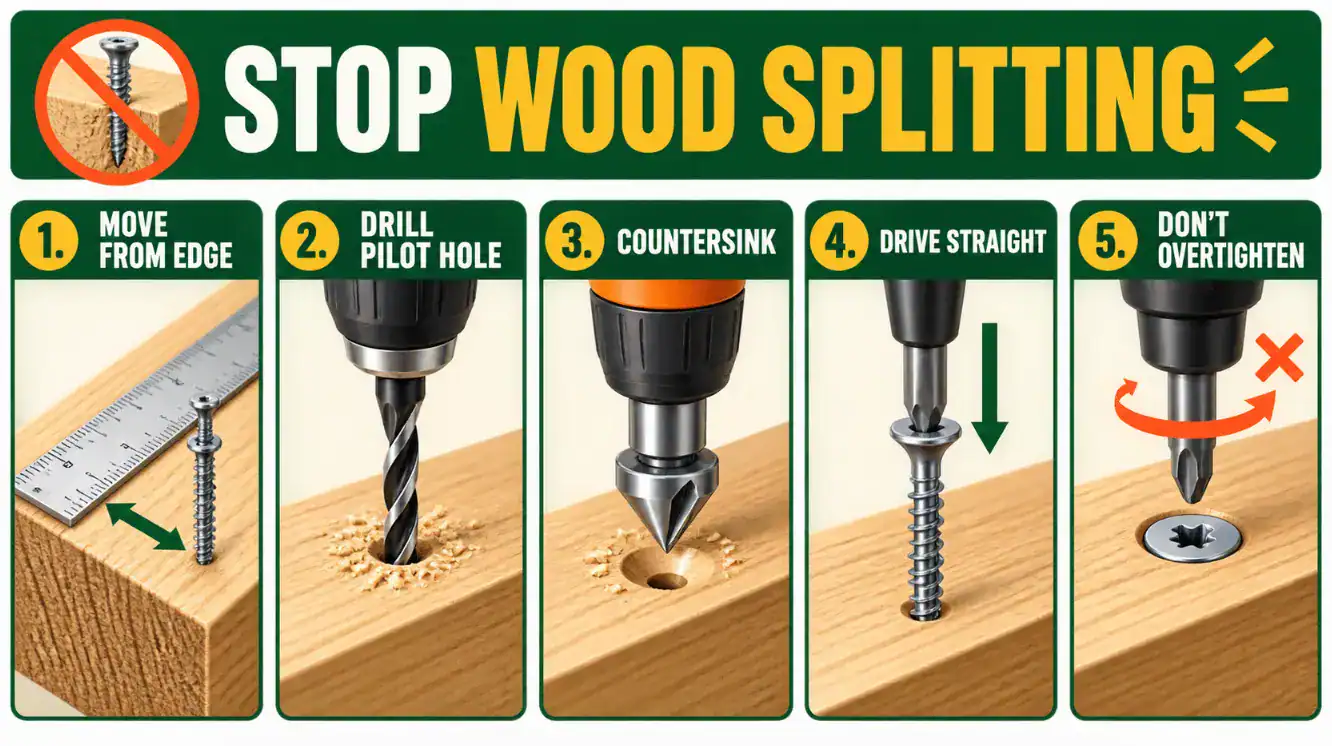
Start by marking the screw’s position. Be sure to keep it away from the end of the board as much as you can.
Then, drill an initial hole.
If the screw is flat in its head, think about countersinking the screw’s surface.
Make sure to drive the screw straight and not at an unintentional angle. A fastener that is angled can create uneven pressure on surrounding wood.
Avoid tightening too much.
After the pieces are joined, continuing to drive the screw will not strengthen the joint. It could break the wood fibers or even cause cracks.
Sometimes, less force can be more effective.
How Do You Fix Split Wood Around A Screw?
The repair of split wood around a screw is contingent on how bad it is that the damage has become.
A minor, clean fracture is sometimes repaired.
You could be able to:
- Take off the screw with care.
- The crack should be opened slightly, without making it worse.
- Apply wood glue to the split.
- Secure the board until the glue sets.
- Create a hole for a pilot prior to reinstalling the fastener.
Do not use the same screw hole.
You might need to adjust the position of the fastener, or strengthen the region.
When the wood is bearing the structural burden and the split is substantial, replacing it could be a better option.
A superficial crack in the trim is quite different from a fracture in a structural connection.
How Does Wood Grain Direction Affect Screw Splitting?
Yes.
Wood grain splitting occurs because the wood naturally contains long fibers that run through it. These fibers are able to split when pressure is applied outward.
At the point where a board cracks, it will have only a small path up to the edge.
That’s why prevention is crucial.
Take a look at the board before drilling.
If you’ve already noticed an enlarged crack, knot, or a snag near the screw’s location you’re planning to fix, move the screw as soon as you can.
Sometimes, the board will tell you precisely the places it doesn’t want another hole.
Frequently Answered Questions
What causes screws to split wood?
Screws can cause wood fibers to break apart when they penetrate. The risk is higher at the edges, near board ends, cracks that are already present, and in dry or dense wood.
Do I have to always drill a pilot hole to install wood screws?
It’s not always necessary, but it is recommended when working with hardwoods, large screws, thicker wood, or screws that are close to the edge.
Do self-drilling wood screws break the board?
Yes. Self-drilling techniques can lower the risk of splitting however they are not able to completely stop breaking when screws are put too close to an end or inserted into difficult wood.
Do you think a bigger pilot hole is more effective?
Not necessarily. When the holes are too wide, the screw threads may not be able to grip the wood properly. Make sure the pilot hole is a good match to the screw and kind of wood.
Do you think that removing a screw slowly will can help?
It could. A controlled drive allows you to be more aware of resistance and stop the screw gets too tight.
How can I preserve a piece of wood after it has split?
Sometimes, small cracks can be fixed by clamping and wood glue. More extensive or structural splits could necessitate replacing the board.
Final Thoughts
The best way to prevent cracks is usually down to a handful of fundamental practices.
Allow the screw to be able to move to extend away from the edge of your board. Make the correct pilot hole. Select the right screw. Countersink as necessary. Don’t force the fastener to go further than it should be.
When you keep seeing screws splitting wood, the screw itself may not be the only problem. Take a look at the wood species and grain, as well as the moisture condition the screw’s location and even the pilot hole.
In Anawalt Lumber, we help homeowners as well as contractors and builders select lumber, screws drill bits and other equipment which is appropriate for the job. A little planning prior to when you begin drilling could make a difference, save some time, and most importantly you will save yourself a lot of stress.