
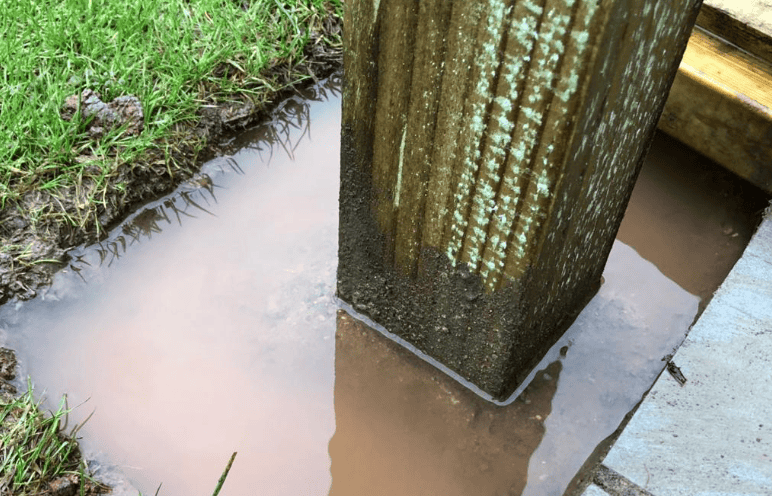
You walk out to your yard. Maybe just checking the fence. Nothing serious. Then you notice one post looks… off. Not broken. Not leaning too much. Just a little softer near the bottom. You press it. It gives slightly. That is usually when people start dealing with wood fence post rot.
From what I have seen running a lumber and hardware store, this almost always starts at ground level. Not at the top. Not in the middle. Right where the wood meets the soil.
And honestly, it surprises people every time.
Contact Us

Key Takeaways
- Wood Fence Post Rot Usually Starts At Ground Level Due To Moisture Buildup
- Soil Contact Increases The Risk Of Decay And Fungal Growth
- Early Signs Include Softness, Discoloration, And Slight Leaning
- Pressure-Treated Wood Helps But Still Needs Proper Installation
- Prevention Methods Can Extend Fence Life By Years
Why Does Wood Fence Post Rot Happen At Ground Level?
This is the part that confuses most people.
Why there?
Why not higher up?
The answer is simple. Moisture.
The ground holds water. Even when it looks dry, there is still moisture trapped below the surface.
That constant exposure leads to wood fence post rot.
At ground level, the post deals with:
- Wet Soil
- Poor Air Circulation
- Bacteria And Fungi
It creates the perfect environment for decay.
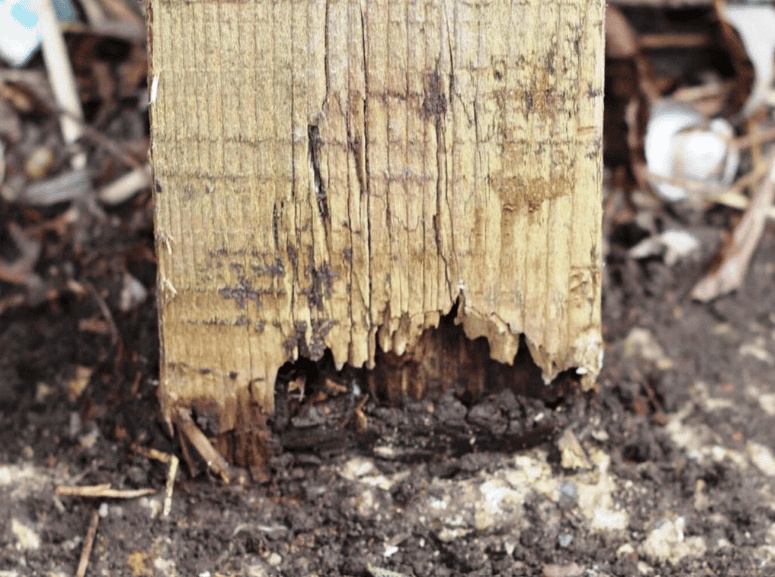
I have seen posts that looked solid above ground. Then you dig a little, and the base is almost gone.
What Causes Wood Fence Post Rot To Develop Over Time?
Contact Us
It is not just one thing.
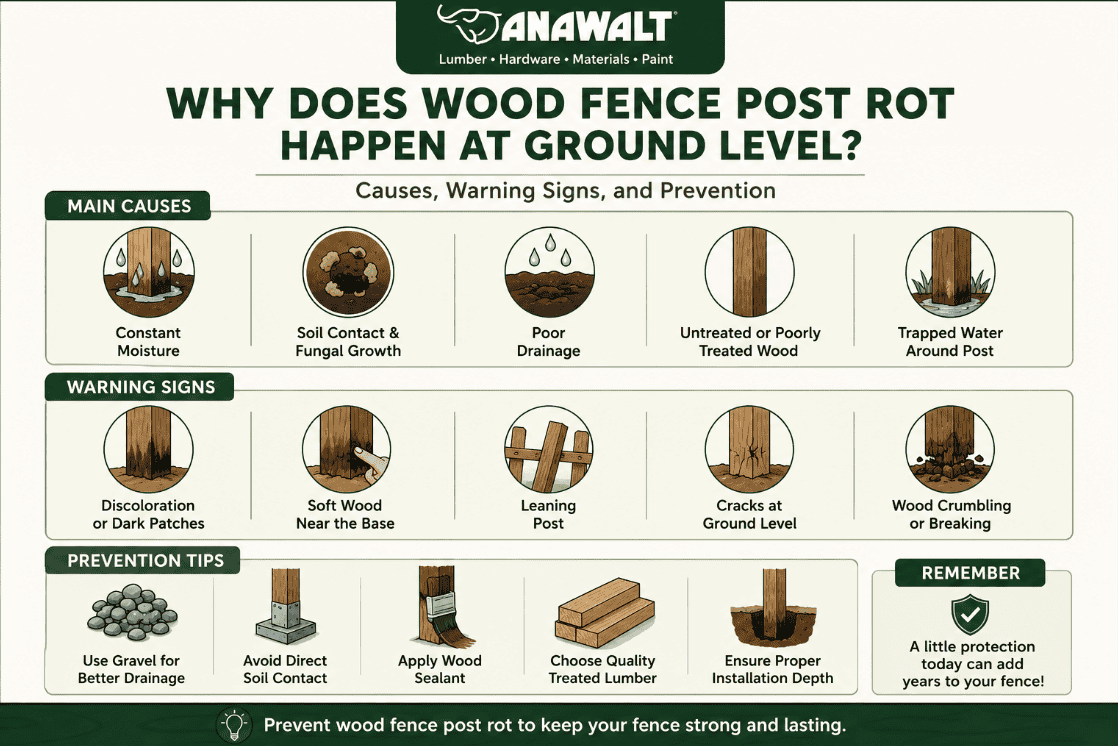
Several factors work together:
- Constant Moisture Exposure
- Lack Of Drainage
- Untreated Or Poorly Treated Wood
- Trapped Water Around The Post
Even pressure-treated wood can develop problems over time.
It slows decay. It does not stop it completely.
What Are The Warning Signs Of Wood Fence Post Rot?
This is where it gets tricky.
Because early signs are easy to miss.
Common signs include:
- Soft Wood Near The Base
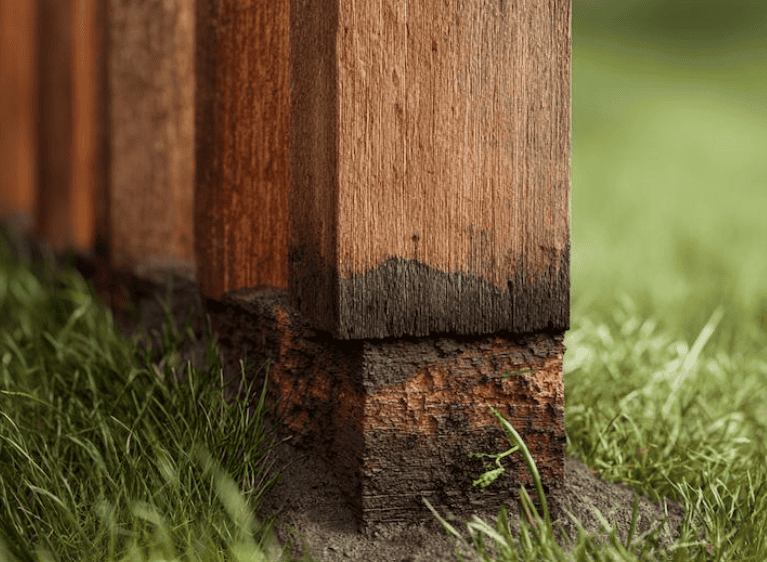
- Discoloration Or Dark Patches
- Slight Leaning Of The Fence
- Cracking At Ground Level
Sometimes the top still looks fine.
That throws people off.
I have had customers bring in a piece of a post. The top looked brand new. The bottom looked like it had been sitting in water for years.
Can Pressure-Treated Wood Prevent Fence Post Rot?
Short answer. It helps.
Long answer. It depends.
Pressure-treated wood is designed to resist decay. It is treated with chemicals that slow down rot.
But over time:
- Treatment Wears Down
- Moisture Still Gets In
- Conditions Still Matter
So yes, it reduces wood fence post rot.
But it does not make the post invincible.
How Does Poor Drainage Affect Fence Posts?
Drainage is one of the biggest factors.
If water sits around the base, the wood stays wet longer.
That leads to faster decay.
Poor drainage can come from:
- Heavy Clay Soil
- Improper Installation
- Low Spots In The Yard
Water has nowhere to go.
So it stays. And the wood absorbs it.
Contact Us
How Can You Prevent Wood Fence Post Rot?
This is the part most people want to know.
Prevention is possible. Though it takes a bit of planning.
Here are some ways to reduce risk:
- Use Gravel At The Base For Drainage
- Avoid Direct Soil Contact When Possible
- Apply Wood Sealant
- Choose High-Quality Treated Lumber
- Ensure Proper Post Installation Depth
A small change during installation can make a big difference later.
I have seen fences last years longer just because gravel was added at the base.
Should You Use Concrete Or Gravel For Fence Posts?
This one comes up a lot.
Concrete feels stronger. And in some cases, it is.
But it can trap moisture if not done correctly.
Gravel allows water to drain away.
So:
- Concrete Adds Stability
- Gravel Improves Drainage
Some people use both.
It really depends on soil conditions.
How Long Do Wood Fence Posts Usually Last?
It varies.
A properly installed post can last:
- 10 To 15 Years
- Sometimes Longer
But with poor conditions:
- It May Fail In A Few Years
That difference often comes down to moisture control.
And a bit of maintenance.
Contact Us
What Should You Do If You Already Have Wood Fence Post Rot?
If the rot has already started, you have a few options.
Depending on severity:
- Replace The Entire Post
- Reinforce With Brackets
- Treat Minor Decay Areas
In most cases, once rot is deep, replacement is the safest option.
Trying to patch it can work short term.
Though it does not always last.
How We Help Customers Choose The Right Materials
In our store, this comes up all the time.
People ask:
“Why did my fence fail so fast?”
And usually, it comes back to the base.
We guide customers toward:
- Better Treated Lumber
- Proper Installation Materials
- Drainage Solutions
Because the goal is not just building a fence.
It is building one that lasts.
Frequently Asked Questions
Why does wood fence post rot happen at ground level?
Because that area stays exposed to moisture and soil bacteria longer than the rest of the post.
Can pressure-treated wood still rot?
Yes, it resists decay but does not completely prevent it over time.
How can I prevent fence post rot?
Use gravel for drainage, apply sealants, and install posts properly.
Should I use concrete for fence posts?
It depends. Concrete adds strength, but gravel helps with drainage.
How do I know if my fence post is rotting?
Look for softness, discoloration, or leaning at the base.
Wood fence post rot is one of those things people do not think about until it shows up.
At first, it feels small.
Just a little softness. Maybe a slight lean.
But over time, it becomes the reason the whole fence fails.
And that is the part that catches people off guard.
Because the problem was always at the bottom.
Contact Us