
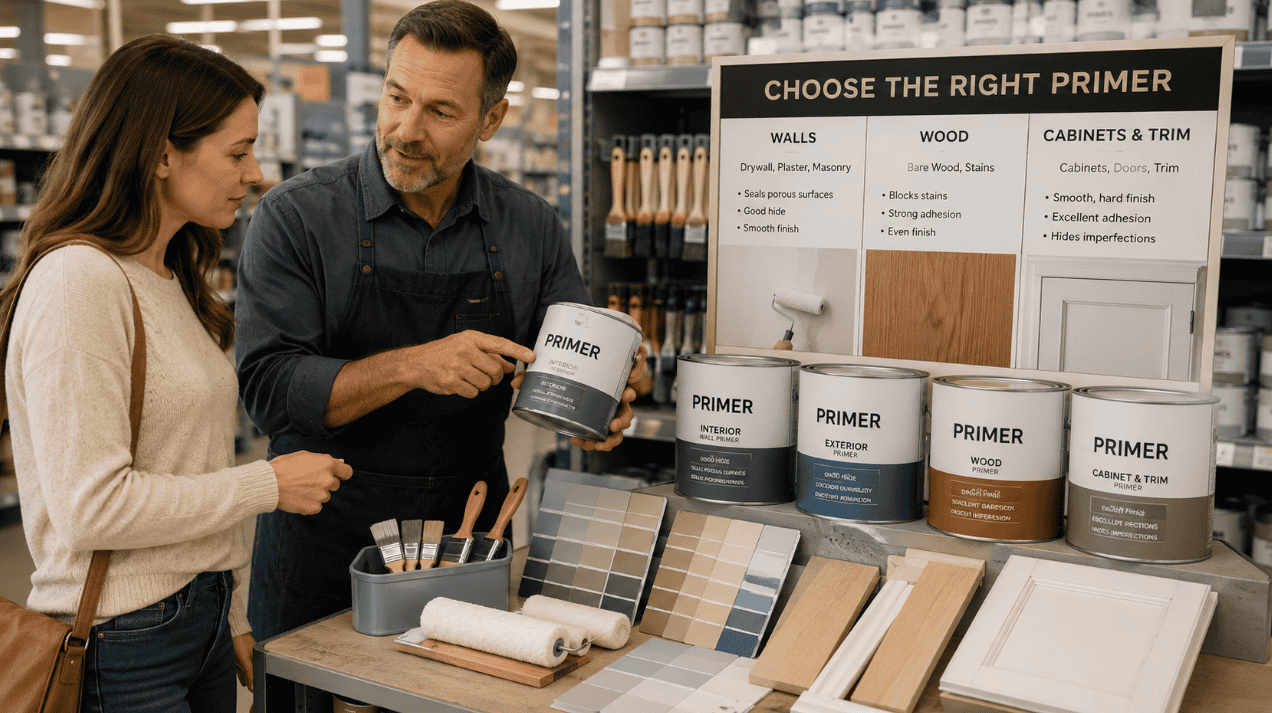
Most people skip primer at least once. I did. It looked fine at first. Then the paint started to look uneven, kind of patchy in spots. That is when I realized I probably picked the wrong types of primer paint, or maybe none at all.
At Anawalt Lumber, this question comes up a lot. People walk in asking for paint. Then someone asks, what are you priming? And that is where things pause.
Because the truth is, types of primer paint matter more than most expect. The surface changes everything.
Contact Us
Key Takeaways
- Types of primer paint depend on surface and condition
- Wall primer paint helps create an even finish
- Stain blocking primer stops bleed through
- Bonding primer improves adhesion on tricky surfaces
- Oil based primer works for heavy stains and wood
- Water based primer is easier for general use
Why Do You Need Primer Before Painting?
Primer before painting helps paint stick better. That is the basic idea.
Without primer, paint may:
- peel early
- look uneven
- absorb differently across the surface
Primer fills small gaps and creates a consistent base.
It feels like an extra step. Sometimes people skip it. Sometimes it works out. Sometimes it does not.
What Are The Main Paint Primer Types You Should Know?
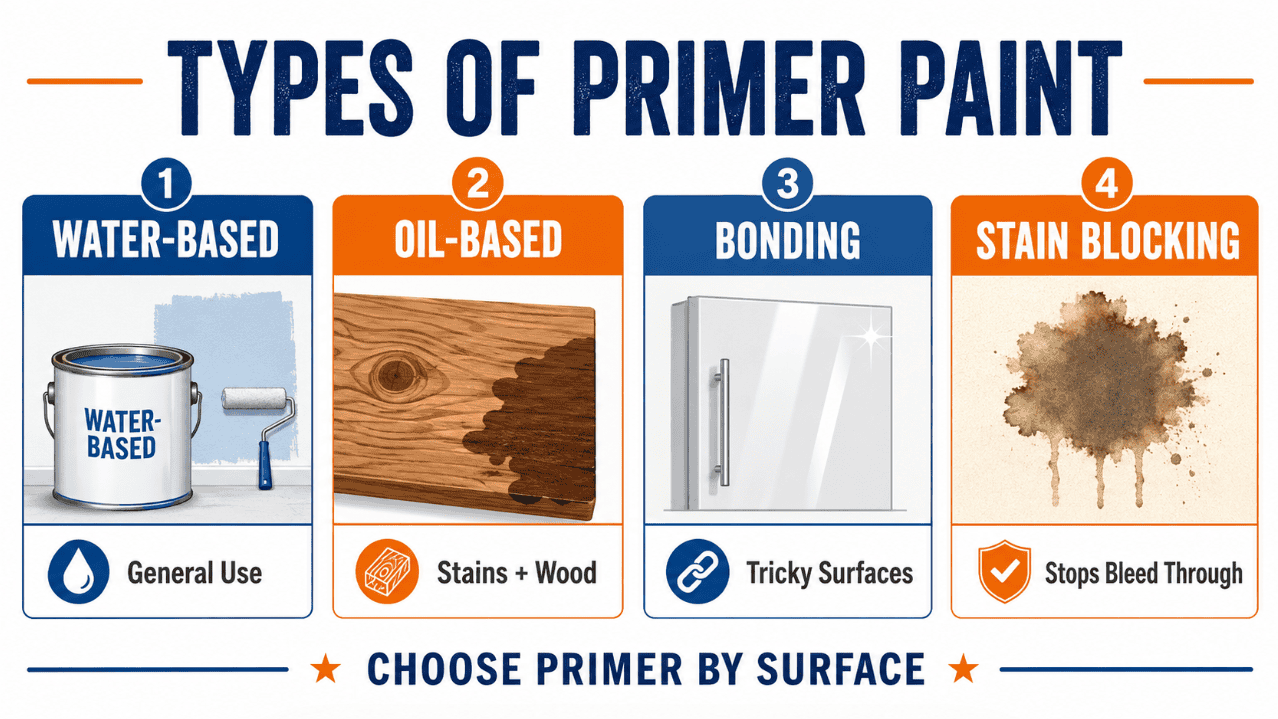
There are several paint primer types. Each works for a specific situation.
The most common include:
- water based primer
- oil based primer
- bonding primer
- stain blocking primer
Each type handles a different surface or problem.
Choosing the wrong one does not always fail right away. Still, it shows later.
When Should You Use Wall Primer Paint?
Wall primer paint works for standard interior walls.
Use it when:
- painting new drywall
- covering light color changes
- refreshing painted walls
Drywall primer is a common type here. It seals the surface before paint.
Primer for painted walls helps smooth out uneven finishes.
It seems simple. Still, skipping primer often leads to more coats later.
What Is The Best Primer Paint For Wood Surfaces?
Wood primer paint depends on the condition of the wood.
Use:
- oil based primer for raw or stained wood
- primer for bare wood to seal grain
- bonding primer for previously finished wood
Wood absorbs paint differently. Without primer, it may look blotchy.
I remember painting a small shelf without primer. The color looked uneven. It bothered me more than expected.
When Do You Need A Stain Blocking Primer?
Stain blocking primer works when surfaces have marks or discoloration.
Use it for:
- Water Stains
- Smoke Damage
- Grease Spots
Paint primer for stains prevents bleed through.
Without it, stains often show through new paint layers.
It is one of those things you think one coat will fix. It usually does not.
Contact Us
Should You Choose Oil Based Primer Or Water Based Primer?
Oil based primer and water based primer both have uses.
Oil based primer:
- blocks stains better
- works well on wood
- handles heavy damage
Water based primer:
- Dries Faster
- Easier Cleanup
- Works For Most Interior Surfaces
Latex primer paint falls under water based options.
I tend to prefer water based for simple projects. Though oil based works better for tough spots.
What Is Bonding Primer And When Do You Need It?
Bonding primer helps paint stick to difficult surfaces.
Use it on:
- glossy finishes
- cabinets
- tile or laminate
Primer for cabinets often requires bonding primer.
High adhesion primer improves grip where regular primer fails.
This is where primer makes a big difference. Without it, paint may peel.
How Do You Choose Primer For Metal Surfaces?
Primer for metal surfaces protects against rust and improves adhesion.
Use:
- Oil Based Primer For Corrosion Protection
- Specialty Metal Primers For Specific Surfaces
Metal needs protection before painting.
Skipping primer often leads to early wear.
What Is The Best Exterior Primer Paint?
Exterior primer paint handles weather exposure.
Use it for:
- outdoor wood
- siding
- exterior walls
Exterior primer paint resists moisture and temperature changes.
Interior primer paint does not hold up outside.
It is easy to mix them up. The labels matter here.
How Do You Choose The Right Primer For Your Project?
How to choose primer paint depends on a few factors.
Ask yourself:
- what surface am I painting
- is there existing paint or damage
- will the surface be indoors or outdoors
Docking these questions helps narrow down the types of primer paint you need.
It is not always obvious at first. That is normal.
What are common mistakes when using primer?
Some common mistakes include:
- skipping primer completely
- using the wrong type
- applying too thin or uneven coats
- not letting primer dry fully
These mistakes affect the final result.
Primer feels like preparation. Still, it shapes how the paint looks later.
FAQs
What are the most common types of primer paint?
Water based, oil based, bonding, and stain blocking primers are the most common.
Do I always need primer before painting?
Not always, though it improves adhesion and finish in most cases.
What is the best primer paint for drywall?
Drywall primer works best for sealing new surfaces.
Can I use the same primer for all surfaces?
No, different surfaces require different primer types.
What is bonding primer used for?
It helps paint stick to smooth or glossy surfaces.
Does primer affect paint color?
Yes, primer helps create an even base for better color coverage.
Contact Us