
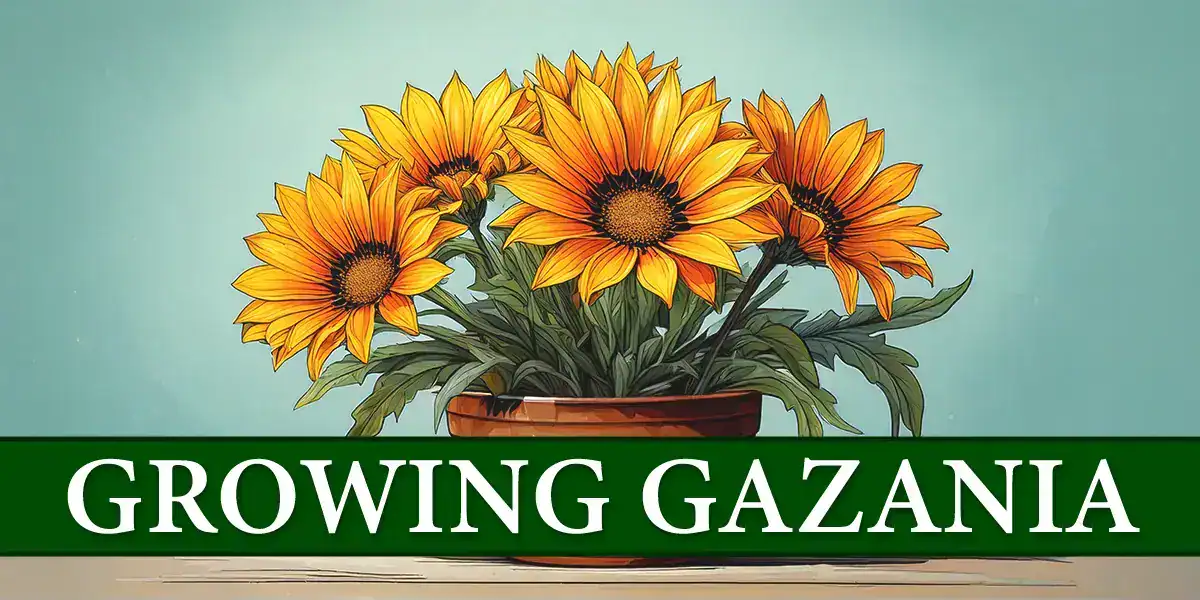
Gazanias evolved in rocky, drought-prone regions of South Africa. Once established, many varieties need only rainfall to thrive.
They’re God’s gift to lazy Southern California gardeners — a stunning, low-maintenance, nearly year-round bloom.
There are over 70 species; some resemble daisies, while others look like sun-stars. Colors range from neon yellow to deep burgundy with bold striping.
Gazania Trivia to Impress Your Friends
- Gazania blooms open only in sunlight, helping conserve energy and water in hot climates.
- It belongs to the Asteraceae family, the same family as daisies and sunflowers.
- The plant was named after Theodore of Gaza, a 15th-century translator of Greek botanical texts.
- Its common name, “treasure flower,” refers to the jewel-toned petals that open in the sunlight and close at night or on cloudy days.
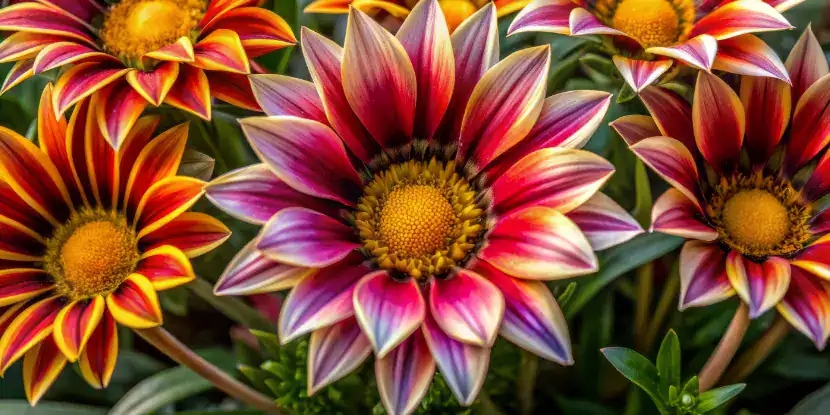
Gazania is a sun-loving plant that opens with daylight and closes at dusk.
Why Gazanias Are a Good Fit for SoCal
- Once established, gazanias need little water.
- They flourish in full sun and high temperatures that cause other plants to wilt.
- Their low, spreading habit makes them an excellent ground cover, helping to suppress weeds and reduce soil erosion.
- Their bright blooms attract bees and butterflies, promoting biodiversity in your garden.
Best Gazania Varieties for SoCal
Several gazania varieties perform exceptionally well in Southern California’s climate.
- ‘Big Kiss’ Series has massive 4.5-inch flowers in bold colors like yellow, white, and orange, often with a contrasting stripe.
- ‘New Day’ Series is compact and uniform, producing a profusion of blooms in shades of red, bronze, pink, and yellow. It’s an early bloomer.
- ‘Sunbathers’ Series is a trailing variety perfect for hanging baskets and ground cover. It offers a mix of vibrant colors that cascade beautifully.
- ‘Tiger Stripes’ Mix features unique, striped petals in combinations of red, yellow, orange, and white, adding drama to a garden bed.

Gazania is a South African native that loves Southern California sun.
Optimal Growing Conditions
Light
- Gazanias need 6–8 hours of direct sunlight daily.
- Their flowers open only in bright sunlight, so avoid shady spots.
Temperature
- They prefer warm temperatures and thrive in the typical Southern California climate.
- They perform best in frost-free zones. In areas with colder winters, they’re often grown as annuals.
Soil
- Well-draining soil is crucial. Gazanias are susceptible to root rot in soggy conditions.
- They tolerate poor, sandy, or rocky soils.
- A slightly acidic to neutral soil pH (6.0-7.0) is ideal.

Gazanias bloom in yellows, violets, and mixed tones thanks to their drought-smart genetics.
Steps for Growing Gazania from Seed
You can start seeds indoors 6–8 weeks before the last expected frost, or sow them directly in the garden when the danger of frost has passed.
- If starting seeds indoors, fill a seed tray with a quality seed-starting mix and moisten the soil evenly so it is damp but not wet.
- Place 2–3 seeds per cell, pressing lightly into the soil. Seeds need light to germinate, so barely cover with soil.
- Place the tray in a warm, sunny location or under a grow light. Maintain a temperature of around 70°F (21°C).
- Keep soil moist but not soggy. Mist with a spray bottle.
- Seeds should germinate within 7 to 14 days. Once the seedlings have developed two sets of true leaves, thin them to one seedling per cell.
- After the last frost, harden off the seedlings by gradually exposing them to outdoor conditions over a week. Then, transplant them into the garden, spacing them about 8–10 inches apart.
Gazania Care
Water
- Water newly transplanted seedlings regularly until they are established.
- Established gazanias are exceptionally drought-tolerant. Water them deeply but infrequently, allowing the soil to dry completely between waterings.
- Overwatering is a common mistake and can lead to root rot.
Fertilizer
- Gazanias prefer well-draining soil that is not too rich.
- If your soil is exceptionally poor, apply a balanced, slow-release fertilizer at the time of planting.
- Avoid high-nitrogen fertilizers, which promote leafy growth at the expense of flowers.
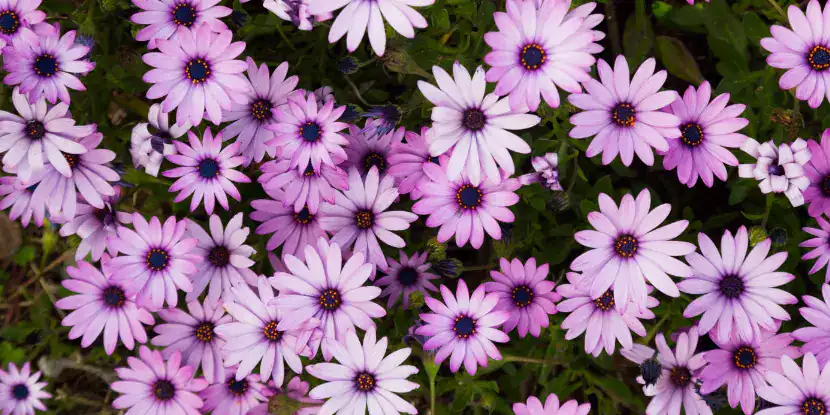
Plant gazanias once — they’ll return every year with a burst of color.
Pests & Diseases
- Occasionally, aphids or mealybugs may appear. These can be managed with a strong spray of water or insecticidal soap.
- The most common disease is root rot, caused by poor drainage or overwatering.
- Powdery mildew can occur in humid conditions or with poor air circulation. Ensure proper spacing to prevent this.
Growing Gazania in Containers
Gazanias are well-suited for pots, hanging baskets, and window boxes.
- Choose a pot with adequate drainage holes.
- Use a high-quality potting mix formulated for cacti or succulents, or amend regular potting soil with sand or perlite to improve drainage.
- Place the container in a location that receives full sun.
- Water when the top inch of soil is dry. Container plants may need more frequent watering than those in the ground.
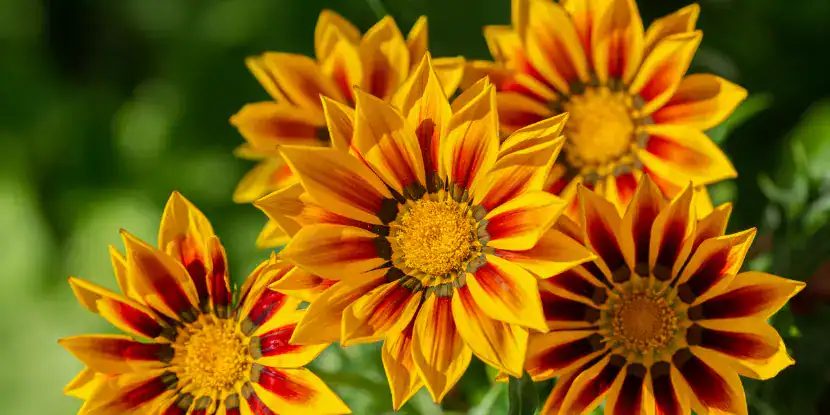
These multi-colored blooms thrive in heat — perfect for Southern California’s dry summers.
FAQs: Growing Gazanias
Q: Why are my gazania flowers not opening?
Gazania flowers open only in direct sunlight. If closed, it’s often due to clouds, low light, or nighttime.
Q: How often should I water my gazanias?
Water deeply but infrequently; let soil dry between sessions. In peak summer, this may mean every 1–2 weeks.
Q: Do I need to deadhead gazania flowers?
Deadheading spent blooms encourages more flowers and keeps plants tidy.
Q: Can gazanias survive the winter in Southern California?
In most of Southern California (zones 9-11), gazanias act as short-lived perennials, surviving mild winters and blooming again in spring.
Q: Is gazania invasive?
In ideal regions, gazania can self-seed and spread. Deadhead before seeds form to control it.
Q: Why are my gazania leaves turning yellow?
Yellow leaves may signal overwatering or root rot. Ensure well-draining soil and reduce watering.
Q: Can I collect seeds from my gazania plants?
You can collect seeds from dried flower heads, but hybrids may not produce true-to-parent plants.