
There are millions of tools on the tool aisle, or so it seems.
Power tools, hand tools, pneumatic tools, multi-tools, hybrid tools, and so on.
Brain freeze takes over, and you purchase the wrong tool for the job. This mistake can compromise the quality of your work and lead to injuries.
Knowing what each tool does best lets you make confident, effective choices — whether you’re aiming for precision, speed, safety, or convenience.
In this guide, we’ll examine the key differences between power tools and hand tools and show you when each one shines.
Hand Tools
Hand tools are manually operated and require no electricity or batteries. While simple in design, their effectiveness comes from the direct feedback and precision they offer, making them indispensable for work that requires a delicate touch.
Hand tools are also less expensive than power tools. Plus, you don’t have to worry about cords or recharging batteries, and storage space is less of an issue.
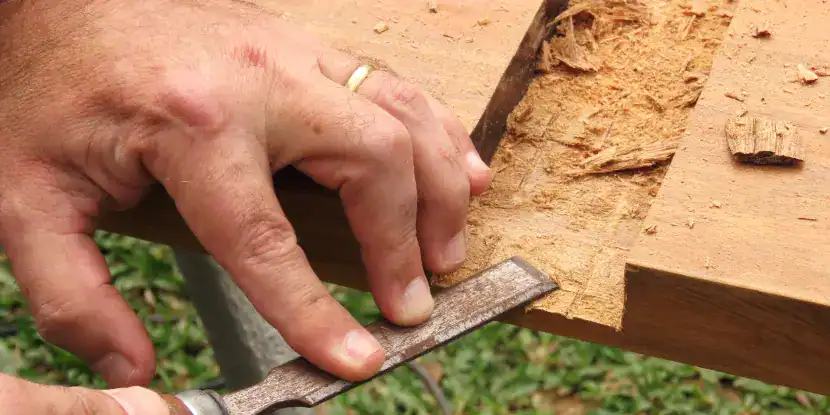
A worker uses a chisel to finish a joint.
Advantages of Hand Tools
- Precision & Control: As the power source, you have complete control over the tool’s movement and force. Hand tools are ideal for detailed tasks such as carving wood, fine-tuning joinery, or carefully tightening a delicate fixture without stripping the screw.
- Quiet Operation: Hand tools are nearly silent, which is a major benefit when working in a shared space, an apartment, or your suburban Southern California neighborhood.
- Safer for Beginners: With fewer moving parts and no high-speed components, hand tools have a lower risk of serious injury. New DIYers can learn fundamental skills safely and effectively.
- No Power Source Needed: A hammer or a screwdriver works anywhere, anytime. You never have to worry about a dead battery or finding an outlet, making them completely reliable for quick fixes and remote jobs.
Common Hand Tools
Every homeowner should have a basic set of hand tools, including:
- Screwdrivers (Phillips and flathead)
- Hammers
- Pliers (various types)
- Wrenches
- Hand saws
- Chisels
- Utility knives
- Measuring tapes and squares
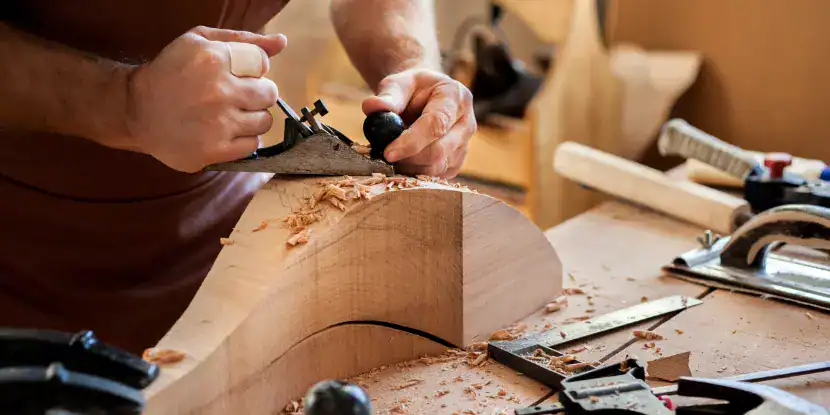
A woodworker shapes an irregular piece with a hand plane.
Power Tools
Power tools operate on electricity or compressed air to perform tasks with incredible speed and strength, delivering professional-grade results.
Advantages of Power Tools
- Speed and Efficiency: Power tools can perform tasks in a fraction of the time it would take by hand. Imagine building a deck with a handsaw and screwdriver versus a circular saw and an impact driver. The difference is night and day.
- Strength and Power: Need to drill through concrete, cut thick lumber, or drive dozens of long screws? Power tools handle materials and tasks that would be difficult or impossible by hand.
- Consistency: Power tools deliver consistent results for repetitive tasks, such as drilling holes or sanding a large surface. This is crucial for achieving a polished and professional look.
- Essential for Major Projects: For any serious construction, remodeling, or fabrication, power tools are the standard for professionals and ambitious DIYers alike.
Common Power Tools
As you take on bigger projects, your collection of power tools will likely grow. Here are some of the staples:
- Drills and impact drivers
- Circular saws and miter saws
- Sanders (orbital, belt)
- Nail guns
- Angle grinders
- Routers
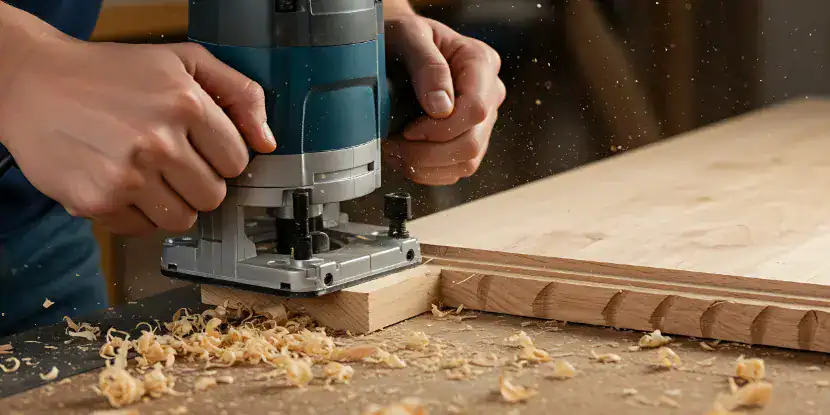
Nothing beats a power router for beveled edges and custom trim, molding, and baseboards.
When to Choose Hand Tools
Opt for hand tools when your project requires:
- High Accuracy and Detail: Use a hand screwdriver to install cabinet handles. This prevents over-tightening and stripping the screws.
- A Lighter Touch: When working with soft woods or delicate materials, a hand plane or chisel allows you to remove material slowly and avoid costly mistakes.
- Quiet Work Environments: Assembling furniture late at night or making a quick repair in an occupied house is much more considerate with hand tools.
- Simple Adjustments: For small tasks like tightening a loose bolt or hanging a picture frame, a hand tool is often faster and more convenient than a power tool.
When to Choose Power Tools
Grab a power tool when the job demands:
- Speed on Large Projects: Building a backyard fence or framing a wall requires hundreds of cuts and fasteners. A circular saw and nail gun become your besties in these scenarios.
- Cutting or Drilling Dense Materials: A power drill with the correct bit can easily bore through brick, metal, or dense hardwood.
- Repetitive Tasks: If you’re sanding an entire tabletop or driving 50 screws to install subflooring, a power sander and impact driver will save effort and ensure consistency.
- Professional-Level Output: Power tools deliver clean cuts, straight lines, and powerful connections essential for structural work and high-quality finishes.
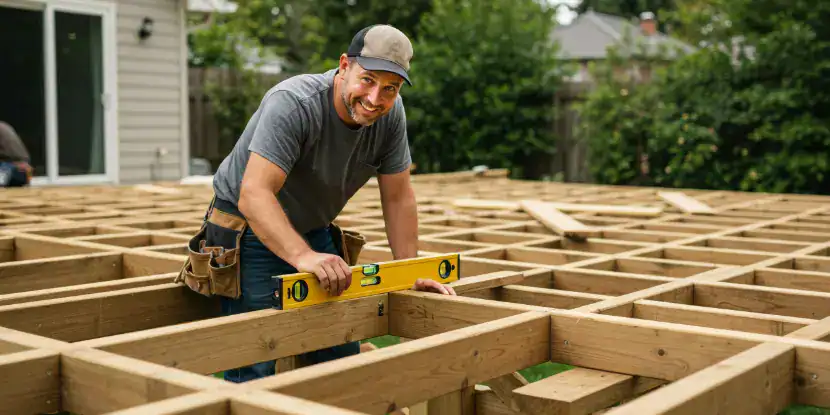
This big job would be tough to complete with hand tools alone.
Building a Smarter Toolbox
A well-rounded toolbox contains both hand and power tools. They aren’t in competition with each other; they’re partners. A power saw makes the rough cuts, while a hand saw or chisel refines the joint for a perfect fit. A power drill creates pilot holes, while a hand-held screwdriver finishes the job.
By knowing the strengths and weaknesses of hand and power tools, you can tackle projects with greater confidence and achieve professional-quality DIY results.
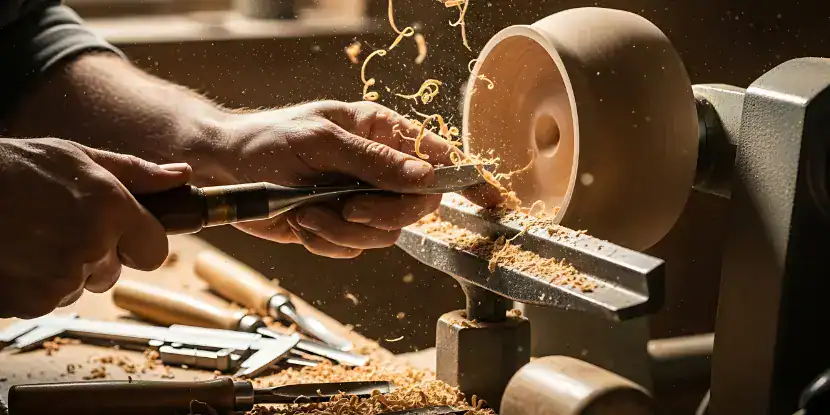
A man uses a chisel to shape a wooden bowl on a power lathe.
FAQs: Power Tools vs Hand Tools
Q: As a beginner, should I start with hand tools or power tools?
Beginners should start by building a solid collection of quality hand tools. They’re safer, and they help you learn fundamental skills like measuring, cutting, and fastening. Once you’re comfortable, you can gradually add power tools for tasks that require more speed and strength.
Q: Are battery-powered tools as strong as corded ones?
For most DIY tasks, cordless power tools offer more than enough power and convenience. However, for continuous, heavy-duty applications like grinding metal or extensive sawing, a corded tool provides more sustained power without needing to be recharged.
Q: What are the hand tools every homeowner should own?
Every home should have a basic toolkit with a claw hammer, a set of Phillips and flathead screwdrivers, a measuring tape, a utility knife, and a pair of adjustable pliers. This small set will handle most minor household repairs and projects.
Q: When is it worth investing in a more expensive, high-quality tool?
Invest in quality for tools you use frequently or for tasks where precision is critical. A good drill, a reliable circular saw, or a durable set of wrenches will perform better, last longer, and be safer than cheaper alternatives.
Q: How do I maintain my tools to ensure they last?
Keep hand tools clean, dry, and stored properly to prevent rust. Sharpen cutting edges on chisels and saws as needed. For power tools, regularly clean out dust and debris from vents, check cords for damage, and follow the manufacturer’s instructions for lubrication and maintenance.
Q: Are there specific safety precautions for power tools?
Absolutely. Always wear safety glasses, and consider using hearing protection when working with loud tools. Make sure guards are in place, unplug tools when changing bits or blades, and never carry a tool by its cord.
Q: Can I use power tools for delicate work?
Yes, but with caution. Many modern power tools, such as drills and impact drivers, feature adjustable torque or speed settings for greater control. With practice and the right setting, you can use them for more delicate tasks, but always test on a scrap piece first.
Q: What’s the difference between a drill and an impact driver?
A drill is designed for drilling holes and driving screws at a consistent speed. An impact driver is for driving screws only and applies rotational impacts at high torque. It’s more effective for driving long screws into dense materials without stripping the screw head.