
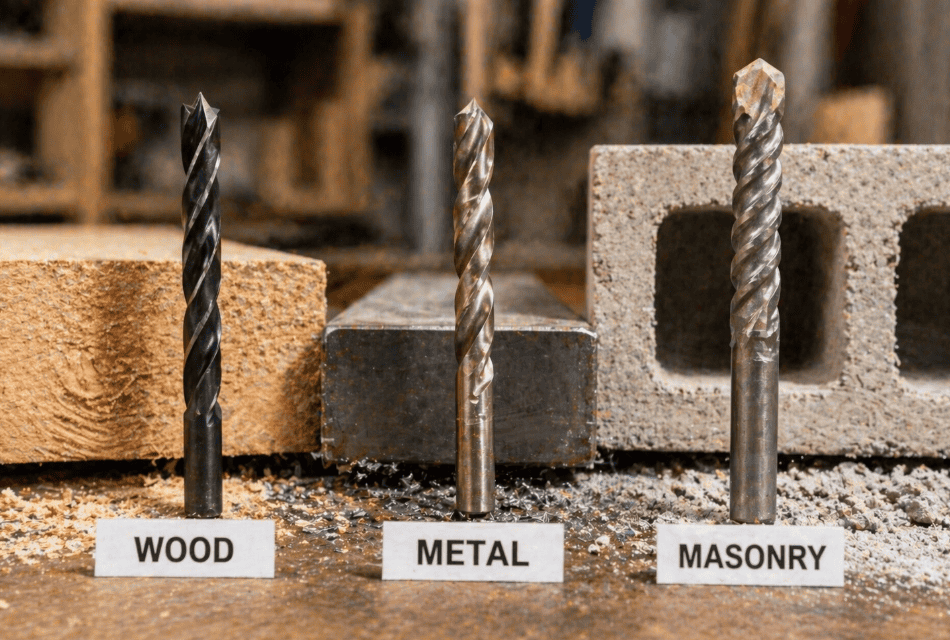
Walk into any hardware aisle and one fact shows up fast. Drill bits do not all do the same job. From my side of the counter at Anawalt Lumber, I watch buyers grab one pack and hope for the best. Then wood tears out. Metal dulls the tip. Brick stops progress cold.
Good results start with the right match. Drill bits for wood, for metal, and for masonry all serve different jobs. If you match the bit to the surface, holes look cleaner, work moves faster, and your drill runs under less strain.
A poor match wastes time and money. A bent bit, burned board, or chipped block often starts with one small choice. This guide will help you sort through types of drill bits, choose the right drill bit for wood, choose the right drill bit for metal, and choose the right drill bit for concrete with less guesswork.
Contact Us

Key Takeaways
- Match the bit to the surface first.
- Use wood drill bits for lumber, plywood, trim, and finish work.
- Use metal drill bits for steel, aluminum, and sheet metal.
- Use masonry drill bits for brick, block, stone, and concrete.
- Run slower speed on metal and masonry.
- Clear chips and dust often.
- Replace dull tips early.
- Start with pilot holes when control matters.
How to Choose Drill Bits
When people ask how to choose drill bits, I start with one question. What are you drilling today? Wood, metal, and masonry each push back in a different way. One bit style will not solve every job.
Look at four things first.
- Material type
- Hole size
- Hole depth
- Drill type
A cordless drill handles many home jobs. A hammer drill helps on concrete and block because the hammer action breaks up hard material while the bit cuts. For simple wood or metal work, a standard drill often does the job well.
Also check the shank. Some bits use a round shank. Some use hex. Rotary hammer models use SDS systems. The shank must match your tool.
What Are the Main Types of Drill Bits?
The main types of each serve a clear role.
Twist drill bits
These are the common general-purpose bits found in many sets. Twist drill bits work on wood, light metal, plastic, and mixed shop tasks. Many twist styles use high speed steel, which handle common drilling work at a fair price.
Spade drill bits
Spade drill bits cut wide holes in wood fast. Electricians, framers, and DIY homeowners often reach for these during rough work. Finish quality is lower than brad point or auger styles, but speed stays high.
Masonry drill bits
Masonry drill bits use a tougher tip, often carbide. These bits handle brick, block, stone, and concrete when paired with the right drill mode.
Carbide drill bits
Carbide drill bits matter most on hard surfaces. The carbide tip stands up better under abrasive drilling, especially on masonry.
Hammer drill bits
Many buyers use this phrase for bits paired with hammer mode drilling. For concrete, hammer action plus the right bit makes a huge difference.
High speed steel drill bits
High speed steel drill bits are common for wood, plastic, and many metal jobs. For harder metals, cobalt options usually hold an edge longer.
Which Drill Bits for Wood Work Best?
For wood, clean entry and clean exit matter. The wrong tip tears fibers, wanders across the face, or leaves a ragged hole.
Good for wood include:
- Brad point bits for neat, accurate holes
- Spade drill bits for larger rough holes
- Auger bits for deep holes in framing lumber
- Twist drill bits for common wood tasks
When buyers ask for the best for wood, I usually ask about the job first. Cabinet work needs a cleaner cut than fence work. A shelf bracket hole in oak needs more control than a rough utility hole in a stud.
For trim, hardwood, plywood, and finish work, brad point wood drill bits usually leave the cleanest result. The center spur holds the bit in place before the outer edges score the surface. This small detail helps reduce splintering.
For larger holes in studs or joists, spade drill bits save time. Use steady pressure. Pull the bit out now and then to clear chips. Push too hard and hole quality drops fast.
If the goal is a clean face on both sides, drill halfway from one side, then finish from the other after the point shows through. Many woodworkers use this trick because breakout on the back side ruins a clean panel.
Contact Us
Which Drill Bits for Metal Work Best?
Metal punishes weak bits. Too much speed builds heat. Too little cutting pressure rubs the tip and dulls the edge. Good drill bits for metal need sharp cutting edges and the right bit material.
Good options include:
- High speed steel drill bits for mild steel, aluminum, and thin stock
- Cobalt bits for harder steel or stainless
- Step bits for sheet metal and thin panels
- Twist drill bits for many common shop jobs
The best drill bits for metal depend on hardness and thickness. For soft aluminum, a sharp high speed steel bit works well. For stainless, cobalt usually wins because heat wears down cheaper bits fast.
Use lower speed on metal. Add cutting oil when the job calls for oil. Start with a center punch so the tip does not skate. If blue color shows on the bit, heat is too high. Slow down.
The right drill bit for metal will cut chips, not dust. Small curls or chips show good cutting action. Fine dust often means rubbing, not cutting.
A pilot hole helps on larger sizes. Start small. Then step up. This keeps the larger bit from wandering and lowers strain on both tool and bit.
Which Drill Bits for Masonry Work Best?
Brick, block, stone, and concrete need a different approach. Drill bits for masonry use a tougher tip, and hard surfaces often need hammer action from the drill.
Good options include:
- Carbide masonry drill bits for brick and block
- Hammer drill bits for concrete and stone
- SDS masonry bits for rotary hammer tools on heavy work
When buyers ask for the best drill bits for concrete, I look at two things first. Hole size and job volume. A few small anchor holes in a slab need a different setup than repeated holes in block walls.
The right drill bit for concrete must match both the tool and the material. A regular drill with a masonry bit will handle some small brick holes. Dense concrete usually needs hammer mode or a rotary hammer setup.
Use steady pressure. Let the tip work. Pull out often to clear dust. Packed dust slows the cut and raises heat. On deep holes, stop more often and clean the flutes. Dust left in the hole slows progress and wears the bit faster.
Wood vs Metal vs Masonry, What Changes From One to the Next?
The change comes from tip shape, material hardness, and drilling action.
For wood:
- Sharp point for clean entry
- Faster drill speed
- Focus on chip removal
For metal:
- Sharp cutting edge
- Lower speed
- Cutting oil on many jobs
- Focus on heat control
For masonry:
- Carbide tip
- Hammer action on hard material
- Lower speed with firm pressure
- Focus on dust removal
This is the heart of any good drill bit guide. One bit family does not fit every surface.
How Do You Pick the Right Drill Bit for Wood, Metal, and Concrete?
Start with the surface. Then match the bit style, drill speed, and drill mode.
Use this quick guide.
Right drill bit for wood
- Brad point for finish holes
- Spade for large rough holes
- Twist for common jobs
Right drill bit for metal
- High speed steel for softer metals
- Cobalt for stainless or harder stock
- Step bit for sheet metal
Right drill bit for concrete
- Carbide masonry bit for lighter jobs
- Hammer drill bits or SDS bits for harder concrete
Many homeowners lose time because they focus only on size. Size matters, but shape and bit material matter too. A 1/4 inch bit made for wood will fail fast in steel or concrete.
Contact Us

What Mistakes Ruin Fast?
I see the same problems over and over at Anawalt Lumber. The bit gets blamed, though the issue often starts with setup.
- Using wood drill bits on metal
- Running metal bits at full speed
- Using no cutting oil on tougher metals
- Drilling concrete with no hammer action
- Pushing too hard
- Leaving dust in the hole
- Skipping pilot holes on larger sizes
- Using dull bits too long
Dull bits create heat. Heat kills cutting edges. Once a tip loses shape, the drill works harder and hole quality falls. Replace dull bits early. A fresh bit saves more time than many buyers expect.
Another common problem comes from side load. A bit is built for straight cutting. Angle pressure snaps smaller sizes fast, especially in metal and masonry. Keep the drill square with the surface.
How Do You Make Drill Bits Last Longer?
Good storage and good drilling habits stretch bit life.
Follow these steps:
- Keep bits dry
- Store each size in a case or index
- Clean pitch, dust, and oil after work
- Use cutting oil for metal when needed
- Match drill speed to the surface
- Back the bit out to clear chips or dust
- Stop drilling when the tip turns dull
High speed steel drill bits last far longer when heat stays under control. Carbide drill bits last longer when you avoid side pressure. Spade drill bits stay useful longer when you keep the cutting edges sharp and avoid nails.
A small habit helps a lot. Label one section of your case for worn bits. This keeps worn edges out of active jobs and saves frustration on the next project.
When Should You Buy a Full Set, and When Should You Buy Single Bits?
A full set works well for new homeowners, general repair work, or light shop use. A single premium bit makes more sense when one job repeats often.
Buy a set when:
- You need many sizes for mixed work
- You handle wood, plastic, and light metal
- You want a starter kit
Buy single bits when:
- You drill one hole size again and again
- You work with stainless or concrete
- You need better quality for one demanding task
At Anawalt Lumber, I often steer buyers toward a basic set plus one or two task-specific bits. This mix covers most home jobs without loading the toolbox with sizes left unused.
What Should You Remember at the Shelf?
If you stand in front of a wall of drill bits and feel unsure, keep the choice simple. Match the surface first. Match the hole size second. Match the drill type third. Then think about finish quality.
For wood, go sharp and clean. For metal, go slower and cooler. For masonry, go tougher and use hammer action when the job calls for hammer action.
From my side of the counter, the best results usually come from buyers who slow down for one extra minute before they buy. One careful pick saves burned wood, snapped tips, ruined anchors, and wasted time. Anawalt Lumber serves homeowners, tradespeople, and weekend builders every day, and the same rule keeps showing up. The right bit makes the whole job smoother.
FAQs
What are the best drill bits for wood?
For finish work, brad point bits usually give the cleanest hole. For rough larger holes, spade bits save time.
What are the best drill bits for metal?
High speed steel works well for mild steel and aluminum. Cobalt works better on stainless and harder metals.
What are the best drill bits for concrete?
Carbide masonry bits work for lighter jobs. Rotary hammer or SDS bits work better for repeated concrete drilling.
Do twist drill bits work on every surface?
Twist bits handle many jobs, but no single bit fits every surface. Wood, metal, and masonry each need the right tip and drilling method.
How do I know when a bit is dull?
Watch for slow cutting, squealing, extra heat, smoke on wood, or dust instead of clean chips on metal.
Should I use hammer mode on brick and concrete?
Hammer mode helps on most brick and concrete jobs when the bit and drill support hammer mode.
Contact Us